The population is about 738,000. Guyana is bordered to the east by Suriname, to the south and southwest by Brazil and to the west by Venezuela. It is the third smallest country on the mainland of South America. Culturally it is more associated with the Caribbean than with Latin America and is the only English speaking country in South America. Guyana is an Amerindian word meaning "Land of many waters" beacause of its rain forests dissected by numerous rivers, creeks and waterfalls, including the famous Kaieteur Falls. The country enjoys a diverse, multicultural society, high floral and faunal biodiversity, prize-winning rum, and Demerara sugar. Guyana is a major breeding area for sea turtles and other wildlife. The local climate is tropical and generally hot and humid. The major religions in Guyana are Christianity, Hinduism, Islam and other minor different faiths. Most Guyanese Christians are Protestants and include a mix of all races. Hinduism is
Energy law example for 47 countries 6.3% to over 20% Numerous awards including The Right Livelihood Award Renewable energy in world Investments 63 billion USD > 120 billion USD 20062009 Wind energy: 74 000 MW to 135 000 MW Solar energy: 5100 MW to 19 000 MW WHAT ARE THE ALTERNATIVES TO TODAYS SOLAR, WIND AND BIOMASS ENERGY SOURCES? Osmotic power How it works? Pressure created by osmosis powers turbines Where could be used Where fresh and salt water meet (creeks, fjords) Desalination plants Now Worlds first test factory in Norway Tofte (2009) Disadvantages Km2s of membranes needed Norway, Tofte Click to edit Master text styles Second level Third level Fourth level Fifth level
väga suurt rolli Austraalia pindalast ligikaudu 68 920 km² moodustavad veekogud. Austraalia jõgedevõrk on hõre, ja kuigi jõgesid on vähe, on nad riigile elutähtasd. Nad varustavad maad joogiveega, farmereid veega karja jootmiseks ja põllumaade niisutuseks. Umbes 60% selle maa pindalast on äravooluta, 33% hõlmab India ookeani valgala, 7% Vaikse ookeani valgala. Siseosas on peamiselt ajutise vooluga jõed kriigid (creeks). Suuremad (Cooper`s Creek, Diamantina) suubuvad Eyre`i soolajärve. Kriikides on vett ainult pärast lühiajalisi suvevihmu. India ja Vaiksesse ookeani suubuvad enamsti lühikesed ja ebaühtlase veereiimiga jõed, mis toituvad vihmaveest ja on veerohked ainult alamjooksul. Suurvesi sõltub sademete reiimist ja on enamikul jõgedel suvel, Lõuna-Austraalia jõgedel talvel ning Kagu-Austraalia jõgedel sügisel. Suurim jõgi on Murray (2740 km) koos lisajõe Darlingiga (2740 km).
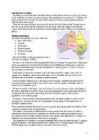
The Timor sea and the Arafura sea separate Australia from Indonesia. In the north the coast is washed by Great Australian Bight and the Indian ocean. In the northeast the Coral sea washes the coasts and in the southeast there is the Tasman sea which also separates Australia from New Zealand. The biggest island is Tasmania which is located in the south of the country. Waterbodies There are very few rivers in Australia. Australian temporary rivers are called the creeks they are full only after it rains. The biggest rivers are in the east. Most of them are very short. The Murray river with its tributary the Darlinggives water for irrigation. Most of the lakes alsi have water after it rains only. Lake Eyre, the biggest, is one of the many salt lakes in Central Australia. Australia has much underground water. The Great Artesian Basin under the central Lowlands makes cattlebreeding possible thee. The network of artesian wells provides cattle with water.
Australia is a very dry continent. There are very few rivers and no big lakes in Australia. Most of the lakes of Australia have water in them only after rain. The biggest lake of Australia is Lake Eyre and it is also the lowest point in Australia, at approximately 15 metres below the sea level. The lake is located in the deserts of central Australia. Even in dry season there is usually some water remaining in Lake Eyre. Australian temporary rivers are called creeks. The biggest rivers of Australia are in the eastern part of the country. The Murray River is the largest but the second longest river, only its tributary the Darling river is longer than it. The Murray rises in the Australian Alps and flows north-west. It makes up much of the border of the New South Wales and Victoria. The Murray-Darling river system is one of the largest river systems in the world.
Of course, the Great Dividing Range that runs along the Pacific Coast is a tourist must. In addition, the largest outback town Alice Springs is a sure must also. Ayers Rock-Uluru The Australian Outback is one of a kind in the world. It is actually a vast arid plateau stretching across most of the continent. There are the Gibson, the Great Victoria, the Great Sandy Deserts and many smaller deserts Australia is known for its temporary rivers or creeks, which are full only after rains. The longest river is the Murray-Darling, which is 2700 km long. Most of the lakes are also full after rain. The biggest, Lake Eyre, is a salt lake in Central Australia and it occupies an area of 9000km². Nature Australia is the second driest continent in the world and 70% of the country is arid or semi- arid. More that one-third of the mainland is occupied by desert. The rain is distributed unevenly around the continent
after it rains. The biggest lake is Lake Eyre which is a salt lake. The natural lakes of the interior of continental Australia are salt lakes. Fed by streams and rivers, they receive water rarely. Lake Eyre, Torrens, Frome and Gairdner are the remains of a vast inland sea which once extended south from the Gulf of Carpentaria. Rivers Australia has only few rivers. Many of them are full of water only after it rains. There are many temporary rivers called creeks. The biggest rivers are in the east. All the rivers in Australia are short. Murray River is Australia's principal river. The Murray River and its tributaries run approximately 3,370km in length and form most of the border between New South Wales and Victoria. Climate Because of its size, Australia has many climates. The Tropic Capricorn cuts across the northern part of Australia so about 40per cent of the country lies in tropics. In the south, the
The first graded road was built in 1948 on mount Uluru. Ayers Rock was created as a national park in 1950. Artistically Kata Tjuta is noted for its engravings and its rock piles whereas Uluru is famous for its rock paintings. Both the engravings and the geometric rock piles are believed to have been created by the Spirit Ancestor during the Dreamtime. Waterbodies. There are very few rivers in Australia. Australian temporary rivers are called creeks they are full of water only after rains. The biggest rivers are in the east. Most of them are short. The Murray River with its tributary the Darling gives water for irrigation (vilja kastmiseks). Most of the lakes also have water only after the rains. Lake Eyre, the biggest, is one of the many salt lakes in Central Australia. Australia has much underground water. The Great Artesian Basin under the Central Lowlands makes cattle-breeding possible there
 annaabi.ee