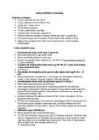
Ex. Our country is getting richer. The Universe is expanding. 6.Irritation or Anger And the last use of this tense is to express irritation or anger over somebody or something in the present with adverbs such as: always, continually or contantly. Ex. She is continually complaining about everything! John is always asking stupid questions! Form To form a sentence in the Present Continuous, you have to: *know the proper conjugation of the auxiliary verb. Person Singular Plural First I am We are Second You are You are Third He/she/it is They are *add the "ing" suffix to the verb. Ex. Try + ing = trying go + ing = going NB! Take + ing = taking have + ing = having die + ing = dying Exercises John ......................... (read) a book right now. What ....................... (you do) tonight? Silvia ........................... (not listen) to music
Vinco, vici, victum, ere Vinco praed. id. act. Sg 1 ma võidan Vici perf. ind. act. Sg 1 ma võitsin / olen võitnud Victum partic. parf. pass. võidetud Ere infinit. praes. act. võitma/võita/võitmine näitab pöördkonda ehk konjugatsiooni Veni, vidi, vici Neljandat põhivormi tähistatakse sõnastikes lühendatult, infinitiivi lõpp liitub esimese põhivormi viimase konsonandi külge. Inf. lõpud I are II ére (pikk e) III ere (lühike e) IV - ire Conjugation I (prima) Accuso, avi, atum, are süüdistama Accuso, accusavi, accusatum, accusare Conjugation II (secunda) · Video, vidi, visum, ére nägema, vaatama Videre · Habeo, bui, bitum, ére omama Habui, habitum, habere · Respondeo, spondi, sponsum, ére vastama respondi, responsum, respondere · Possideo, sedi, sessum, ére valdama posedi, posessum, possidere Conjugation III (tertia) o lõpulised, io lõpulised vinco, vici, victum, ere võitma (vincere)
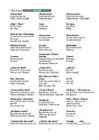
tomas tomáis toma toman When tomar means to drink, it usually refers to alcohol. In Mexico, tomar can be intransitive, as beber is almost never used. In Spain, tomar is always transitive, such as tomar una copa - to have a drink and tomar un café - to have a coffee. 26 38. Commands / Imperative To form commands, drop the final -s on the present tense conjugation for the tú form and change the final -r of the infinitive to -d for the vosotros form. The other imperative conjugations (for Usted, Ustedes, and nosotros) use the present subjunctive forms. (More about the Subjunctive at #70.) You use the nosotros form when you mean Let's + infinitive. Negative commands use no + the present subjunctive conjugations for all forms. So the only forms that differ between affirmative and negative commands are tú and vosotros
sclerotiorum. Current Genetics 27: 166-176. Carbone, I. & Kohn L.M. 2001. A microbial population-species interface: nested cladistic and coalescent inference with multilocus data. Molecular Ecology 10: 947. Couch, B. C. & Kohn, L. M. 2000. Clonal spread of Sclerotium cepivorum in onion production with evidence of past recombination events. Phytopathology 90: 514-521. Gomis-Ruth, F. X., Moncalian, G., Perez-Luque, R., Gonzalez, A., Cabezon, E., de la Cruz, F. & Coll, M. 2001. The bacterial conjugation protein TrwB resembles ring helicases and F1- ATPase. Nature 409: 637-641. Hawksworth, D. L., Kirk, P.M., Sutton, B.C. & Pegler, D.N. 1995. Ainsworth & Bisby’s Dictionary of the Fungi. CABI, 616 pp. Holst-Jensen, A., Vaage, M., Schumacher, T. & Johansen, S. 1999. Structural characteristics and possible horizontal transfer of group I introns between closely related plant pathogenic fungi. Molecular Biology and Evolution 16: 114-126. Ito, Y. & Hirano, T. 1999
97. (a) penetration of biofilm difficult ; ref to diffusion of antibiotic ; detail of diffusion ; larger SA of separate bacteria / ora ; does not reach all bacteria in film / ora ; antibiotic trapped by film ; detail of entrapment ; dead bacteria in film form barrier ; AVP ; e.g. horizontal transmission / conjugation, easier in biofilm AVP ; 4 max (b) both strains have identical sensitivity when in suspension ; to all three antibiotics ; both, less sensitive / more resistant, when in biofilms (ora) ; strain 1 much, less sensitive / more resistant ; comparative figures ; C most effective / AW ;
 annaabi.ee