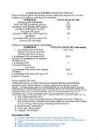
ANDMEBAASIGA SCOPUS TEOSTATUD OTSINGUD Teostatud lihtotsing üldiste märksõnadega: ainsaks kriteeriumiks seejuures on, et otsisõna sisalduma artikli pealkirjas, märksõnana või abstraktselt. OTSIPROFIIL LEITUD ALLIKATE ARV carcinogens AND groundwater 417 health risks AND groundwater pollution 1276 groundwater AND pollution AND problems 3708 groundwater AND health risks AND 275 (carcinogen OR cancer) groundwater AND cancer AND (organisms 289 OR health) groundwater AND ecosystem (cancer OR 0
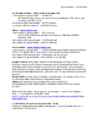
Ilona Juhanson, 123964YASB 6.1 Google Scholar – http://scholar.google.com „Carcinogens in groundwater“ – 7 tulemust, - tõenäoliselt kõige põhjalikum, kuna tuleneb pealkirjast, mitte ainult kahe peamise märksõna arvelt. carcinogens AND groundwater – 16700 tulemust carcinogens OR groundwater – 1110000 tulemust Yahoo – www.yahoo.com „Carcinogens in groundwater“ – 179 tulemust, - samuti kõige põhjalikum variant, kuna kasutab mõlemat märksõna täpsemal viisil. Carcinogens AND groundwater – 75200 tulemust Carcinogens OR groundwater – 998000 tulemust MetaCrawler – www.metacrawler.com „Carcinogens in groundwater“ – numbriliselt tulemuste hulka ei andnud, küll aga oli hitte 9 lehekülje võrra, ning vasakul nurgas pakkus kaheksa alateemat. Carcinogens AND groundwater – lehekülgede arv jäi samaks
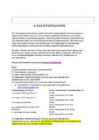
Esita: a) Otsimootorite nimetused ja veebiaadressid: b) Otsistrateegia, piirangud: c) Leitud /relevantsete internetiallikate arv d) Väljavalitud veebilehekülgede hinnang autorluse, täiendamise, objektiivsuse ja sisu seisukohalt. e) 1 teemakohase artikli kirje (juhendis näide "veebiartikkel") a) Otsimootorite nimetused ja veebiaadressid: GoogleScholar; http://scholar.google.com/ Otsistrateegia, piirangud Leitud /relevantsete internetiallikate arv ,,carcinogens" AND ,,groundwater" 13 700 Ajaline piirang (2012-2013) 1180 carcinogens ,,AND" groundwater 16 600 Ajaline piirang (2012-2013) 1380 carcinogens+groundwater 22 000 Ajaline piirang (2012-2013) 2520 groundwater AND pollution AND 299 000
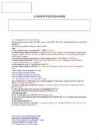
Ilona Juhanson, Martin Tamm, Agnes Suurväli, Regiina Lopetaite, Oliver Simpson TEEMAST Kantserogeensed ained Nende sattumine põhjavette Kuidas nad põhjavette satuvad Nende mõju elusorganismidele TUNTUD KANTSEROGEENID Radoon, asbest, benseen, arseen Tubakas Raskemetallid (Sb, Pb jt) Dioksiinid Tuumajaamade jäätmed, radioaktiivsed ained Halogeenid ÜLDISED MÄRKSÕNAD Kantserogeenid (carcinogens) Põhjavesi (groundwater) Terviseriskid (health risk) Kartsinoom, vähk (carcinoma, cancer) Reostus, reostamine (pollution) OTSIPROFIILID carcinogens AND groundwater Carcinogens AND groundwater AND pollution health risks AND groundwater AND pollution groundwater AND pollution AND problems groundwater AND health risks AND (carcinogen OR cancer) groundwater AND cancer AND (organisms OR health)
3. HARJUTUSÜLESANNE 3.1. Harjutusülesanne "Autori otsing" Nobeli preemia keemia alal anti 2001. aastal uurimistööle "Discovery and development of conductive polymers". Üks auhinna saajatest oli Alan G. MacDiarmid. Leia: a) mitu artiklit avaldas ta aastatel 1975 - 1985? 67 artiklit b) kuidas leidsid vajalikud andmed? Sisestasin autori nime. Seejärel kuvati ekraanile igasuguseid variante, millest valisin nime Alan G. MacDiarmid. Seejärel klõpsasin ,,Publication years 1975- 1985. Sain 67 vastet. c) mitu tööd sisaldasid kontseptsiooni "conducting polymers" või "plastics"? 183 tööd d) kuidas leidsid need tööd? Tuli refine'i alt valida research topics, sisestasin otsisõnadeks "conducting polymers" or "plastics" . e) mitu patenti on Alan G. MacDiarmid nimel? 26 f) kuidas leidsid vajalikud andmed. Tuli refine'i alt valida ,,document type" ning klikata patent'i peal. Juhised ülesande lahendamiseks leiad : How to...
docID=10159425&p00=environment%20changes%20europe d) Wright, H. E., Jr. Kutzbach, John E. Webb; Thompson, III. 1994. Global Climates: Since the Last Glacial Maximum : climatic changes, paleoclimatology. Minneapolis, MN, USA : University of Minnesota Press. 2.3 Ilona Juhanson, 123964YASB b) Viies köide ja 14. peatükk . c) David B. Vance, James A. Jacobs. Groundwater and Arsenic: Chemical Behaviour and Treatment. 2.4 OTSING OMA TEEMAL (Carcinogens in Groundwater) a) Parimaid tulemusi andis Ebrary Knovel Reference E. Tulemusi 692 3 lk 73 kokku Täpsustavalt 216 Artiklid 1.Identifying 1. Drinking Water 1. Toxic Legacy: Future Drinking Quality (2nd Synthetic Toxins in the Water edition) Food, Water, and Air of contaminants 2
deserts, forests, grasslands, oceans, prairies, rainforests, taiga and tundra, terrestrial ecosystems, wetlands. b) Plotkin, Mark J. 2.3 Solar Energy Materials and Solar Cells (52), Thin Solid Films (50), (Journal of Non- Crystalline Solids (31), Synthetic Metals (18), Organic Electronics (10), Materials Science in Semiconductor Processing (2) Teemades: solar cell (79), thin film (21), organic solar (9), zno (9), cds (6) 2.4 Peamised märksõnad: carcinogens, groundwater, pollution; 847 hitti. Groundwater AND pollution AND problems: Groundwater AND ecosystem AND cancer: Eelistasin edasisel tööl esimest varianti, kuna sisaldab teema pealkirjas olevaid sõnu märksõnadena. Esimesel leheküljel olevad artiklid olid kõik teemakohased, kuigi pealkirjades kajastus kantserogeenina kõige enam arseen, kuid oli ka teisi aineid ja kontekste. Valitud artikkel: Autorid: Petrusevski, B.; van der Meer, Walter; Baker, J.; Kruis, F.; Sharma, S. K.;
information on how to handle loads correctly and the risks they might be open to particularly if these tasks are not performed correctly, having regard to Annexes I and II. Article 7 Council Directive Article 4 90/394/EEC Reduction and replacement 1. The employer shall reduce the use of a carcinogen at the place of work, Carcinogens in particular by replacing it, in so far as is technically possible, by a substance, preparation or process which, under its conditions of use, is not dangerous or is less dangerous to workers' health or safety, as the case may be. 2. The employer shall, upon request, submit the findings of his investigations to the relevant authorities. Article 5
Even forest fires can contribute to the creation of small amounts of dioxins and furans. Dioxins and furans have been found in the air, soil, and food. Dioxins and furans are mainly distributed through the air. However, only a small percentage of exposure is from air. Eating contaminated food is the primary source of exposure. Impact on Human Dioxins have been characterized as likely to be human carcinogens and are anticipated to increase the risk of cancer at background levels of exposure. At body burden levels 10 times or less above those attributed to average background exposure, adverse noncancer health effects have been observed both in animals and, to a more limited extent, in humans. In animals these effects include changes in hormone systems, alterations in fetal development, reduced reproductive capacity, and immunosuppression. Effects specifically
These symptoms are relieved by the next cigarette. Most smokers need to smoke regularly to feel normal and to prevent nicotine withdrawal symptoms. So once you start smoking it is very hard to quit. But why is smoking so harmful? Cigarettes have tar in them which contains many chemicals. These deposit in the lungs and can get into the blood vessels and are carried to other parts of the body. Cigarette smoke contains over 4,000 chemicals, including over 50 known carcinogens (causes of cancer) and other poisons. In addition to different kinds of cancer (mouth, nose, throat, larynx, gullet, pancreas, bladder, cervix, blood, and kidney) it also may cause heart diseases, rheumatoid arthritis, fasten your ageing and have impact on your fertility. There are also other conditions where smoking often causes worse symptoms. For example: asthma, flu, chest infections, tuberculosis, chronic rhinitis, diabetic retinopathy, hyperthyroidism, multiple sclerosis, optic
IARC's overall evaluation is that formaldehyde is probably carcinogenic to humans (Group 2A). Later IARC classified formaldehyde as human carcinogen. Evaluating Pesticides for Carcinogenic Agency classified formaldehyde in Group B1 - probable human carcinogen, under conditions of unusually high or prolonged exposure. The National Toxicology Program, an interagency program of the Department of Health and Human Services, named formaldehyde as a known human carcinogen in its 12th Report on Carcinogens (2011). Toxicity for Reproduction Studies in Humans No increased risk of spontaneous abortion was seen after maternal or paternal exposure to formaldehyde based upon survey questionnaire. In one study of cosmetologists who used formaldehyde based disinfectant products as well as other chemicals a slight excess of spontaneous abortions is reported, but that finding could not be linked to any chemical exposure. Formaldehyde exposure levels were not reported in these studies
components has revealed in recent decades etc.). The main routes for the presence of that some toxic compounds may be present these compounds in meat are summarized in or generated in certain types of meat and Table 27.1. processed meat. Three groups of compounds Controls and effective corrective mea- have received great attention because they sures (i.e., control of raw materials, reduction are potential carcinogens, and, even when not in the addition of nitrite, control of microbial present in the raw meat, they can be gener- decarboxylase activity, etc.) can been taken ated during further processing or cooking. to minimize this problem in cooked, cured, These groups are nitrosamines, heterocyclic and dry-cured meat products. All these haz- amines, and polycyclic aromatic hydrocar- ardous compounds and the main analytical bons
 annaabi.ee