* Wales, to the west, was at the beginning of this period still thoroughly Celtic * At the beginning of this period the literary model was Chaucer´s verse, there was none in prose Sir Thomas More * Born in London * known to Catholics as Saint Thomas More since 1935 * was an English lawyer, social philosopher, author, statesman, and noted Renaissance humanist. * He was an important councillor to Henry VIII of England and was Lord Chancellor from October 1529 to 16 May 1532 * He was canonized by Pope Pius XI in 1935 * He was an opponent of the Protestant Reformation and in particular of Martin Luther and William Tyndale. ´´Utopia´´ * "Utopia" a name he gave to the ideal and imaginary island nation, the political system of which he described in Utopia, published in 1516. * Written in Latvin * In it a traveller, Raphael Hythlodeaus describes the political arrangements of the imaginary island country of Utopia to himself and to Pieter Gillis. This novel describes
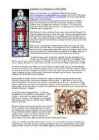
saintliness was overstated, possibly a sham perpetrated by the monks of Westminster in the twelfth century. Others seem to think that he was deeply religious man and a patient and peaceable ruler. Having warded off political threats, England during the last 15 years of Edward's reign was peaceful and prosperous with a growing population. He died at the age of 64 and was buried in the Abbery he had constructed at Westminster. Edward was canonized in 1161 by Pope Alexander III. His feast day is October 13. He died on 4 January 1066 and was buried in the Abbey he had constructed at Westminster. Find the meaning of these words in estonian: Achievement - Penultimate - Influential - Threat - Prosperous - Breach To oulaw A vow of celibacy - To deprive To consecrate To canonize Feast - Additional reading: http://www.catholic-forum.com/saints/golden291
Pirita Pirita is a picturesque area situated about seven kilometres away from the centre of Tallinn. There is a beautiful sandy beach stretching for two kilometres. Pirita is also a yachting centre and a place for motor-cycle races. One of its attractions is the ruin of St. Birgitta's Convent. The founder of the convent was the Bridgettine Order whose principal house was at Vadstena in Sweden. The convent was dedicated to Birgitta Gudmarsson who was canonized in 1391. The construction was started in 1407 and it was sponsored by wealthy citizens and the knighthood of the provinces of Harju and Viru as well as by some rich people of Sweden. The convent was divided into three parts. The central part was the church with its 34-metre-high gable. The left wing was for the nuns and the priests lived in the right wing. The church building was completed and consecrated in 1436. Other buildings took longer to build they were completed at the
institutions, with Papal sanction, both for bridge construction and for hospitals. The influence of these groups lasted from the end of the 12th to the early 14th century, and their perseverance ensured the construction of major bridges over wide rivers as the Rhône and the Danube. The bridge over the Rhône at Avignon (1187), for example, a wooden deck on stone piers, was built by such an order under the inspired vision of a young shepherd, later canonized as St Bénézet for his accomplishment. The four surviving arches, dating from the bridge's rebuilding around 1350, rank as one of the most remarkable monuments of medieval times in view of the 101-110ft (31-34m) elliptical arches with radii varying at the crown and haunches. As the Middle Ages drew to a close, stone arches of remarkable spans were built in mountain valleys where rock abutments provided solid foundations for spans in excess of 150ft (50m), such as
Middle Ages. Feudalism is a hierarchical system in which a lord or king gives a gift or land to a vassal in exchange for protection. The decline of feudalism can be marked by the crusades. *Edward the Confessor was an Anglo-Saxon King of England and the last of the House of Wessex. His reign marked the continuing disintegration of royal power in England and the enlargement of the great territorial counts. Edward was canonized and is regarded as the patron saint of kings, difficult marriages, and separated spouses and the Royal Family. Edward's reign was marked by peace and prosperity. He married Edith, daughter of Earl Godwin of Wessex, but they were childless. It was during the reign of Edward that some features of the English monarchy familiar today were introduced. Edward is regarded as responsible for introducing the royal seal and coronation regalia.
To his own scandal. HORATIO Look, my lord, it comes! Enter Ghost HAMLET Angels and ministers of grace defend us! Be thou a spirit of health or goblin damn'd, Bring with thee airs from heaven or blasts from hell, 34 Be thy intents wicked or charitable, Thou comest in such a questionable shape That I will speak to thee: I'll call thee Hamlet, King, father, royal Dane: O, answer me! Let me not burst in ignorance; but tell Why thy canonized bones, hearsed in death, Have burst their cerements; why the sepulchre, Wherein we saw thee quietly inurn'd, Hath oped his ponderous and marble jaws, To cast thee up again. What may this mean, That thou, dead corse, again in complete steel Revisit'st thus the glimpses of the moon, Making night hideous; and we fools of nature So horridly to shake our disposition With thoughts beyond the reaches of our souls? Say, why is this? wherefore? what should we do? Ghost beckons HAMLET HORATIO
 annaabi.ee