The Bolsheviks had many enemies. One group who wanted to destroy the Bolsheviks were the Social Revolutionaries. At first, they had supported the November Revolution. Elections had been held in November 1917 for a new government, the Assembly in which the Bolsheviks had won 175 seats and the Social Revolutionaries 370 seats. However, when it met in 1918, Lenin used the Red Guards to close the Assembly, and killed anybody who objected. The Social Revolutionaries fought back by attacking the Bolshevik government. The Bolsheviks were also opposed by the Mensheviks, who had controlled the Provisional Government, and who they had toppled from control of the Soviets in September, and by the Tsarists, who wanted to rescue Nicholas II and put him back on the throne. Lenin made peace with Germany ,the Treaty of Brest-Litovsk, in which Russia had lost much of Russia's best agricultural and industrial land to Germany, including Ukraine, Estonia, Latvia and
wanted to or not. The Danes improved the fortifications and expanded the town, which became part of the Hanseatic League, a trading organization of a hundred northern cities. The Danes sold Tallinn to the Livonan Order, a branch of the Teutonic Knights, in 1346. The Swedes came next in 1561. Tallinn weathered plague and the Great Northern War and became part of Russia in 1710. In 1918, Estonia declared independence from Russia and fought a bitter war against Bolshevik Russia. Independence didn’t last long, however, and the fledgling nation fell first to the Nazis and then the Soviets during World War II. Despite all this conquering, Tallinn’s historic core has survived remarkably intact. Much of the 14th century city wall still stands, including a couple of stretches where you can climb the narrow spiral staircases of the towers and end up on the medieval catwalk. The Viru Gates, flanked by thin pointed towers
Independence Day On 24 February, Independence Day is celebrated in the Rebublic of Estonia. This is the day that the Manifesto was declared in Tallinn 91 years ago. In responce to a period of Russification initiated by the Russian empire in the 1890's, Estonian nationalism took on more political tones, with intellectuals first calling for greater autonomy, and later, complete independence from the Russian empire. Following the Bolshevik takeover of power in Russia after the October Revolution of 1917 and German victories against the Russian army, between the Russian Red Army's retreat and the arrival of advancing German troops, the Committee of Elders of the Maapäev issued the Estonian Declaration of Independence in Pärnu on February 24, 1918. after winning the Estonian Liberation War against Soviet Russia and at the same time German Freekorps volunteers (the Tartu Peace Treaty was signed on 2 February 1920), Estonia
by village. With the collapse of the Russian empire in World War I, Russia's provisional government granted national autonomy to Estonia. A popularly elected assembly (Maapaev) was formed but was quickly forced underground by opposing extremist political forces. The Committee of Elders of the underground Maapaev announced the Republic of Estonia on February 24, 1918, 1 day before German troops invaded. After the withdrawal of German troops in November 1918, fighting broke out between Bolshevik and Estonian troops. On February 2, 1920, the Treaty of Tartu was signed by the Republic of Estonia and Soviet Russia. The terms of the treaty stated that Soviet Russia renounced in perpetuity all rights to the territory of Estonia. Independence lasted 22 years. This period was one of great cultural advancement.Estonia underwent a number of economic, social, and political reforms necessary to come to terms with its new status as a sovereign state.
Government signed the Law on Estonian Autonomy, which united the Livonian counties of Tartu, Võru, Viljandi, Pärnu and Saaremaa with Estonia. For the first time an Estonian, Jaan Poska was appointed as a Provincial Commissioner of Estonia. A six-member Provisional National Council, the Maapäev, was formed. The Maapäev appointed a national executive that began to organise and modernise local government and educational institutions. Prior to its forceful dissolution by Bolshevik authorities, and the foreseeable invasion by German forces, the Maapäev took a decisive step toward sovereignty by declaring itself the supreme authority in Estonia on November 15, 1917. Independence Proclaimed The elections to the Estonian Constituent Assembly were held on February 3-4, 1918. Parties which supported the idea of national independence, gained two-thirds of the popular vote. With
The Estonian Defence League has 3 affiliated organisations the Women's Home Defence, Young Eagles and Home Daugthers. History The Estonian Defence League established in November 1918 during the confusing times primarily for maintaining public order. Several armed services, the order guard, Prison Board and many single military units grew out of the organisation. There have been two attempts to liquidate the Estonian Defence League: in 1924, it led to the Bolshevik rebellion and when the Estonian Defence League was truly liquidated in 1940, the Estonian state was also finished, with the occupation lasting for half a century. The Estonian Defence League was re- established in February 1990, a full 18 months before Estonia re-gained its independence, and although the Estonian Defence League is still developing, it is once again becoming a cornerstone of statehood. I as member of Estonian Defence League
Regular documented contacts between Estonia and English speaking countries begun after Estonia gained its independence in 1918. At that time, England with her colonies was the biggest and the strongest sea power in the world. During the First World War England dominated the high seas and the Baltic Sea. So it is quite obvious that after the Bolsheviks gained power in St. Petersburg, The English navy came to aid the newly formed government of Estonia in their war efforts against the Bolshevik invaders. The Royal Navy detachment blocked Bolshevik attempts to land troops behind Estonian lines. British sailors were among those who gave their lives defending Estonia's freedom during the conflict. Some of these men are laid to rest in Tallinn. The aid came not only in the military presence of the war ships, but also in technical, financial and moral support. The technical expertise of the military advisers 5
linnas toimuvatest sotsialistlikest meeleavaldustest. Pärast isa äkilist ning enneaegset surma aastal 1906, kolis perekond laste parema hariduse nimel Moskvasse. Moskvas ilmutas Majakovski huvi marksistliku kirjanduse vastu ning võttis osa vene sotsiaaldemokraatliku töölispartei tegevusest, hiljem sai temast bolshevik. 1908. aastal vabastati Majakovski koolikohustusest, sest ta ema ei olnud enam võimeline koolirahasid maksma. Majakovski vahistati revolutsioonilise tegevuse tõttu, kuid teda ei saadetud sunnitööle, kuna oli veel alaealine. Üksildase vangistuse ajal Butyrka
(700 seats). The repertoire of the Puppet Theatre consists of plays mostly for children and youth, combining puppetry and drama elements, the theatre also offers traditional shadow theatre. In last few years the theatre has a growth in musical productions and various experimental projects. Russian Drama Theatre The roots of Russian theatre in Tallinn go back to the small Russian community of the late 19th century. Theatricals received a boost after the Bolshevik revolution in 1917, when many Russian actors found refuge in the newly independent Estonia. A professional Russian theatre started in Tallinn under Soviet occupation, in 1948. It received the building of a former cinema in the centre of the city, its troupe was formed by a graduating group of a Moscow theatre school. Now they are paying more attention to local audience. 10-12 new plays are staged each year, mostly in the 661-seat big auditorium, but sometimes in the 70-seat small hall.
The Teutonic Knights, another German crusading order, gained control of southern Estonia in 1237 and later conquered all of Estonia. The Teutonic Knights withdrew from Estonia in 1560. Sweden and Poland then fought for control of Estonia; in 1629, Sweden won and annexed the region. Peter I of Russia conquered Estonia in 1710, and in 1721 Sweden formally recognized Russian possession of the region. Russia remained in control of Estonia until shortly after the Bolshevik revolution of 1917. At the treaty of Brest-Litovsk the following year, which brought an end to Russian involvement in World War I, Estonia was ceded. The new Soviet government at first refused to recognize Estonian independence but gave way in February 1920. The new state along with its Baltic neighbors, Lithuania and Latvia enjoyed just two decades of independent statehood before the Soviet Union took control under the 1939 Nazi-Soviet Pact
were the groups seeking freedom from religious prosecution. Nearly half of the immigrants were Jews. Religion of the Russian immigrants: Russian Orthodox, Jews, Nominal Jews (non-religious people of Jewish descent). Eastern European Jews dominated New York's garment industry!!! Immigration in 19201939: A large wave of Russians immigrated in the short time period of 19171922, in the wake of October Revolution and Russian Civil War as refugees from the Bolshevik regime due to the hatred for the new Bolshevik regime in their homeland. Great emphasis was put on education. Most notable immigrants from the cultural sphere were Vladimir Nabokov, Igor Stravinsky, and Isaac Asimov. Immigration in 19451955: During the Soviet era, emigration was prohibited, and limited to very few defectors and dissidents who immigrated to the United States of America and other Western Bloc countries for political reasons. Russians who had been
and void. On 19 February, the Committee of Elders of the Land Council decided to proclaim Estonian independence. For that purpose, a Rescue Committee with special mandates was set up, involving Konstantin Päts, Jüri Vilms and Konstantin Konik. In February 1918, the peace negotiations between Soviet Russia and Germany were broken off. Besides the troops of the Russian Provisional Government, the invading Germans forced the bolshevik rifle brigades out of Estonia. On 24 February 1918, during the military interregnum, the Rescue Committee published the manifesto of the Committee of Elders, Manifesto to All Peoples of Estonia. The manifesto declared Estonia a democratic republic within its historical and ethnic borders which would be neutral in the Russian-German conflict. The same day the Rescue Committee appointed Konstantin Päts as head of the new Estonian Provisional Government.
industrialization. Photography, first few months of war = Europeans. Then you see more Caucasians, East Asians. Not many more j recruits after 1 st year. 4 March 2014 Memorialization of Holocaust. Last week, rise of pop anti-Semitism. Causes? Nazi occ did something, efficiently disseminated targeted anti-Semitism in local langs. Tatars couldn't read Ger, but Tat and Russ. Crafted to local sensitivities. J land- grabbing as part of Judeo-Bolshevik theory, dispossessed Tatars and others of natl land through collectivization. Hungary only occ for a year. W Uk, over 2 years, latently anti-Semitic to begin w, pogroms 1919, 1940-41 before Nazi troops even arrive. Sovs had allowed for greater Rus, Orthodox natlism, which opened up antisem can of worms; but not antisem. Incubator of antisem, Red Army, rumor. Dispropor # Js killed at beginning, so not as many Js. Pop antisem, J draft-dodging. Not necessarily running away from front, but to E
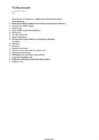
1. Majanduskriis
2. Rahulolematus tsaariga (nik 2)
3. Sõjatüdimus
4. Maapuudus
Veebruaruirevolutsioon 1917
1. Inim ja kodanikuõigused
2. Ajutine valitsus
3. Asutava kogu valimised
Kadetid
Nõukogud (bolsevikud, esseerid)
Oktoobrirevolutsioon
Date 23 October[1] - 8 November 1917
Final transfer of power happens on 7 November 1917, and finally declared by 2nd All-Russian Congress of
Soviets on November 8
Location Petrograd, Russia
Result Bolshevik victory
· Creation of Russian Soviet Republic
· End of Russian Provisional Government, Russian Republic anddual power
· Start of the Russian Civil War
Pasted from
Fadeyev served as a secretary of the Soviet Writers' Union and was the general secretary of the union's administrative board from 1946 to 1954. He was awarded two Orders of Lenin and various medals. His novel The Rout deals with the partisan struggle in Russia's Far East during the Russian Revolution and Civil War. Fadeyev described the theme of this novel as one of a revolution significantly transforming the masses. The novel's protagonist Levinson is a Bolshevik revolutionary who has a high level of political consciousness. The novel The Young Guard, which received the State Prize of the USSR in 1946, focuses on an underground Komsomol group in Krasnodon, Ukraine and their struggle against the fascist occupation. The first years of the Soviet regime were marked by the proliferation of avant-garde literature groups. One of the most important was the Oberiu movement that included the most famous
the Russian Provisional Government and seized power in Estonia. In spite of severe obstacles the Estonian Land Council assembled and declared itself the highest authority in the country until new legal state institutions could be elected. Estonian political leaders, working “underground”, proclaimed independence on February 24th, 1918 and formed the Estonian Provisional Government. Nevertheless, as a result of the First World War Estonia fell victim to first the Bolshevik and in the spring of 1918, German occupation. As soon as the Germans left, due to the end of the war and because of the internal crisis at home, the Russian Red Army invaded. The Estonian War of Independence had begun. Though with severely limited resources, the active measures taken by the commander-in chief Johan Laidoner (1884- 1953) improved the situation. The most effective help was given by Finland by sending 3,500 volunteers
other nations. Though attached to the foreign directorate of the secret police, it was actually responsible to the Central Committee of the Russian Communist party, the Soviet .. Union's real ruling body, whose chairman was first Lenin and then Stalin. In 1938, it appears to have been renamed and reorganized into the 5th Directorate of what was then the N.K.V.D. Up until that time, and beginning, apparently, around 1927, its chief was Gleb I. Boki, an old Bolshevik and friend of Lenin, who, at the same time, sat on the Supreme Court of the Soviet Union! Born in 1879, he had taken part in prerevolutionary activities and had gained the Communist badge of honor by being arrested many times and winning a three-year sentence in Siberia. At the time of the Revolution, he was secretary of the Bolshevik cell in the capital, St. Petersburg. In the early 1920's, he headed the Cheka in Turkestan, where he so terrorized the
 annaabi.ee