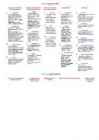
active ("Who Function suggest strong emotions. proceeded by can stop me?") predicate 3. CHIASMUS 3. 3. ANAPHORA "go I must"; - reserve parallelism word order of second NOMINATIVE (*... *... *...) repetition of sent-e is inverted compared to first one. 2. EXCLAM
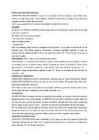
passage.In this way the repeated unit is emphasised. NT: the street, so soft and sunny. Here he comes. She smiles and stretches out her hands. ANADIPLOSIS ANADIPLOSIS means repeating a word or phrase at the end of the clause or sentence and at the beginning of the next one. NT: Such was life. Life without hope. NT: Three fishers went sailing out in the West. Out in the West, as the sun went down. ANAPHORA ANAPHORA means repeating a world, phrase or sentence at the beginning of several clauses or sentences in succession (happening one after another). NT: Heroes come and go. Heroes eat and drink. Heroes kiss women and enjoy their lives. NT: Supposing he comes; supposing the darkness lits; supposing it is possible. EPIPHORA EPIPHORA means repeating a word, phase or sentence at the end of clause, sentence or passages. NT: She likes the bottle. She is found of the bottle. She will never give up the bottle
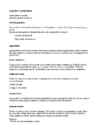
the same syntactical relation to the rest of a sentence (as the poet and Burns in “a biography of the poet Burns”) back-reference In grammatical analysis, the term reference is often used to state a relationship of identity which exists between grammatical units, e.g. a pronoun 'refers' to a noun or noun phrase. When the reference is to an earlier part of the discourse, it may be called a 'back-reference' (or anaphora); collective noun Collective noun is the name we give to a group of nouns to refer to them as one entity. A crew of sailors. A flock of birds. A range of mountains. conjunction any member of a small class of words distinguished in manylanguages by their function as connecto rs between words, phrases,clauses, or sentences, as and, because, but, however. content words Content words are words that have meaning. They can be compared to grammatical words, which are structural
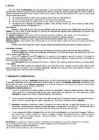
Function is to make the repeated part stronger, to emphasize it (e.g. "The street (word), so soft and sunny, the street (word)."). 2. Anadiplosis (catch repetition) is repeating a word or a phrase at the end of a clause, or sentence, and at the beginning of the following one (e.g. "Such was his life life without hope."). 3. Anaphora repetition of a word or phrase at the beginning of several clauses or sentences in succession (e.g. "Supposing she does come, supposing the darkness lift, supposing"). Anaphora involves notional parts of speech - usually nouns, adjectives, or verbs are repeated. 4. Epiphora repetition of a word or phrase at the end (e.g. "She is mad, unhappy and mad, cheerful and mad."). 5
Consonant Polysyndeton Ottava rima Compound Inversion Sonnet: Eye-rhyme Detachment Italian Internal Antithesis Shakespearean Head r. Chiasmus Blank verse Couplet r. Anaphora Limerick Cross r. Epiphora Accented verse Frame r. Climax Monometer Lexical SD Anticlimax Dimeter Metaphor: Suspense Trimeter Trite Rhetorical q. Pentameter Genuine Exclamation Hexameter
To introduce an effect of some cause. 2) SSD-s based on the redundancy of elements of speech Here belong different kinds of repetition. Framing--repeating the same word, phrase or sentence at the beginning and at the end of a sentence or a paragraph. Function is to stress. (The street, so soft and sunny, the street) Anadiplosis--catch repetition--repeating the same w or a phrase at the end of a sentence or at the beginning of the next one. (Such was her life--life without hope.) Anaphora--repeating aw or a phrase at the beginning of several clauses, sentences or paragraphs in succession (Heroes come and go. Heroes eat and drink. Heroes kiss women and enjoy life) Epiphora--repetition at the end of clauses, sentences, paragraphs. Tautology--it is produced by us not thinking. It is redundancy in words which is objectionable in literary speech. · Grammatical tautology--having double subject, predicate or both (Mary, she slept all time) Creates a colloquial touch.
Philosophy of Language Philosophy of Language: a Contemporary Introduction introduces the student to the main issues and theories in twentieth and twenty-first-century phi- losophy of language, focusing specifically on linguistic phenomena. Topics are structured in four parts in the book. Part I, Reference and Referring, includes topics such as Russell's Theory of Descriptions, Donnellan's distinction, problems of anaphora, the description theory of proper names, Searle's cluster theory, and the causalhistorical theory. Part II, Theories of Meaning, surveys the competing theories of linguistic mean- ing and compares their various advantages and liabilities. Part III, Pragmatics and Speech Acts, introduces the basic concepts of linguistic pragmatics, includes a detailed discussion of the problem of indirect force and surveys approaches to metaphor. Part IV, new to this edition, examines the four
 annaabi.ee