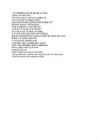
1 It is preferable to do sth late than not at all 1 Better late than never 2 the final victory is the most complete one 2 he who laughs last laughs longest 3 you cannot achieve anything without taking risks 3nothing ventured, nothing gained 4what is attractive is very subjective 4 beauty is in the eye of the beholder 5 too much work can make you boring 5 all work and no play makes jack a dull boy 6 there is always basis for rumous no matter how untrue they seem 6There's no smoke without fire 7 everybody has different tastes 7 one man's meat is another man's poison 8 don't only think about people's appearance 8 never judge a book by its cover 9 spread your risks 9 don't pull all your eggs in one basket 10 if you don't see someone for a long time you love them more 10 absence makes the heart grow fonder
Futhermore, newspaper`s journalists should focus on facts and checked information, not on gossips, that people are available to rely on newspaper`s articles. On the other hand, magazines are more focused on social news of famous people`s lifes. In general, magazines offer information about famous people’s personalaties and private lifes, because the magazine’s goal is entertain readers and nowaday people are fond of famous people life details, despite embarrassing or untrue things. Besides, magazines help famous people support their popularity and in some way develope their careers, giving other people free information about their private lifes. Gossips increase people`s interest and products, which are produced or broadcasted with famous people will be more common ,than others things. In conclusion, based on the arguments listed above is clear that more appropriative role for featuring private life of famous people is for magazines,
Dumbledore invited Harry to his office and asked to explain what he saw in the graveyard to him and to Sirius Fudge gave Harry the t prize money and left sullenly. In the dinner dumbledore said in his speech that Cedric was killed by Lord Voldemort and warned everyone not to join with him. On the train, Hermione showed to Harry and Ron a strange bugin the jar .who was actually Rita Skeeter. It was very good lesson for him about what he had done all the untrue articles about Harry`s and his friends . Leaving the train, Harry gave his gold to the Weasley twins to help the, start their practical joke company. Book ended when Harry returned to the Dursleys for the summer.
The if-clause usually comes first, but it can come after the main clause. If I hear any news, I’ll phone you. / I’ll phone you if I hear any news. The Zero Conditional expresses conditions that are always true and have automatic or habitual results: If you heat ice, it melts. The Present Simple is used in both clauses. 2 B. Unreal Conditionals Unreal Conditionals refer to situations that are untrue or imagined, have not happened or are only remotely likely to happen. The Second Conditional expresses a hypothetical condition and its probable result: If I had time, I would help you. (=but I don’t have time, so I cannot do it) In the if-clause we use the Past Simple, in the main clause would + the verb. We can also use the Past Continuous in the if-clause and could or might in the main clause: If Jim was playing his guitar, we could not enjoy the silence.
impression that all that the past European forefathers have passed on all their acquired traits to the younger generations following them. The reasoning powers of the great philosophers, the valour of Crusading knights should have been endowed in all rather than a meagre few. According to this theory of evolution descendants could one day attain the heights Europeans had already scaled. The Lamarckian evolution had only one crucial defect, it was entirely untrue. One could cut off a rat's tail, but its offspring would have normal tails. The rules of genetics were not known in Lamarck's day, and were not known until long after Darwin's, when the pioneering work of Mendel was rediscovered at the turn of the twentieth century. But animal breeders had long since discovered certain principles of breeding for desired characteristics, and acquired characteristics played no part in this process. Only through proper training could one find out if
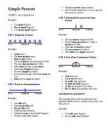
Windows are not made of wood. Simple Present · · New York is a small city. It is not important that this fact is untrue. [VERB] + s/es in third person USE 3 Scheduled Events in the Near Examples: Future · You speak English. · Do you speak English? · You do not speak English. USE 1 Repeated Actions Examples: · The train leaves tonight at 6 PM.
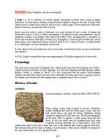
order when the sheet was folded, and the folded edges trimmed. Types of books Types of books according to their contents A common separation by content are fiction and non-fictional books. By no means are books limited to this classification, but it is a separation that can be found in most collections, libraries, and bookstores. Fiction Many of the books published today are fictitious stories. They are in-part or completely untrue or fantasy. Historically, paper production was considered too expensive to be used for entertainment. An increase in global literacy and print technology led to the increased publication of books for the purpose of entertainment, and allegorical social commentary. Most fiction is additionally categorized by genre. The novel is the most common form of fictional book. Novels are stories that typically feature a plot, setting, themes and characters
We could go out later. ___________________________________________________________________ · imagining situations - would = to talk about a situation which we are imagining (=thinking about) but which is not really happening A holiday in the Bahamas would be nice. Yes it would. ___________________________________________________________________ · certainty - will, must, can't = to say that something is logically certain This story can't be true. (It is certainly untrue.) He left half an hour ago, so he'll be home by now. No one is answering the phone. They must be out. __________________________________________________________________ Past tense · Modal verbs + have + -ed form to talk about necessity, obligation etc. in the past. Peter and Susan didn't come. They ought to have told/should have told us. (=They had an obligation to tell us, but they didn't tell us.) Translate
that act as roadblocks to the realization of everything that is truly possible for you. The most harmful beliefs you can have are your self-limiting be- liefs. These are beliefs about yourself and your potential that hold you back. Most of them are not true. Most of them are the result of information you have accepted without question, often from early childhood. Even if it is completely untrue, if you believe yourself to be limited in areas such as achieving wonderful health and happi- ness and earning a lot of money, that will become your truth. As the author Richard Bach in his book Illusions wrote, “Argue for your limitations and sure enough, they’re yours.” ccc_tracy_fm_i-xviii.qxd 7/7/03 3:23 PM Page xvii Introduction ➤ xvii
In many films a wom an's change of costume or hairstyle indicates that her identity is shifting and her loyalty is in doubt. T h i s archetype may also be expressed through changes in behavior or speech, such as assuming different accents or telling a succession of lies. In the thriller Arabesque, Shapeshifter Sophia Loren tells unwilling hero Gregory Peck a bewildering series of stories about her background, all of which turn out be untrue. M a n y heroes have to deal with Shapeshifters, male and female, who assume disguises and tell lies to confuse them. A famous Shapeshifter from The Odyssey is the sea god Proteus, "the O l d M a n of the Sea." Menelaus, one of the heroes returning from the Trojan War, traps Pro teus to force information out of him. Proteus changes into a lion, a snake, a panther, a boar, running water, and a tree in his attempt to escape. But Menelaus and his men
(The speaker-referent is the object that the utterer means to be talking about.) Fortunately, communication goes by speaker-meaning and speaker-refer- ence: if I (speaker-)mean Jones when I say "Smith's murderer" and you take me to mean Jones and understand me to have said that Jones is insane, then you have understood me correctly and communication has succeeded; it does not matter that the sentence I uttered was according to its literal meaning untrue, any more than it matters that "Albert's an elegant fellow" is literally false. 26 Reference and referring Thus, according to Kripke, Donnellan has failed to show that a sentence containing a definite description can be true even if nothing (or something extraneous) is the description's semantic referent. Even if Kripke is right about the near-miss examples, it is important to hold on to some version of Donnellan's distinction. The distinction is amply
mixture of good and bad. There were three interesting findings. First, the evalua- tor who provided only praise was liked best by the men. Second, this tendency held true even when the men fully realized that the flatterer stood to gain from their lik- ing him. Finally, unlike the other types of comments, pure praise did not have to be accurate to work. Positive comments produced just as much liking for the flat- terer when they were untrue as when they were true (Drachman, deCarufel, &. Insko, 1978). Apparently we have such an automatically positive reaction to compliments that we can fall victim to someone who uses them in an obvious attempt to win our favor. Click, whirr. Wh en seen in this light, the expense of printing and mail- ing well over 150,000 "I like you" cards each year seems neither as foolish nor as costly as before. Contact and Cooperation
 annaabi.ee