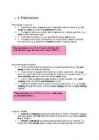
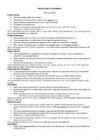
E.g. Her feet were swollen because she had been walking all morning. The Past Perfect Continuous. E.g. I'm tired. I've been gardening all afternoon. I was tired. I had been gardening all afternoon. Time expressions used with Past Perfect Continuous: for, since Present Perfect is used for: Recently completed actions. E.g. My father has finished painting the house. Complete past actions connected to the present with stated or unstated time reference. E.g. I have worked all day and I'm tired. Personal experiences or changes, which have happened. E.g. Sally has gained some weight recently. Present Perfect Continuous is used for: Actions in the pas and continuing up to the present. E.g. I have been studying for the Math's test for three hours. Past actions of certain duration having visible results or effects in the present. E.g. She has been lying in the sun and now she has sunburn.
.) · Fixed arrangements in the near future (I'm going to the dentist tomorrow) · Currently changing ang developing situations (The number of burgularies is increasing) · With ,,Always" to express anger or irritation at a repeated action (You're always forgetting..) TIME EXPRESSIONS USED WITH PRESENT CONTINUOUS: now, at the moment, at present, these days, nowadays, still, today, tonight etc. Present Perfect · Action happened at an unstated time in the past. Emphasis on the action, time is unimportant or unknown. (I have washed the car) · Action started in the past and continues up to the present, especially with stative verbs (I have known her for six years) · Recently completed action (I have finished my essay) TIME EXPRESSIONS USED WITH PRESENT PERFECT: for, since, already, always, just, ever, never, so far, today, this week/month etc. lately, recently, still (in negations) etc.
Confirmation gives only probable truth. Confirmation (The piece does not fit) What is disconfirmation? We predict observations (O) that are consequent to a hypothesis (H). If the predictions turn out to be incorrect, they disconfirm the hypothesis. If H, then O Not O Therefore, Not H. Problem: This is a simplified account: disconfirmation is not necessarily falsification. Tests involve Auxiliary hypotheses (A1, A2, …, An) that are generally unstated. If H and A1 and A2, ...and An, then O Not O Therefore, Not H or not A1, or not A2… or not An. When prediction fails, the hypothesis might still be saved. It is not clear when the hypothesis has to be necessarily rejected. The Eddington 1919 Experiment Mill’s Inductive Methods John Stuart Mill introduced 4 inductive methods to discover casual laws. Each has its limitations but they are still valuable for hypothesis-formation.
 annaabi.ee