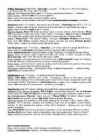
William Shakespeare (1564-1616) playwright, actor, poet 37 plays, over 400 screen adaptions Lord Chamberlain's Men, King's Men, The Globe Early life: John Shakespeare, Mary Arden, 2 sis', 3 bros; married Anne Hathaway 3 children Life in London: 1599 built Globe, 1623 first compilation Forms: classical & history plays, comedies+tragedies, poetry Style: metaphors, rhetorical phrases, free flow of words, unrhymed iambic pentameter; deviations Renaissance (end of 14th century) Italy, reaches rest of Europe Elizabethan era (16th II h - 17th I h) Theatre: combined medieval theatre, morality plays & Roman drama to create Elizabethan tragedy Poetry: Italian influences, sonnet (English: cddc ee) Rulers of England: Henry VII (brings prosperity, repairs economic situation; made alliances); Henry VIII (beginning of English reformation; killed "traitors"; 6 marriages); Mary I (Catholic); Elizabeth I
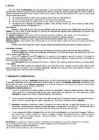
4. Ottava rima is a stanza of 8 iambic pentametres (5 feet), rhyming: a b a b a b c c. It is borrowed from the Italian poetry in the 16th century. 5. Rhyme Royal is a stanza of 7 iambic pentametres (5 feet), rhyming: a b a b b c c. The name comes from the use of this stanza by the king James I of Scotland. 6. Terza rima a verse written in triplets, lines being iambic pentametres (5 feet), rhyming: aba bcb cdc, etc. ending with a couplet to avoid 1 word unrhymed. 7. Sonnet is a poem that originated in Italy and was adopted in England in the 16 th century. There are 2 types of English sonnets Petrarchan (Italian) and Shakespearean (English). Both contain 14 iambic pentameters. The difference between the 2 is mainly a matter of rhyme. 8. Limerick is a funny poem of nonsense comprising 5 anapaestic lines, rhyming: a a b b a; with the 3rd and 4th lines shorter than the other 3. 16. RHYTHM IN POETRY AND IN PROSE
It is borrowed from the Italian poetry in the 16th century. 5. Rhyme Royal is a stanza of 7 iambic pentametres (5 feet), rhyming: a b a b b c c. The name comes from the use of this stanza by the king James I of Scotland. 6. Terza rima a verse written in triplets, lines being iambic pentametres (5 feet), rhyming: aba bcb cdc, etc. ending with a couplet to avoid 1 word unrhymed. 7. Sonnet is a poem that originated in Italy and was adopted in England in the 16 th century. There are 2 types of English sonnets Petrarchan (Italian) and Shakespearean (English). Both contain 14 iambic pentameters. The difference between the 2 is mainly a matter of rhyme. 8. Limerick is a funny poem of nonsense comprising 5 anapaestic lines, rhyming: a a b b a; with the 3rd and 4th lines shorter than the other 3.
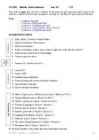
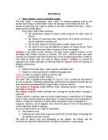
E. Spenser used in his "the Faerie Queen" · Ottava rima is a stanza of 8 iambic pentameters rhyming a b a b a b c c. It is borrowed from Italian poetry in the 16th century. · Rhyme Royal is a stanza of seven iambic pentameters rhyming a b a b b c c. James U of Scotland used it in his "King's Quair" · Terza rima is a verse written in triplets, lines being iambic pentameters with the rhyme scheme a b a b c b c d c and so on ending with a couplet to avoid one word unrhymed (Shelley's "Ode to the West Wind" · Sonnet is a poem that originated in Italy and was adopted in England in the 16 th century. There are 2 types of English sonnets--Petrarchan (Italian) and Shakespearean (English). Both contain fourteen iambic pentameters. The difference is in the rhyme. 1. Italian sonnet falls into the octave (a b b a a b b a) and the sestette (2 or 3 rhymes, their order is various- c d e d e c, c d c d c d, c c d e e d, etc. 2
 annaabi.ee