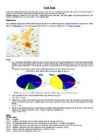
fog. SO2 and NOx come mainly from power stations and factories burning fossil fuels, or from motor vehicles. · Carbon dioxide in the air can dissolve in rain water to form carbonic acid, H 2CO3 CO2 + H2O H2CO3 · During the last century the rain water in some parts of the world has become far more acidic. This acid rain has been caused by the emission of pollutants gasses such as sulfuric dioxide, when goal is burned in electric power stations, sulfur impurities form sulfur dioxide S + O2 SO2 · The gas is also produced when fuels obtained crude oil are burned. When sulfur dioxide is released into the air it reacts with water and oxygen to form sulfuric acid, which is strong it ionizes completely to hydrogen ions. H2SO4 2H + SO4-2 Effects pH range Effect 6.59 No effect 6.06
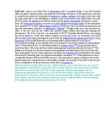
Acid rain is rain or any other form of precipitation that is unusually acidic. It can have harmful effects on plants, aquatic animals, and infrastructure through the process of wet deposition. Acid rain is caused by emissions of compounds of ammonium, carbon, nitrogen, and sulfur which react with the water molecules in the atmosphere to produce acids. Governments have made efforts since the 1970s to reduce the production of sulfuric oxides into the Earth's atmosphere with positive results Since the Industrial Revolution, emissions of sulfur dioxide and nitrogen oxides to the atmosphere have increased.[2][3] In 1852, Robert Angus Smith was the first to show the relationship between acid rain and atmospheric pollution in Manchester, England.[4] Though acidic rain was discovered in 1852, it was not until the late 1960s that scientists began widely observing and studying the phenomenon
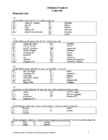
(CrO4)-2 chromate (SiF6)-2 hexafluorosilicate (Cr2O7)-2 dichromate (C4H4O6)-2 tartrate (C2O4)-2 oxalate (HPO4)-2 hydrogen phosphate -3 (PO4)-3 phosphate (AsO4)-3 arsenate (PO3)-3 phosphite ACIDS (aq) H2SO4 sulfuric HNO3 nitric H2SO3 sulfurous HNO2 nitrous H2CO3 carbonic HC2H3O2 acetic H3PO4 phosphoric H3BO3 boric H3PO3 phosphorous H2C2O4 oxalic HClO4 perchloric HCl hydrochloric
It is also important to note that the pH scale is logarithmic and each whole number on the scale represents a 10-fold change. Causes and History of Acid Rain Acid deposition can occur via natural sources like volcanoes and rotting vegetation but it is mainly caused by the release of sulfur dioxide and nitrogen oxide during fossil fuel combustion. When these gases are discharged into the atmosphere they react with the water, oxygen, and other gases already present there to form sulfuric acid, ammonium nitrate, and nitric acid. These acids then disperse over large areas because of wind patterns and fall back to the ground as acid rain or other forms of precipitation. The gases responsible for acid deposition are normally a byproduct of electric power generation and the burning of coal. As such, it began entering the atmosphere in large amounts during the Industrial Revolution and was first discovered by a Scottish chemist, Robert Angus Smith, in 1852
· Little Pollution As demand for electricity soars, the pollution produced from fossil fuel- burning plants is heading towards dangerous levels. Coal, gas and oil burning power plants are already responsible for half of America's air pollution. Burning coal produces carbon dioxide, which depletes the protection of the ozone. The soft coal, which many power plants burn, contains sulfur When the gaseous byproducts are absorbed in clouds, precipitation becomes sulfuric acid.. Coal also contains radioactive material. A coal-fired power plant emits more radiation into the air than a nuclear power plant. The world's reserves of fossil fuels are running out. The sulfurous coal which many plants use is more polluting than the coal that was previously used. Most of the anthracite, which plants also burn, has been used up. As more soft coal is used, the amount of pollution will increase
Kerosene 205 to 260 Fuel oil 205 to 290 Diesel fuel 260 to 315 Other derivatives Certain types of resultant hydrocarbons may be mixed with other non-hydrocarbons, to create other end products: Alkenes (olefins) which can be manufactured into plastics or other compounds Lubricants (produces light machine oils, motor oils, and greases, adding viscosity stabilizers as required). Wax, used in the packaging of frozen foods, among others. Sulfur or Sulfuric acid. These are a useful industrial materials. Sulfuric acid is usually prepared as the acid precursor oleum, a byproduct of sulfur removal from fuels. Bulk tar. Asphalt Petroleum coke, used in speciality carbon products or as solid fuel. Paraffin wax Aromatic petrochemicals to be used as precursors in other chemical production. Agriculture Since the 1940s, agricultural productivity has increased dramatically, due largely to the
 annaabi.ee