(Repubblica Italiana in Italian), is a country in Europe. Italy is situated on a boat-shaped apennine peninsula 800 km in the Mediterranean. In the north form the natural boundary of the Alps. Italy includes Sicily, Sardinia and a number of smaller islands. Rome, a settlement around a ford on the river Ancient Rome Tiber conventionally founded in 753 BC, was ruled for a period of 244 years by a monarchical system, initially with sovereigns of Latin and Sabine origin, later by Etruscan kings. The tradition handed down seven kings: Romulus, Numa Pompilius, Tullus Hostilius, Ancus Marcius, Tarquinius Priscus, Servius Tullius and Tarquinius Superbus. In 509 BC, the Romans expelled the last king from their city and established an oligarchic republic. Rome (italy, lat. Roma) is the capital of Italy and
At the end of the tour send the worksheet to yourself so that you could use it again. Good luck with exploring the city! DAY 1. The route: The Buckingham Palace – Trafalgar Square – National Gallery – Piccadilly Circus – The British Museum – Madame Tussauds – Oxford Street – Hyde Park – Harrods Destination 1: The Buckingham Palace What is its function? - Buckingham Palace has served as the official London residence of Britain's sovereigns since 1837 and today is the administrative headquarters of the Monarch. When was it built? 1703 Who was the first monarch to live there? Queen Victoria Is it open to public? Yes Go to the official website of the British monarchy http://www.royal.gov.uk/TheRoyalResidences/BuckinghamPalace/Buckin ghamPalace.aspx and take a virtual tour of The Grand Staircase and The Blue Drawing Room. Whose memorial is immediately in front of the gates of the palace
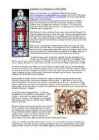
Around 1045-1065, Edward the Confessor built a church for the Benedictine monks in the Norman form of Romanesque. He intended it to be his burial place. The Westminster Abbey is located near the Houses of Parliament. It is more a historical site than a religious site. Since 1066, every royal coronation, with the exception of Edward V and Eward VIII has taken place in Westminster Abbey. The abbey also serves as the burial ground for numerous politicians, sovereigns and artists. It is also a final resting place of seventeen monarchs.The abbey is stuffed with graves, statues and monuments. Many coffins even stand upright due to the lack of space. In total approximately 3300 people are buried in the Church and cloisters. Some of the most famous are Charles Darwin, Sir Isaac Newton and David Livingstone. The history of the abbey starts in 1050, when King Edward The Confessor decided to build an abbey. Only a small part of this original Norman
William the Conqueror. A fire in 1834 left all but the Westminster Hall in ruins. The present Neo-Gothic structure was built between 1840 and 1860. It is the home of the British parliament. 32. Westminster Abbey. Westminster Abbey has been the site of royal coronations since 1066 – when William the Conqueror was crowned the King of England there on Christmas Day – and the final resting place for sovereigns and respected politicians, poets and artists since the 13th century. Around 3,300 people are believed to be buried there, including Charles Dickens, Charles Darwin, George Frederick Handel and others. 33. Gunpowder Plot. On 5 November 1605, a group of Catholics planned to blow up the Houses of the Parliament while the king was in there. Before they could achieve this, one of them, Guy Fawkes, was caught in the cellars under Parliament with the gunpowder. He
rebellion of the Streltsy (Russia's elite military corps) in AprilMay 1682. In the subsequent conflict some of Peter's relatives and friends were murdered, including Matveev, and Peter witnessed some of these acts of political violence. The Streltsy made it possible for Sophia, the Miloslavskys (the clan of Ivan) and their allies to insist that Peter and Ivan be proclaimed joint Tsars, with Ivan being acclaimed as the senior. Sophia acted as regent during the minority of the sovereigns and exercised all power. For seven years, she ruled as an autocrat. A large hole was cut in the back of the dual-seated throne used by Ivan and Peter. Sophia would sit behind the throne and listen as Peter conversed with nobles, while feeding him information and giving him responses to questions and problems. This throne can be seen in the Kremlin Armoury in Moscow. Peter was not particularly concerned that others ruled in his name. He engaged in such
 annaabi.ee