Our school Põltsamaa Co-education Gymnasium was founded on 17. December of 1917. Põltsamaa Co-education Gymnasium celebrate school anniversary festively every year. That schoolhouse, where we study now, was built on 1967 and it was renovated on 2009. Head of school is Aimar Arula. There are studying 841 students in 37 classes. We have 4 terms September 1. until October 24., November 2. until December 24., January 11. until March 20. and March 29. until June 5. We get reports every end of the terms. We don't have school uniform, we're allowed to wear, what we want. School lunches are 20 minutes long. Food isn't and don't taste very well.
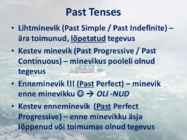
This summer they WERE not GROWing cucumbers as usual. They WERE GROWing tomatoes instead. • “WHILE” – “sel ajal kui” The guests ARRIVED while we WERE still COOKing the meal. • BE (was/were) + 1pv-ing Created by Aari Juhanson, MA 2009 Past Perfect • Toimunud tegevus, enne teist mineviku tegevust: I had WORKed there for 3 years until they finally PROMOTED me. The classes had already STARTED by the time Arno ARRIVED at the schoolhouse with his father. Garfield had EATEN all pizzas by the time we REACHED home. • had + -ed/3 pv • ‘d = had / would • ‘d better had better Created by Aari Juhanson, MA 2009 Past Perfect Progressive • Minevikus (enne teist tegevust) toimunud/toimuva tegevuse protsessi või kestvuse rõhutamine: They had been WATCHing TV since morning (and he was going slightly mad). • Äsja lõppenud tegevuse (tagajärjed nähtavad) kirjeldus minevikus:
Outdoor education enables students to comprehend the ideas and solutions before they get acquainted with the scientific or technical terms. Some studies declare that students have specific learning styles and on the basis of that we can say that outdoor learning is suitable for everyone, because it includes hearing, seeing, touching, feeling etc. For example, learning about history, children will remember the details much more likely, when they are presented in an authentic environment (old schoolhouse, museums, battle fields). Outdoor education makes it possible for the students to have hands- on lessons, which gives them personal experiences, opinions and understanding that they will most likely to remember. Outdoor education creates meaningful learning experiences when teachers help children to move beyond simple observations to more complex activities that require higher-level thinking and collaboration with peers.
This summer they WERE not GROWing cucumbers as usual. They WERE GROWing tomatoes instead. · "WHILE" "sel ajal kui" The guests ARRIVED while we WERE still COOKing the meal. · BE (was/were) + 1pv-ing Aari Juhanson, MA 2008 Past Perfect OLI -NUD · Toimunud tegevus, enne teist mineviku tegevust: I had WORKed there for 3 years until they finally PROMOTED me. The classes had already STARTED by the time Arno ARRIVED at the schoolhouse with his father. Garfield had EATEN all pizzas by the time we REACHED home. · had + -ed/3 pv · `d = had / would · `d better Æ had better Aari Juhanson, MA 2008 Past Perfect Progressive · Mineviku lõpetamata tegevuse protsessi või kestvuse rõhutamine: They had been WATCHing TV since morning (and he was going slightly mad). · Äsja lõppenud tegevuse (tagajärjed nähtavad) kirjeldus minevikus: It had not been RAINing for weeks, everything
_____ the picture (54) _____ the River Thames. According (55) _____ tradition, tourists who toss coins to the fountain will one day return to visit the city. Always look (56) _____ truth no matter where it takes you. In Finland it's common to start summer holidays (57) _____ Midsummer day. The Arctic is sometimes called the "land (58) _____ the midnight sun". Attention! Tomorrow's astronomy lesson is taking place (59) _____ 2 am (60) _____ front of the schoolhouse. Don't be late or you'll miss the most beautiful stars. Artists are the few lucky people who can enjoy working (61) _____ home. (62) _____ the High Middle Ages towns and universities developed and writers produced great literature. 200 years ago people rubbed themselves with perfumed oil instead (63) _____ using soap. Ta s k 3 (3.5 points) Write questions to which the words in bold are the answers. An example (0) has been done for you. (0) When did you feed the dog? I fed the dog an hour a go.
escape with one goose in hand. Kat kills it quickly, and they retreat to an unused lean-to to cook it, eating quickly for fear of their theft being discovered. They keep the feathers to make pillows. Paul feels an intimate closeness with Kat as they roast the goose. They eat their fill and take the rest to Tjaden and Kropp. Summary The Second Company returns to the front two days early. On their way, they pass a schoolhouse that has been shattered by shells. Fresh coffins are piled by the dozens already lying next to the schoolhouse. The soldiers make jokes to distance themselves from the unpleasant knowledge that the coffins have been made for them. At the front, they listen to the enemy transports and guns. They detect that the enemy is bringing troops to the front, and they can hear that the English have strengthened their artillery. The men are disheartened by
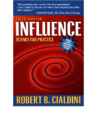
be impossible. At the opposite end, the alternative is anarchy, a state hardly known for its beneficial effects on cultural groups and one that the social philosopher Thomas Hobbes assures us would render life "solitary, poor, nasty, brutish, and short." Consequently, we are trained from birth to believe that obedience to proper authority is right and disobedience is wrong. This message fills the parental lessons, the schoolhouse rhymes, stories, and songs of our childhood and is carried forward in the legal, military, and political systems we encounter as adults. Notions of sub- mission and loyalty to legitimate rule are accorded much value in each. Religious instruction contributes as well. The very first book of the Bible, for example, describes how failure to obey the ultimate authority resulted in the loss of paradise for Adam, Eve, and the rest of the human race. Should that particular
 annaabi.ee