What can you eliminate and/or incorporate? Are you redundant? Are you too brief? Does this essay paint an accurate picture of YOU? 3. SPELL CHECK SPELL CHECK SPELL CHECK 4. Have someone else read your essay. Is it you? What do they think? 5. Do you like what it says about you? Reread it one last time and SPELL CHECK it again! REMEMBER: The idea of the essay is for you to communicate to the reviewers your needs, accomplishments, goals, etc. The reviewers should read your essay and feel as if they know you personally. Keep your essay conversational! 4
synthesize your important personal characteristics and experiences in a coherent whole while simultaneously addressing your desire to attend that particular college Selecting the Essay Topic The key to a strong essay is a good topic. When selecting a topic, you should keep in mind to choose a topic that allows you to demonstrate your skills and individuality, a topic that answers the essay question while telling the reviewers what they really want to know. To begin with, you should first read the essay question carefully and try to understand what the reviewers want to know, keep in mind that essay questions are designed to let the reviewers judge why you should be admitted to that particular college. There are several different kinds of essay questions. Some of the most common types of essay questions and the purposes behind them are given below: Key Influence Questions:
Q Quirkiness veidrus, imelik komme R Rational mõistuspärane Rationalize ratsionaliseerima Raw energy toores energia Raw ingredients toored koostisosad Recalibrated mitte kalibreerima Refer nimetama, viitama Reject tagasi lükkama Relentless järelejätmatu Relevant oluline Research uuring Resource ressurss, vahend Retailers jaemüüjad Rewarded preemia Reviewers arvustajad, kriitikud Rough-hewn tahumatu Runaway hits hea tabamus S Satisfying rahuldav Scarcest vähene Scheming plaanitsev Scientifically teaduslikult Scotch soti viski Screwed tüssatud Scrutiny läbivaatamine Section osa Service-oriented teenindussuunitlusega Shift muutus Shipping kohaletoimetus Shortcuts otseteed Significant oluline
Byroni isa suri, kui ta oli kolme aastane. Lord Byron armastas loomi ja reisis koos nendega, sealhulgas koerad, kassid, ahvid, hobused ja kotkad. Lord Byronil oli ainult üks laps Augusta Ada Byron King, kes töötas matemaatikuna ja kes töötas varakute arvutitega. Üks tema sõpru kirjeldas Byroni "hulluks, halvaks ja ohtlikuks" Loomingud Hourse of Idleness oli Lord Byroni esimene luuletus, kui ta oli 19- aastane. English Bards and Scotch Reviewers see ilmus esmakordselt anonüümselt 1809. The Giaour Byron oli inpireeritud kirjutama poeemi oma Grand Touri ajal 1810 ja 1811. The Dream on luuletus kirjutatud Lord Byroni poolt 1816. Cain on draamatiline teos Lord Byroni poolt tehtud aastal 1821 Siim Mihkel Palits Percy Bysshe Shelley Shelley sündis väga jõukas Sussexi maa-aadli perekonnas. Ta sai hariduse Eton College'is ja Oxfordi Ülikooli University College'is..
· Morality · Health (opposed to smoky industrial urban scenes) · Natural and pure: children and animals Some authors: Wordsworth, Coleridge, Byron, Shelly, Keats, Burns, Southey, Cowper, and Thomson. Predecessors: Theocritus Greek pastoral poet, whose Idylls are set in Arcadia, Virgil, Horace, Spenser, Milton's The Garden of Eden from the Paradise Lost. Influences: 7. G.G. Byron major works: 1806 Hours of Idleness 1809 English Bards and Scotch Reviewers 1813-1818 Childe Harold's Pilgrimage a partly autobiographical narrative poem that describes the travels and reflections of a world-weary young man who, disillusioned with a life of pleasure and revelry, looks for distraction in foreign lands; in a wider sense, it is an expression of the melancholy and disillusionment felt by a generation weary of the wars of the post-Revolutionary and Napoleonic eras. 1813 The Giaour; The Bride of Abydos 1814 The Corsair; Lara 1815 Hebrew melodies
mitu autorit, siis erinevate autori- te parandused kuvatakse erineva värviga. Kõiki autoreid saab näha Kuva märgis- tus rippmenüüst Läbivaatajad (Reviewers) alt. Läbivaatajate nimekirjast saab valida kas vaadata kõikide autorite või konkreetse autori parandusi. Samuti on erinevate autorite kommentaarid erivärvilised. Kommentaari ees on lisaks autori nimele kasutaja init- siaalid koos kommenteerimise järjekorra numbriga. Kommentaare saab lisada nupuga Uus kommentaar (New Comment), kustutada ning navigeerida nuppudega Eelmine (Previous) ja Järgmine (Next).
" (171) and Stick to It" · · Ülepingutatud. ,,Overengineering." ,,Conclusions Not in Alignment. ... A publishable paper should have a strong concluding section that tell the reader what the findings mean." (172) · ,,Listen to Your Reviewers" (179) · Andmete tükeldus. ,,Cutting up the data." (173) · ,,Allow the Manuscript to Ripen Naturally" · ,,Dont Exaggerate" (180)
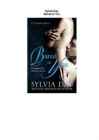
Her résumé includes a variety of odd jobs ranging from amusement park employee to Russian linguist/interrogator for U.S. Army Military Intelligence. She's presently a full-time writer. Sylvia's work has been called an "exhilarating adventure" by Publishers Weekly and "wickedly entertaining" by Booklist . Her stories have been translated into Russian, Japanese, Portuguese, German, Czech, Italian, and Thai. She's been honored with the Romantic Times Reviewers' Choice Award, the EPPIE award, the National Readers' Choice Award, the Readers' Crown, and multiple finalist nominations for Romance Writers of America's prestigious RITA® Award of Excellence. She's now hard at work on DEEPER IN YOU, the sequel to BARED TO YOU, but would love for you to visit with her on her website. Connect with Sylvia www.SylviaDay.com www.Facebook.com/AuthorSylviaDay www.Twitter.com/SylDay ***
Robert M. Brady, University of Arkansas; Brian M. Cohen, University of Texas at San Antonio; Christian B. Crandall, University of Florida; Catherine Goodwin, Uni- versity of Alaska; Robert G. Lowder, Bradley University; James W. Michael, Jr., Vir- ginia Polytechnic Institute and State University; Eugene P. Sheehan, University of Northern Colorado; Jefferson A. Singer, Connecticut College; and Sandi W. Smith, Michigan State University. Thanks to the following reviewers of this new edition: Amy M. Buddie, Kennesaw State University; Maria Czyzewska, Texas State Univer- sity; A. Celeste Farr, North Carolina State University; Arthur Frankel, Salve Regina University; and Brian Smith, Graceland University. Finally, throughout the project, no one was more on my side than Bobette Gor- den, who lived every word with me. I wish to thank the following individuals who-either directly or through their
 annaabi.ee