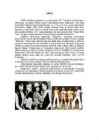
ABBA In 1964 Benny joined with 'Hep Stars' as keyboardist and suddenly he knew that this was what he wanted to do. Andersson met Björn Ulvaeus in June 1966, and the two started writing songs together. During the song writing he met Anni-Frid and around the same time Bjorn met Agnetha. Their first musical project was the Chess with vocals by Elaine Paige and Barbara Dickson. ABBA Princess Anni-Frid Reuss of Plauen (born Anni-Frid Lyngstad,1945) is a Swedish singer Anni-Frid was born in the north of Norway She showed musical talent at an early age. On Fridays, she was often asked by her teacher to sing in front of the class and soon became known in school and in the neighborhood for her beautiful voice At the age of 13, she got her first job as a dance band singer in 1958, with The Evald Eks Orchestra ABBA
bassisti Ragnar Fredrikssoniga. Abielust sündis 2 last, kuid paar lahutas 1960ndate lõpus. Aastal 1972 liitus Anni-Frid ABBA-ga ning oli bändi koosseisus kuni aastani 1982. Pärast ABBA-st lahkumist jätkas ta oma soolokarjääri. Aastal 1982 lahkus Anni-Frid ka Rootsist ja siirdus Londonisse. 1980ndate keskpaiku sõitis ta Sveitsi, kus elab praegugi. 26. augustil 1992 abiellus Anni-Frid oma kauaaegse boyfriendi vürst Heinrich Ruzzo Reuss von Plaueniga. Plauen suri aastal 1999 lümfoomi. Agnetha ja Björn abiellusid 1971. aasta juulis ja Frida ja Benny abiellusid 1978.aasta oktoobris. Muusika 1960. 1970. aastatel tekkis muusikastiil kantri-rock. Ansambel "The Eagles" oli kindlasti selle stiili kõige edukam esitaja. Just 1970. aastaid on sageli nimetatud rock-muusika seisakuajaks, sest tehti küll muusikat, mis hästi müüs, kuid uusi ideid sündis vähe. Siiski on iga aastakümme toonud rock-muusikasse midagi uut.
The most impressive were the 1969ft (600m) long Chaumont Viaduct (1857) and the 240ft (73m) high Sainte-Brieuc (Barentin) Viaduct (1860), both in France, and the Goltzschtal Viaduct in Germany, which used 26 million units of brick. The French engineer, Paul Séjourne, expressed the most elegant modern restatement of the principles of this most ancient material in his masterpiece bridges of stone, the 279ft (85m) span Pont Adolphe in Luxembourg (1903) and the bridge at Plauen, Germany (1905), which was the longest ever achieved in stone masonry, with a span of 295ft (90m). The beginning of concrete as a major material of bridge construction dates from 1865, when it was used in its mass, unreinforced form for a multiple-arch structure on the Grand Maître Aqueduct conveying water from the River Vanne 94 miles (151km) to Paris. Engineers in the late 19th century demonstrated the possibilities of reinforced concrete as a structural material. With concrete resisting
 annaabi.ee