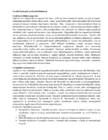
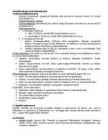
Jean-Louis Blouin Genetic variability of the -opioid receptor influences intrathecal fentanyl analgesia requirements in laboring women Pain. 2008 September 30; 139(1): 514. Opioidide kasutamisel (k.a intratekaalselt) analgeesia efektiivsus võib oluliselt varieeruda Põhjuseks on -opioidretseptori (OR, OPRM1) geneetilised variandid Kolesnikov Y., Gabovits B., Levin A., Voiko E., Veske A. Joint Catechol-O-Methyltransferase and µ-Opioid Receptor Gene Polymorphisms Affect Morphine Postoperative Analgesia and Central Side Effects Anesth. Analg. February 2011 ; Volume 112 ( 2 ); 448-453 Uuriti geneetilise polümorfismi esinemissagedust patsientidel ja selle seos postoperatiivse valuga, opiaatide vajadusega valuraviks ja kõrvaltoimetega Mutatsioonid puudusid: morfiini doos suurem, PONV rohkem Mõlemad mutatsioonid korraga: morfiini doos väiksem, PONV vähem
[edit]Capping Capping of the pre-mRNA involves the addition of 7-methylguanosine (m7G) to the 5' end. To achieve this, the terminal 5' phosphate requires removal, which is done with the aid of aphosphatase enzyme. The enzyme guanosyl transferase then catalyses the reaction, which produces the diphosphate 5' end. The diphosphate 5' prime end then attacks the gamma phosphorus atom of a GTP molecule in order to add the guanine residue in a 5'5' triphosphate link. The enzyme (guanine- N7-)-methyltransferase ("cap MTase") transfers a methyl group from S-adenosyl methionine to the guanine ring.[3] This type of cap, with just the (m7G) in position is called a cap 0 structure. The ribose of the adjacent nucleotidemay also be methylated to give a cap 1. Methylation of nucleotides downstream of the RNA molecule produce cap 2, cap 3 structures and so on. In these cases the methyl groups are added to the 2' OH groups of the ribose sugar. The cap protects the 5' end of the primary
[edit]Capping Capping of the pre-mRNA involves the addition of 7-methylguanosine (m7G) to the 5' end. To achieve this, the terminal 5' phosphate requires removal, which is done with the aid of aphosphatase enzyme. The enzyme guanosyl transferase then catalyses the reaction, which produces the diphosphate 5' end. The diphosphate 5' prime end then attacks the gamma phosphorus atom of a GTP molecule in order to add the guanine residue in a 5'5' triphosphate link. The enzyme (guanine- N7-)-methyltransferase ("cap MTase") transfers a methyl group from S-adenosyl methionine to the guanine ring.[3] This type of cap, with just the (m7G) in position is called a cap 0 structure. The ribose of the adjacent nucleotidemay also be methylated to give a cap 1. Methylation of nucleotides downstream of the RNA molecule produce cap 2, cap 3 structures and so on. In these cases the methyl groups are added to the 2' OH groups of the ribose sugar. The cap protects the 5' end of the primary
 annaabi.ee