Hamlet's View on Life and Death Hamlet has a everlasting dilemma " to be or not to be" he is dissatisfied with life and lists many things that trouble him but he is not sure what death will bring him. He is thinking that the experience of death itself maybe worse than life itself Hamlet is a melancholic, always thinking about the dark things in life (he always dresses in black, he's fascinated when he finds the old clown's skull, etc.) I think that Hamlet does not really value his life so much because he is so consumed with his desire to kill Claudius that he doesn't have time for real life. Hamlet's view of death influences his morality: if all people die, no matter what they do, then one's actual life becomes less significant than its purpose. In Hamlet's case,
Cullen family back story - hopefully their characters might be developed further in future books. Bella herself is a well written and realistic character, shy and lacking in confidence, her sarcastic inner voice narrates the story for the reader. Twilight is simply and yet beautifully written. The descriptions of Forks leave you feeling like you can almost smell the damp air and hear the rain falling on the roof. The romance between Edward and Bella is both touching and compelling. There is a melancholic feel to their impossible love, yet at the same time they both are unwilling to give up hope that their relationship is not doomed. The book reaches a fever pitch of excitement as the romance between Bella and Edward turns into a frantic race to stay alive. I have heard Twilight described as "a vampire story for people who don't like vampire stories" and I think I would agree with that. This book really has something for everyone
touched by all this, his heart filled with what might be nostalgia, thoughtfullness or just pure understanding of how simple life really is. Wanting to share the moment with his lover, he asks her to join him by the window and draws attention to the never-ending sound of the waves clashing against the shore and moving pebbles. Alas, this sound seems to bring forward a sudden realization of things in the author and everything seems sad and melancholic to him. In the second stanza, he compares his train of though with Sophokles's, who is also known to have sat on the beach while thinking about life. According to the author, Sophokles had come to the conclusion that life is miserable, and a grim thought now comes to the mind of the author, too. Now speaking more to himself rather than his lover, he begins to ponder on "the sea of faith" and how it once used to round the earth, with which he probably means that there
vesi (vedelus) maa (tugevus) õhk (külmus) inimese omadused ja kehamahlad: sanguis - veri soojus flegma - lima külmus chole - kollane sapp kuivus melas chole - must sapp niiskus · Galenos (129 -199 p.K) - temperament temperamentum (segu) - kehamahlade segu temperamendi tüübid: koleerik (ärritus) - choleric (kollane sapp) melanhoolik (masendus)- melancholic (must sapp) sangviinik (optimism) - sanguine - (veri) flegmaatik (rahu) - phlegmatic (lima) · William Herbert Sheldon (1898-1977) · Sheldon, William H. (1940) The varieties of human physique: An introduction to constitutional psychology. New York: Harper & Brothers · Sheldon, William H. (1942) The varieties of
vesi (vedelus) maa (tugevus) õhk (külmus) inimese omadused ja kehamahlad: sanguis - veri soojus flegma - lima külmus chole - kollane sapp kuivus melas chole - must sapp niiskus · Galenos (129 -199 p.K) - temperament temperamentum (segu) - kehamahlade segu temperamendi tüübid: koleerik (ärritus) - choleric (kollane sapp) melanhoolik (masendus)- melancholic (must sapp) sangviinik (optimism) - sanguine - (veri) flegmaatik (rahu) - phlegmatic (lima) · William Herbert Sheldon (1898-1977) · Sheldon, William H. (1940) The varieties of human physique: An introduction to constitutional psychology. New York: Harper & Brothers · Sheldon, William H. (1942) The varieties of
The band have gained a considerable amount of international recognition, selling over one million albums in the UK and over ten million worldwide. Placebo are best known for hit songs such as "Nancy Boy", "Pure Morning", "Every You Every Me", "Infra-Red", a cover of Kate Bush's "Running Up That Hill", and "For What It's Worth". Their style has varied greatly. The band's first album featured a raw sound and a fairly minimalistic instrumental lineup, but proceeding albums have had a slower, more melancholic tone and they started experimenting with synthesizers and other, less traditional, forms of sound production (particularly after Black Market Music).The band have gained some measure of notoriety for the sexualities of its members (Olsdal is gay and Molko is bisexual) as well as for their excessive lifestyles and Molko's androgynous image, which are often referred to in their songs. In 1998, Placebo switched to the major label Virgin Records, and issued their album Without
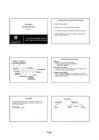
creative, etc. Eysenck's Three Factor Theory Hippocrates & Galen: the four humours Unstable Neuroticism Melancholic Choleric Introversion Extraversion Introverted Extraverted Phlegmatic Sanguine Psychoticism Stability Stable Page
expression were inadequate to what they really wanted to say. Together they represent move away from the public themes dominating Augustan age towards poetry more domestic and personal. Too often some banality, but some lyrics are delicately moving. Edward Young: The Complaint: or, Night Thoughts on Life, Death and Immortality – melancholy meditations Robert Blair: the mood of Youngs and his major poems are predominantly sombre, reflective, melancholic, and moral. Both Central members of a loose groupng „The Graveyard Poets”. The Grave – a dramatic evocation of the horrors of corruption and of the solitude of death. Thomas Gray: Elegy Written in a Country Churchyard – draws together feelings of the era. Sense of isolation, withrawal into inner self, poet as man of feeling meditating on obscurity and death, time and history, fame and passion. 32. The „Comedy of Manners” (Goldsmith, Sheridan)
1925, the composer conducting. beginning, suggests (like that of Beethoven) hidden strength, its potential quickly becomes manifest in the exposition: Example 19. The subsidiary theme is characterised by a plaintive tone (Flute). Kapp likes to explore themes expansively; their variants may deviate from the original: Example 20. The closing theme (Corno solo) is consoling, drawing a deep breath, a mild and somewhat melancholic companion to its forerunners. In the developmental process the subsidiary theme has been fully transformed into a grave, massive and forceful brass sound. The main theme appears tumultuously. The second monothematic movement is a quiet, wistful unison-monologue for bassoon and violoncellos. The composer’s free meditation, sounds like a compound of different interwoven, increasingly strenuous, motifs. The former loneliness and sadness has been replaced by inner tranquillity:
Inimese omadused ja kehamahlad: sanguis - veri soojus flegma - lima külmus chole - kollane sapp kuivus melas chole - must sapp niiskus Galenos (129 -199 p.K) – temperament temperamentum (segu) - kehamahlade segu Temperamendi tüübid: Koleerik (ärritus) – choleric. Kollane sapp. Melanhoolik (masendus) – melancholic. Must sapp. Sangviinik (optimism) – sanguine. Veri. Flegmaatik (rahu) – phlegmatic. Lima. WILLIAM HERBERT SHELDON (1898-1977): Põhja-Ameerika lennuki sõjavägi panna kokku inimestest, kes oskavad lennukit juhtida. Testide ja vaatluse põhjal. Ehk eksiteerib seos kehatüübi ja käitumise vahel. Kas kõik tugevad on rohkem ka need, kes istuvad kinnipidamisasutustes? Somatotüübid (Somatotypes): Hinnang skaalal 1-4-7 endoderm - siseorganid endomorf
 annaabi.ee