Edinburgh Castle UK, Scotland an ancient stronghold. History a centre of military activity. Human habitation since 9th century BC. Nowadays Scotland's second-most-visited tourist attraction. The New Barrack Block is home to the official headquarters of the Royal Regiment of Scotland. St. Margaret's Chapel the oldest surviving building in the castle and in Edinburgh. dates from the early 12th century. King David I built it as a private chapel for the royal family. He dedicated it to his mother, Saint Margaret of Scotland, who died in the castle in 1093. St. Margaret's Chapel Crown Square the citadel at the top of the castle. 15th century (during the reign of King James III) as the main courtyard of the castle. Before 1818 it was known as Palace Yard. Royal Palace former Royal Apartments. 15th century residence of the later Stewart mon...
Kontrolltöö Kamoza Jana 11. klass Paldiski Ühisgümnaasium Sulgudes on kirjutatud piltide numbreid. Pildid on teksti all. 1. Professionaalne kunst see on kunst, mida teevad vastava hariduse saanud kunstnikud. (Kunstil on palju tähendusi, ada on üldisemas tähenduses see on meisterlik oskus mis tahes loomingulisel tegevusalal.) · Johann Köler (1) · Amandus Adamson (2) · Jüri Arrak (3) 2. Isetegevuslik kunst on kunst, mida teevad need, kes ei saanud vastava haridust. · Toomas Vint (4) · Navitrolla (5) · Gregory Zhuravlev(isetegevuslik kunstnik ja ikoonemaalija) (6) 3. Originaal autori, kunstniku enda tehtud töö(näiteks, maa, skulptuur, ...
Introduction Tallinn, the capital city of the Republic of Estonia and of the Harju county, is a town in North Estonia on the coast of the Gulf of Finland. It has nearly half a million inhabitants and covers an area of almost 160 sqkm. It is also an important economic and cultural centre and one of the main ports in the Baltic States. Tallinn is one of the oldest cities on the Baltic Sea. It is unique for its well-preserved architecture from the 13-15 centuries. In contrast to the ancient town-walls and towers, Tallinn of today offers modern hotels, restaurants, sport and cultural centres. Every five years national song and folk dance festivals take place in Tallinn. The yachting regatta of the 1980 Moscow Olympic Games was held at Pirita. History Tallinn means in English "Danish town". The place is believed to have been settled by Finno-Ugric people about 2500 BC. It was first marked on a map of the world by the Arab geographer al-I...
Tallinna Mustamäe College The Most Important Buildings in Lai Street in Tallinn Report Supervisor: Ingrid Teigar Tallinn 2014 Table of Contents Introduction.............................................................................. 3 Lai Street in general.................................................................. 4 The origin of the name "Lai"...................................................... 4 1 Lai Street / 4 Nunne Street...................................................... 5 17 Lai Street............................................................................. 6 23 Lai Street............................................................................. 6 27 Lai Street............................................................................. 8 29 Lai Street...........................................................................
THE U.K Different Parts The United Kingdom is a short way of saying the United Kingdom of Great Britain and Northern Ireland. The UK is the political name for those countries which share a parliament in London. All of them were at one time independent kingdoms with their own monarch. Now they are all part of the same kingdom and share the same monarch. The UK consists of Northern Ireland, Scotland, England and Wales. The peoples of these countries are British subjects; they hold British passports and therefore their nationality is British. The british Isles is the geographical name for all the islands off the west coast of Europe. These islands also include The Republic of Ireland, which is politically independent of the Britsh government. Many people refer to the inhabitants of the British isles as 'the English', but England is only one of the countries. The other countries are Scotla...
Kooli ajalugu ja tänapäev Pedagoogika ajalugu Pedagoogika ajalugu uurib: Pedagoogiliste ideede ja teooriate teket ning arengut Kasvatuse ja hariduse korraldust eri ajastutel Pedagoogika ajaloo allikad: 1. Maailmapedagoogika klassika J.A. KOMENSKY (Comenius) (1592-1670) "Didactica Magna" (Suur didaktika) J.J.ROUSSEAU (1712-1778) "Emile e. kasvatusest" J.H.PESTALOZZI (1746-1827) Kuidas Gertrud oma lapsi õpetab? (eesti k. Elavad sõnad) J. DEWEY (1859-1952) Õppimine läbi tegevuse (Learning by doing) "Democracy and Education" R. STEINER (1861--1925) waldorfkoolide rajaja 1919 avas esimese Waldorfkooli Stuttgartis Täna tegutseb maailmas 850 kooli ja 2000 lasteaeda, Eestis 6 kooli "Lapse kasvatamine vaimuteaduse vaatekohast" "Kasvatuskunst" M. MONTESSORI (1870-1952) Lõi alus- ja alghariduse metoodika, mis levis Itaaliast kogu maailma. 2. Eesti pedagoogika klassika Peeter Põld (1878-1930) Üldine kasva...
History exam *Stonehenge - is a monument located in England. It is one of the most famous prehistoric sites in the world and is composed of earthworks surrounding a circular setting of large standing stones. The surrounding circular, earth bank and ditch, have been dated to about 3100 BC. Stonehenge was produced by a culture with no written language. Many aspects of Stonehenge remain subject to debate. There is little or no direct evidence for the construction techniques used by the Stonehenge builders. *The Celts in Britain and their legacy The Cets lived in Britain in The Iron Age. They were warring tribes who were battleful amongst themselves as well as inter-tribal war. They were not centrally governed. The Celts brought iron working, iron ploughs and metal swords, horses, wheels and chariots - all these things gave them an instant superiority over the native tribes. The Celts built a number ...
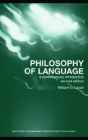
Philosophy of Language Philosophy of Language: a Contemporary Introduction introduces the student to the main issues and theories in twentieth and twenty-first-century phi- losophy of language, focusing specifically on linguistic phenomena. Topics are structured in four parts in the book. Part I, Reference and Referring, includes topics such as Russell's Theory of Descriptions, Donnellan's distinction, problems of anaphora, the description theory of proper names, Searle's cluster theory, and the causalhistorical theory. Part II, Theories of Meaning, surveys the competing theories of linguistic mean- ing and compares their various advantages and liabilities. Part III, Pragmatics and Speech Acts, introduces the basic concepts of linguistic pragmatics, includes a detailed discussion of the problem of indirect force and surveys approaches to metaphor. Part IV, new to this edition, examines the four theories of metaphor. Features...
Hamlet Shakespeare, William Published: 1599 Categorie(s): Fiction, Drama Source: Feedbooks 1 About Shakespeare: William Shakespeare (baptised 26 April 1564 – died 23 April 1616) was an English poet and playwright, widely regarded as the greatest writer in the English language and the world's pre-eminent dramatist. He is often called England's national poet and the "Bard of Avon" (or simply "The Bard"). His surviv- ing works consist of 38 plays, 154 sonnets, two long narrative poems, and several other poems. His plays have been trans- lated into every major living language, and are performed more often than those of any other playwright. Shakespeare was born and raised in Stratford-upon-Avon. At the age of 18 he married Anne Hathaway, who bore him three children: Susanna, and twins Hamnet and Judith. Between 1585 and 1592 he began a successful c...
 annaabi.ee