7. Applicable rakendatav 60. Interstellar tähtedevaheline 8. Arbitrarily omavoliliselt 61. Intricate keerukas 9. Arcane kauge 62. Latency ooteaeg, viivitus 10. Artificial tehislik 63. Layout paigutus 11. Assailant kimbutaja 64. Lurk varitsus 12. Atrocity brutaalsus 65. Magnifying suurendav 13. Attest tunnistama 66. Malfunction talitushäire 14. Attrition ammendumine 67. Miserable haletsusväärne/vilets 15. Badge mark 68. Myriad tohutu hulk 16. Barely vaevu 69. Nauseating iiveldama ajav 17. Blockbuster kassahitt 70. Node sõlm 18
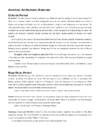
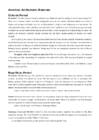
Robert Rauschenberg (late-C20). He loaded his paintings with rags and tatters of cloth, reproductions, fragments of comic strips and other collage elements of discarded materials. He worked similarly to Action painters. His paintings produce the effect of confusion of sights, sounds, debris and movements. His work bridges the gap between Action Painting and Pop Art. Roy Lichtenstein (late-C20). He drew inspiration from comic books and newspaper comic strips. He essentially cast a magnifying glass over the symbols of mass culture and enlarged them. He later made parodies of all the chief Modernist art styles. Andy Warhol (late-C20). He presented repeated images of car crashes, singers, movie stars, soup cans, Coca- Cola bottles and dollar bills. Some different views should reveal various aspects of the person's character. His works display a delight in the surprise and shock of nonart but he is still rooted in the mechanized, standardized and mass- produced culture
Robert Rauschenberg (late-C20). He loaded his paintings with rags and tatters of cloth, reproductions, fragments of comic strips and other collage elements of discarded materials. He worked similarly to Action painters. His paintings produce the effect of confusion of sights, sounds, debris and movements. His work bridges the gap between Action Painting and Pop Art. Roy Lichtenstein (late-C20). He drew inspiration from comic books and newspaper comic strips. He essentially cast a magnifying glass over the symbols of mass culture and enlarged them. He later made parodies of all the chief Modernist art styles. Andy Warhol (late-C20). He presented repeated images of car crashes, singers, movie stars, soup cans, Coca- Cola bottles and dollar bills. Some different views should reveal various aspects of the person's character. His works display a delight in the surprise and shock of nonart but he is still rooted in the mechanized, standardized and mass- produced culture
Applications. Springer, 2010. [7] E. Hecht, Optics, Second Edi. Addison-Wesley Publishing Company, Inc., 1987. 58 [8] L. Solymar and E. Shamonina, Waves in Metamaterials. Oxford University Press, 2009. [9] J. Pendry, "Negative refraction makes a perfect lens," Physical review letters, vol. 85, no. 18, pp. 39669, Oct. 2000. [10] Z. Liu, H. Lee, Y. Xiong, C. Sun, and X. Zhang, "Far-field optical hyperlens magnifying sub-diffraction-limited objects.," Science (New York, N.Y.), vol. 315, no. 5819, p. 1686, Mar. 2007. [11] A. A. Maradudin, Ed., Structured Surfaces as Optical Metamaterials. Cambridge University Press, 2011. [12] A. Loot, "Pinnaplasmonite ja kullakile karakteriseerimine Kretschmanni skeemiga," Tartu Ülikool, 2012. [13] J. B. Pendry, D. Schurig, and D. R. Smith, "Controlling Electromagnetic Fields," Science, vol. 312, no. 5781, pp. 17801782, 2006. [14] D. Schurig, J. J
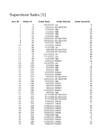
600 Series Non-Flip Recycled Premium Regency Composition Covers Atlantic Metals Mobile 5-Shelf Bookcases, Custom Colors SC7868i Eldon Regeneration Recycled Desk Accessories, Smoke Hewlett-Packard 2600DN Business Color Inkjet Printer Office Star - Ergonomic Mid Back Chair with 2-Way Adjustable Arms Binder Posts 2160 Tennsco Industrial Shelving Canon P1-DHIII Palm Printing Calculator 600 Series Flip Avery Binder Labels Hewlett-Packard Deskjet 940 REFURBISHED Color Inkjet Printer Dana Fluorescent Magnifying Lamp, White, 36" Novimex Fabric Task Chair Advantus Employee of the Month Certificate Frame, 11 x 13-1/2 Xerox 191 Super Bands, 12/Pack StarTAC ST7868 Flexible Leather- Look Classic Collection Ring Binder GBC Therma-A-Bind 250T Electric Binding System OIC Thumb-Tacks SAFCO Commercial Wire Shelving, Black Atlantic Metals Mobile 2-Shelf Bookcases, Custom Colors Self-Adhesive Address Labels for Typewriters by Universal #10- 4 1/8" x 9 1/2" Recycled Envelopes M70 Fellowes Binding Cases
Affected cats are self coloured, but with a modifier which is new to domestic cat genetics. A WIDER PALETTE OF COLOURS The previous sections dealt with solid colours and how they are affected by two types of dilution, three types of colour restriction, agouti ticking and silver/golden shading. There are genes which control how evenly the hair is coloured i.e. the bands of colour on each hair. In agouti cats, it is easy to see different bands of colour using a magnifying glass. In cats with apparently solid-coloured fur, you would need a microscope. Even though the effect on an individual hair can't be detected, the overall effect on an area of fur is make the colour more or less dense i.e. darker or lighter. In general the self colours (with plain English descriptions) are: Colour name Plain English Description Albino White
impressions. But that did not serve for purposes of intersubjectively check- able science, so most positivists joined Hempel (1950) in appealing to the "directly observable characteristics" of ordinary objects. There are two prob- lems here. First, the notion of "direct observation" is a vexed one, and seems totally technology-relative and interest- or project-relative as well. Is a visual observation "direct" when you are wearing eyeglasses? How about if you are using a magnifying glass? How about through a microscope, at this or that degree of magnification? How about through an electron microscope? Second, "observations," and statements couched in "observation language," are theory-laden at least to a degree; what counts as an observation and what counts as observed and how a "datum" is described are all determined in part by the very theories that are in question. Both these problems are knotty issues in the philosophy of science; I merely mention them here
 annaabi.ee