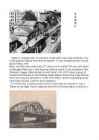
It's also situated between the sea and the Pärnu river. Pärnu was first mentioned in the 12th century, so it is older 700 years old. In the middle ages Pärnu was a very important trading centre. It was a member of the Hanseatic League. Pärnu became a resort town in the 1830s when a group of businessmen founded the first bathing establishment. Before that today's Beach Park's area was just wet pasture. In the 1930s Pärnu cecame especially popular with Finns, Swedes, Latvians and Lithuanians. In Soviet times, however, people from the west were not allowed to stay in Pärnu for the night. Pärnu's sanatoria were full of holiday-makers from the s.u.
Situated 186 km southeast of Tallinn, the city is the centre of southern Estonia. The Emajõgi river, which connects the two largest lakes of Estonia, crosses Tartu. The city is served by Tartu Airport. Tartu was the place where the northsouth road going above the major waterwaysriver.Thought to be the sixth8.Here is the hill fortress built centuries. In Tartu live 82268 Estonians, 15998 Russians, 1214 Finns, 491 Belorussians, 141 Jews, 140 Poles, 124 Germans, 109 Latvians, 91 Lithuanians, 81 Tatars and 673 other nationality people. Mostly known as a university town, Tartu is also a site of heavy industry. In the beginning of the 21st century, many IT enterprises and other hightech companies have taken a foothold in Tartu. Notable examples include Playtech Estonia, Webmedia, Tarkon, Regio and Raintree Estonia. Skype has an office in Tartu. The university is one of the largest employers, which explains the
Due to damages during different wars the stronghold now lies in ruins. These days our theatre "Ugala" gives open air performances on Kaevumägi in the ruins. Every summer a grand Folk Music Festival takes place here. In Estonia everyone knows the song of a boatman rowing on Lake Viljandi. From the castle ruins the most beautiful view opens on the lake and its surroundings . History In 1211 the hill-fort of the estonians in viljandi was besieged by a joint army of germans, latvians, and livs. In 1283 the town received a charter from villekinus de endorpe, the master of the order. In 1470, johann woltus von herse, then master of the order, took up residence in the castle. In 1481, ivan iia of runnian laid siege to the castle but could not take it. After the great northern war the russians revoked local autonomy until 1783, when in the course of the regency reforms of the empress catherine the great viljandi became a district town. This
3 million people. It has been estimated though, that by the year of 2040 the number will have decreased by 125,000 people. It means that the population of Estonia is decreasing. As young Estonians often like to go study or live abroad, the population is aging as well – young people move away, while older stay there. Many different nationalities live there: besides Estonians there are Russians, Ukrainians, Belarussians, Finnish, Tatars, Latvians, Poles, Lithuanians, Jews, Germans and others. Due to this fact, the most popular languages spoken as a mother language are Estonian, Russian and Ukrainian. Nevertheless, there is still just one official language of Estonia, which is Estonian. Most of the people, approximately 900,000 live in the cities, such as Tallinn, Tartu, Narva. The most common sector that people work in is the service sector. People in Estonia are also involved in other sectors of industry, such as wood, construction,
(17171779) and the man of letters Garlieb Merkel (17691850). Eisen was not merely concerned with the Baltic provinces, but he was the first to demand the abolition of serfdom and the peasants' right to land throughout Russia. He laid his hopes on enlightened absolutism, trying to convince the empress Catherine II and the Russian high nobility of the social-economic inefficiency of serfdom. Merkel treated the ancient Livonian and Estonian peoples, or Latvians and Estonians, not only as suppressed peasants, but as nations forced into serfdom whose development had thus been artificially hampered. 6|Page Catherine II (17621796), on the whole, favored the Enlightenment. Her politics of enlightened absolutism aspired to modernize and unify the entire Russian Empire. The special
A more troubled and war-ridden middle Iron Age followed with dangers coming both from the Baltic tribes and from overseas. Several Scandinavian sagas refer to Estonian pirates. During the wars under foreign rule, the number of Estonians diminished. At one point the population in the whole country was only half a million. Although wars devastated the country, it recovered quickly and its people with it. Under Soviet rule in the 20 th century, many Estonians, Lithuanians and Latvians were deported to the coldest parts of Siberia. Hundreds of thousands of migrants were relocated to Estonia from other parts of the Soviet Union to conduct industrialization and militarization, contributing to an increase in population of about half a million in just 45 years. 9. Culture Estonian is the official language of the Republic of Estonia and is spoken by the majority of people in the country. It belongs to the Balto-Finnic group of the Finno-Ugric languages
Kokkulepped tuleb lätlastega äri ajades alati kirjalikult vormistada (Vahemets 2001) ning pitsatiga tembeldada. (Saar 2007) Üldiselt kirjeldatakse lätlaste iseloomu kui eestlaste ja leedulaste vahepealset. See tähendab, et lätlased on emotsionaalsed nagu leedulased. Teatud situatsioonides säilitavad nad aga sarnaselt eestlastele külma ja põikpäiselt ratsionaalse olemuse. Lätlased on kohati kergemeelsemad ja avatumad kui eestlased, samas nad naeratavad rohkem. (Latvians 2001) Lätlased on enamasti reserveeritud ja isegi suhtlemisvaesed, emotsioonide näitamine ja fanatism on lätlaste puhul harv nähtus. Nad vajavad tutvumiseks ja sõprade leidmiseks rohkem aega kui näiteks venelased. Lõunanaabrite hulgas on rohkem inimesi, kes usaldavad ainult enda võimeid ja vähem neid kes on valmis võtma riske. Samas on globaliseerumine ja Läti kultuuri tausta mitmekesisus paljuski perekondi venelastega seganud ja seeläbi on raske puhast lätlast ära tunda. (Mezs
Selge on aga see, et vaatamata mõlema poole pingutustele ei saanud säärane jagamistehe toimida jälgi jätmata ning ühest kaheks jagatud tervikust päris kahte uut ja samaväärset tervikut luua ei õnnestunud. 30 Changes in Valga after determination of the Estonian- Latvian border (summary) The period following First World War was a revolutionary time for both Estonians and Latvians, when both nations created an independent state in its ethnic boundaries. The first challenge of the new relations between Estonia and Latvia was to agree on mutually accepted borderline between these states. The main issue in dispute about border was the ownership of the town of Valga. Various border committees haven't reached to any agreement. Initial boundary line was set by the pledge of neutral intermediary. This man
Union.
Pasted from
 annaabi.ee