ourselves Hazardous waste is one of today's biggest environmental problems. The waste poses substantial threats to public health and to the environment. Hazardous waste is mostly produced by major industries. Almost all industries have to get rid of the waste that has been produced due to their work. Mostly, it is difficult and expensive to get rid of the waste so that it does not endanger the environment or human lives. Many industries create landfills to store waste and quite often the new landfill is near the water. The levels of dangerous waste continue to grow thanks to individuals too. Some people are too lazy to throw the trash into the litter bin. They think that it is easier to dump it without realizing that it could be dangerous for the environment. As a solution, the government can increase regulations on the disposal of hazardous waste. It can create modern landfills that are using modern technologies. Those
So that people would use more public transportation than their own car. Furthermore, it will change our climate. In addition our air is polluted by hydrogen sulfide from plants and factors (Especially in Kohtla- Järve and Maardu). Other big environment problem is garbage. Huge amount of waste is produced every day and it is all because of overconsumption. Although, in recent years peoples knowledge about recycling and using eco-friendly products have improved, there are more landfills in Estonia than ever before. The government should take some actions and instead of talking about recession, they should improve recycling programs or take into use some new ways. Environment problem in Estonia is also water pollution. Big factories let their waste run into the rivers without cleaning it and farmers use man-made fertilizers. Their action is spoiling groundwater. Garbage wrong recycling also affects groundwater quality, because when it rains
standards, which means that some unwanted stuff could still be coming through your faucet. According to Consumer Reports, you can find a variety of water filters that remove common contaminants. Trask recommends Brita water- filtering pitchers because the company recycles used filters, preventing them from ending up in landfills. Make the World a Greener Place Plant a tree (or a few!) in your yard as a family project. According to the Arbor Day Foundation, the long list of health- and environment- improving benefits of having trees around include reducing your air-conditioning costs by providing shade; possibly raising the property value and resale appeal of your home; pulling carbon dioxide out of the environment and creating oxygen; improved water quality; and providing you with calming
The second aspect is that people fell quite a lot of trees, but that is not so big problem. In Estonia there are a lot of forests and groves. Also, people are planting new trees all the time and know abot the importance of green. Lastly, one of the issues is that people consume too much and therefore produce a lot of garbage. Most of the people recycle things like plastic, bottles and paper, but some do not know or care what kind of damage growing landfills can make. In conclusion it can be said, that in Estonia there are some environmental problems, but the things are not very bad and fortunately people are thinking about these more every day.
The Green Grid Green Comm Challenge The SPEC Power Approach: Product longevity To prolong the equipment's lifetime Approach: Data center design To better utilize a data center's space Increase performance and efficiency Approach: Software and deployment optimization Algorithmic efficiency Virtualization Terminal servers Approach: Power management Data center power Power supply Storage Video card Display Approach: Materials recycling Keep harmful materials out of landfills Replace equipment saving further energy and emissions Green computing certifications Green Computing Initiative (GCI) CompTIA Strata Green IT Information Systems Examination Board (ISEB) Foundation Certificate in Green IT Singapore Infocomm Technology Federation (SiTF) Singapore Certified Green IT Professional Australian Computer Society (ACS) Conclusion Save energy use and costs Good for business Good for the planet Thank you for your attention! Click to edit Master text styles
To begin with, air pollution is a big problem in big cities and in industrial areas. Air pollution is often caused by the exhaust fumes of the cars or by big factories. It affects nature and peoples health causing them breathing problems. Secondly, huge amounts of waste are being produced every day and it is all because of overconsumption. Although, in recent years peoples knowledge about recycling and using eco-friendly products have improved, there are more landfills in Estonia than ever before. The government should take some actions and instead of talking about recession, improve recycling programs. Last but not least, abuse of the natural resources is also a big problem in Estonia. Big fatories let their waste run into the rivers without cleaning it and farmers use man-made fertilizers. Their actions spoil groundwater. We must not take water for granted but we should conserve it. To sum up, we all should help the environment
In the grocery stores, tons of products are packaged using plastic materials. About 30 years ago, in some countries , there were no plastic bags used for packaging and carrying items. Items in the shops were packed in biodegradable paper bags. Plastic bags as litter create a visual pollution problem, and affect our aquatic wildlife. Many of the grocery store use the plastic bags as a tool to keep the things easy to carrying. Plastic bags aren’t just at the grocery store, there everywhere, landfills ,some coutrys they are even in the lakes, hanging on trees around our neighborhoods and suffocating wildlife As a human being, I’m agree that plastic bags should be banned permanently. This is because plastic bags are not biodegradable, so where ever people leave them, they will stay, forever. Other plastic products can saty because tey are making our life better and more convenient.
but we should. Lately the media has started to speak more about the need for clean water, specially in some parts of the Earth. In the past people did not have showers or baths, toilets with water, dishwashers. These and many other things use more water, than people used to. Secondly we are producing a lot more, than we maybe should. It seems like the most meaningful thing nowadays is money. Maybe because of that we are over producing. If we look at the landfills we can see how full they are. I think it is that way because we produce too much and use too much packages. We should produce only as much we really need or in the future a really big part of earth would be covered with trash and air full of smog and acid rain. Also we should think some reusable way for packaging. Thirdly we are not thinking what we do with our everyday behaviour to the future. Almost a week ago we took a test, which showed how many planets is your ecological footprint
These toxic can be gases like methane, sulfur, nitrogen, carbon monoxide and so on. Municipal dumps are the cause serious diseases and damage crops. These dumps are becoming bigger and bigger. What is the solution to a problem? First of all, people should change their attitude to dumping. Special bins should be put of cans, bottles and paper. Secondly, much more than half of today's trash could be recycled, but 80% of it winds up in landfills. In conclusion, I want to say that there are many solutions to this problem, and if people are interested in this, the biggest problem will be solved
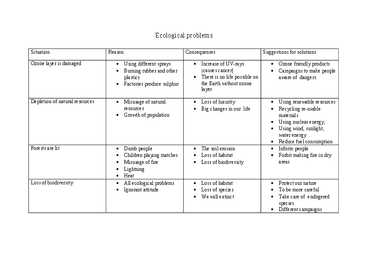
forests · Illegal logging for · Organize · Forest fires animals/birds campaigns · Massive paper · Less oxygen against wasting · More expensive deforestation furniture, paper and heating Huge landfills · Huge wasting · Air pollution · To consume · Over · Contamination less population of underground · More · Massive water recyclable consumption items
Jäätmekäitlus probleemid maailmas Greetel Kala / Liispet Jalandi 2013 Mis on jäätmekäitlus? Jäätmekäitlus on jäätmete kogumine, sorteerimine, vedu, töötlemine, ladusamine ja matmine. Ebaõige jäätmekäitlus võib kaasa tuua rahalise trahvi. Hetke jäätmekäitlus süsteem Jäätmekäitlus probleemid meditsiinis: Meditsiiniliste jäätmete põletamine, mille tagajärjel satuvad õhku mürgised kõrvalsaadused, sealhulgas dioksiidid, kantserogeenid, elavhõbe ja tugevad neurotoksiinid, mis võivad kahjustada aju, neere ja kopse. Jäätmekäitlus probleemid meditsiinis: Meditsiiniliste jäätmete (süstlad, ravimid ja verised lapid) ära viskamine tavalise prügi hulgas. See võib kaasa tuua haiguste epideemilise leviku. Nii aidatakse enda teadmata kaasa HIV ja AIDSi levikule. Ülemaailmene probleem: Hetke üheks suurimaks jäätmekäitlus probleemiks peavad teadlased jäätmekäitluse tulevikku, kuna jäätmete tootmine suureneb ning progn...
people that cannot get proper education. People are often afraid of the consequences, if their attempt at enforcing change goes wrong. They are scared that they will be laughed at or talked about. There are millions of people behind us too shy to take a stand or maybe they do not have the resources so people in developed countries should speak up for them. Documentary film “Waste land” is about a project in Jardim Gramacho, one of the largest landfills in the world, to raise awareness about catadores. Pickers, who sift through detritus looking for recyclables to redeem for cash, took part in an art project directed by Vik Munix, Brooklyn-based Brazilian-born artist, who wanted to step up and start changing world. Pickers shared their stories and thanks to project started seeing their life from a different perspective. Vik Munix changed picker’s lives for the better by giving them something to life for. The world is has never been the same
articles of ratification for all 15 of its then member states. · Since signing and ratifying the protocol, Germany has committed to reducing its emissions to 21% below 1990 levels between 2008 and 2012 RECYCLING: A Prime Example of German Sustainability How it began... · The "Green Movement" in Germany was ignited by damaging acid rain that was ruining their forests · Challenging the "Throwaway Society" · Space was becoming limited for landfills · NIMBY syndrome was rampant and there was an imperative need to find a solution Verpackungsverordnung The Ordinance on the Avoidance of Packaging Waste (1991) · Making the "Polluter Pay" · Goal: to give private industry incentive to consider the solid waste consequences when it designs packages · Requires industry to take back, reuse, and/or recycle packaging · Major Objectives Packaging should be made from "environmentally
producing methane and carbon dioxide as a by-product. Another type of biogas which includes hydrogen, nitrogen, and carbon monoxide can be obtained through the gasification of biomass such as wood or rice husks, a technique which is used to manufacture gas industrially. The gases produced through anaerobic fermentation or gasification are combustible in addition to having a strong smell which makes them stand out to the human nose. Methane leaks from landfills are an ongoing problem, as is the production of biogas in poorly maintained compost piles, manure lagoons, and outhouses. Spontaneous fires and explosions caused by build-ups of gas have been recorded in many regions of the world, illustrating a major problem which needs to be confronted by waste management companies. When this gas is trapped, however, it can be made useful, instead of just being a nuisance.
Trash that comes from plant or animal products is biomass. Food scraps, lawn clippings, and leaves are all examples of biomass trash. Materials that are made out of glass, plastic, and metals are not biomass because they are made out of non-renewable materials. MSW can be a source of energy by either burning MSW in waste-to-energy plants, or by capturing biogas. In waste-to-energy plants, trash is burned to produce steam that can be used either to heat buildings or to generate electricity. In landfills, biomass rots and releases methane gas, also called biogas or landfill gas. Some landfills have a system that collects the methane gas so that it can be used as a fuel source. Some dairy farmers collect biogas from tanks called "digesters" where they put all of the muck and manure from their barns. Read about a field trip to a real waste-to-energy plant or learn about the history of MSW. 14.3 Biofuels - ethanol and biodiesel
 annaabi.ee