bad play good. But she notes that the lovers' tale of paranormal experience in the woods presents "great constancy" -- what paranormal investigators look for today. Like most of us, Hippolyta decides, "If they're all telling the same story, there may be something to it." *Demetrius: Not a nice person. By the time he says he wants to feed Lysander's carcass to his hounds, this seems completely in character. I don't know what Helena sees in him. Neither does she -- such is the irrationality of love, even before the lovers enter the forest. He is the only one who remains under the influence of the magic juice. This is probably good. *Helena: Tall, blonde beauty. Verbal abuse from Demetrius has made her think she's ugly. We have to hope that the love juice never wears off Demetrius, or she is in trouble *Hermia: Short, dark-complected beauty. Spunky and likable. *Lysander: Likable, rationalizer, sense of humor. He suggests Egeus and Demetrius get married
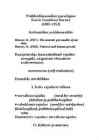
produktiivne armastus (hoolitsus, vastutus, austus, teadmine) - integratsioon · loovus vs. destruktiivsus (creativeness vs. destructiveness) transtsendentsus - aktiivne looja · kuuluvus vs intsest (rootedness vs. incest) kuuluvus inimkonda · individuaalsus vs konformsus (individuality vs. herd conformity) identiteet, mina · põhjuslikkus vs. irratsionaalsus (reason vs. irrationality) intellektuaalne taustsüsteem maailma tunnetamiseks ühiskond - indiviidi vajaduste rahuldamiseks ( kapitalism, kommunism -"haige" ühiskond) III. Isiksuse tüübid. sotsiaalsed karakterid, kultuur: orientatsioonid kohanemiseks · retseptiivne (receptive orientation) ootamine, olla armastatud kergeusklik, kartlik, alluv, sentimentaalne optimistlik, idealistlik. · ekspluateeriv (exploitative orientation) ärakasutamine
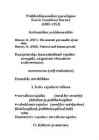
produktiivne armastus (hoolitsus, vastutus, austus, teadmine) - integratsioon · loovus vs. destruktiivsus (creativeness vs. destructiveness) transtsendentsus - aktiivne looja · kuuluvus vs intsest (rootedness vs. incest) kuuluvus inimkonda · individuaalsus vs konformsus (individuality vs. herd conformity) identiteet, mina · põhjuslikkus vs. irratsionaalsus (reason vs. irrationality) intellektuaalne taustsüsteem maailma tunnetamiseks ühiskond - indiviidi vajaduste rahuldamiseks ( kapitalism, kommunism -"haige" ühiskond) III. Isiksuse tüübid. sotsiaalsed karakterid, kultuur: orientatsioonid kohanemiseks · retseptiivne (receptive orientation) ootamine, olla armastatud kergeusklik, kartlik, alluv, sentimentaalne optimistlik, idealistlik. · ekspluateeriv (exploitative orientation) ärakasutamine
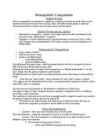
· Monopolistic competition does not have all of the desirable properties of perfect competition. There is a standard deadweight loss of monopoly caused by the markup of price over marginal cost. · The number of firms can be too large or too small. The product differentiation inherent in monopolistic competition leads to the use of advertising and brand names. Critics argue that firms use advertising and brand names to take advantage of consumer irrationality and to reduce competition. Defenders argue that firms use advertising and brand names to inform consumers and to compete more vigorously on price and product quality. Oligopoly Characteristics: A "few sellers" who recognize their interdependence Products may be homogeneous or differentiated Significant barriers to entry exist
predicted because men act chaotically. Kant seeks to prove his claim that rational and moral autonomy will inevitably defeat the compulsions of self-interested individualism. Kant seeks to achieve this by advancing a hierarchical account of development of world history.In writing from the perspective of a universal future history, Kant valorizes an unrealized future state (though he is aware, however, of the problem of theorizing without empirical basis, recognizing the appearance of irrationality that such an enterprise exhibits and criticizing Herder for extracting conclusions from speculative pyschologizing). 9 thesises are posted to prove that rational and moral autonomy will defeat the compulsions of self-interested individualism. In a future state there will be a lot of freedom. I thesis Unnecessary parts of the society will naturaly dissapear. II thesis Man (one) can not learn to use hes reason. Society can. III thesis
Bibliography 32 Appendices Appendix 1: The United Convention of the Rights of the Child Appendix 2: Interview with Jamie Richards, the Head Teacher of Cadle Primary School 2 Abstract: Children inherently have had a rather tenuous relationship with citizenship. Similarly to how women were once viewed, children have not been considered as subjects of rights due to their perceived incompetence and irrationality. Currently, children are not considered as being rational and capable of exercising responsibility until the age of majority, the age of 18. However, the adoption of the U.N Convention of the Rights of the Child (UNCRC) in 1989 granted for the first time the recognition for children as worthy individuals with rights of their own. The UNCRC laid the foundation for the potential re-evaluation of our traditional
view, which means that story is told through one characters limited perspective and this character can't see what other characters can see. He has a very interesting technique presenting facts, he doesn't explain to the reader, the reader has to put it together. His style is similiar to the stream of consciusness technique,but not like joyce's style. Faulkner traces the actual thought perseption and memory processes. His fairly confusing inner monologue reflects the irrationality of people's thinking. Very often the monologues of his characters merge into his as the narrators. Sometimes it's difficult to draw the line between the characters monologue and the authors. His style reminds us labyrinth, which is very appropriate to his vision of the world, world where despair and doom are typical motives and where such events as civil war, suicide, murder, storms are rather typical and characteristic events. Man is faced with destruction
 annaabi.ee