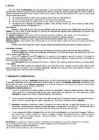
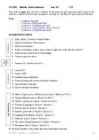
module 24. Clippings, fore clippings, back clippings, ambiclippings Clipping is a word-formation process during which a word is reduced to a certain part of it while retaining the original meaning. Also known as shortening or truncation. Clipping creates lexemes with the same meaning, but different stylistic value. Clippings are usually monosyllabic and might have homonyms. Clipped forms are usually informal. Back-clippings – the most common type of clipping, where the first part of the word remains, and the end is cut off. Crocodile – croc Doctor/document – doc Decaffeinated – decaf Popular music – pop Public house - pub
name but by the name it is associated with Hollywood. Meaning restriction and extension. Specialization of meaning- means narrowing the meaning, extended - widened meanings. Generalization. Meaning degradation and elevation Pejoration (worsening of meaning) deterioration. Amelioration- improvement of meaning. Monosemy Word only has one meaning. Polysemy the meaning of the word depends on the sentence. The content- where the word is placed in the sentence. Homonyms words with the same spelling and pronunciation but a different meaning. Skate, mouth Homophones words that are pronounced the same. Rose, to-two-too Homographs words that are spelled the same. Lead, close, wind. Synonyms words that share the same denotative, different spelling and pronunciation but the same meaning. e.g. male masculine Opposites (antonyms) words with opposite meanings, e.g. long-short, dead-alive, buy- sell
The association of one word with two or more distinct meanings. A polyseme is a word or phrase with multiple meanings. According to some estimates, more than 40% of English words have more than one meaning. The fact that so many words (or lexemes) are polysemous. Deals with different senses of a word or phrase. Because there is a shortage of words and there is also a tendency to use them figuratively. Example: skeleton = structure of bones OR staff of a company OR structure of sth 38. Homonyms Accidental similarity. Example> Band is a ribbon OR a group of musicians. It is very common: dock is a basin OR a pier OR a platform OR legal part of court law OR There can be partial or full homonyms. Full are identical in all forms, but partial is for example scald and skald OR lay is past tense of lie BUT also a non-professional OR a short lyrics or narrative poem which will be sung 39. Homophones Words that sound similar
3) Stylistic devices based on the interaction of primary and secondary meaning Zeugma--a word (often a verb) stands in the same grammatical relation to 2 words or more. When applying to one of them, it has the direct meaning and when applying to the other word, it has figurative meaning (he opened the window and his heart to me). The effect is irony and humour. Pun--a play of words. The humorous use in 2 or more meanings or of words that sound alike but have different meaning [homonyms, polysemantic words] (What makes the tower of Pisa lean? It never eats.) Semantically false chain--it is enumerating objects without logical connections. The words are used in their direct meaning and it is partly humorous. (I like reading books, young men and bananas) Function: to render a chaotic picture or bring out controversial nature of what is described. 4) Stylistic devices based on Circumlocution (a roundabout way to describe sth)
Devices) 1. Zeugma (from Greek "to join") - a word stands in the same grammatical relation to 2 words in the context (e.g. "He opened the window (direct) and his heart to me (figurative metaphorical)"). When it applies to the first word it has direct meaning, when to the other metaphorical. 2. Pun (play on words) the humorous use of a word in two meanings (polysemantic words) or the words that sound alike but have different meanings (homonyms) (e.g. "What makes the tower of Pisa lean (:1., 2. ) It never eats). 3. Semantically false chain enumerating objects without logical connections (words here are used in the direct meaning) (e.g. "She was talking of Picasso, rain, cats, being pregnant, and her husband's mistress."). The function of such sentence is to render chaotic description. (8) IV. Stylistic devices based on circumlocution. 1
coffee." "She possessed two false teeth and a sympathetic heart."). 2. Pun (play on words) the humorous use of a word in two meanings (polysemantic words) (e.g. "I am going to give (say) you some good advice. Oh, do not. One should never give (give) a woman anything she cannot wear in the evening." (O.Wilde) or the words that sound alike but have different meanings (homonyms) (e.g. "What makes the tower of Pisa lean (:1., 2. ) It never eats."; "Did you hit a woman with a child. No, sir. I hit her with a brick.") FGI 1081 Stylistics (I. Ladusseva) 15 3. Semantically false chain enumerating objects without logical connections (words here are used in the direct meaning) (e.g. "She was talking of Picasso, rain, cats, being
 annaabi.ee