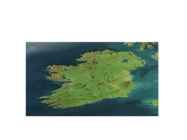
demonstrated by a butchered bear bone found in a cave in County Clare. It is not until about 8000 BC, however, that more sustained occupation of the island has been shown, with evidence for Mesolithic communities around the island. These Mesolithic communities lived as hunter- gatherers across the island until about 4000 BC. Name · The name Ireland derives from Old Irish Eriu. This in turn comes from the Proto-Celtic Iveriu, which is also the source of Latin Hibernia. Iveriu derives from a root meaning 'fat, prosperous'. Economy · Despite the two jurisdictions using two distinct currencies, a growing amount of commercial activity is carried out on an all- Ireland basis. This has been facilitated by the two jurisdictions' shared membership of the European Union, and there have been calls from members of the business community and policymakers for the creation of an "all-Ireland economy" to take advantage
controlling peoples mobements Building took several years, builders kept changing minds about the size 119 km lenght, 5m high, 3m deep The Picts, Caledonia The painted ones, northern tribes, part of the Scots Inhabited an area known as eastern and th western Scotland, until 10 c Mysteriously disappeared Constantly fought with Romans Teir country- Caledonia- Pictland The Scots, Hibernia Raiders, Celts living in Ireland/Hibernia Migrated to Scotland Raided Roman Britain After Kenneth McAlpin united Scotland all inhabitants became Scots The Venerable Bede A monk in the Northumbrian monastery of Jarrow In 731 ,,The Great Ecclesiastical History of the English People"- overshaows all other sources of 7th, early 8th C Well-founded scraps of tradition, first work of history, where AD system is used Angles, Saxons, Jutes. Frisians
*The Picts, Caledonia The Romans called Scotland 'Caledonia' because the dominant tribe of Picts they encountered was the Calidonii. Romans thought they were barbarian savages, but actually they had an advanced, cultured society. There was no slavery amongst them and women for instance had a higher standing than in Roman society. The Picts fought the Romans. The Picts- ,,The Painted Ones"- spoke Pict-Celtic. *The Scots, Hibernia In early medieval times Ireland was known by the name "Hibernia". In Hadrian's time the ancient race called the Scots inhabited Hibernia (now called Ireland). Irish and Scottish missionaries were spreading Christianity in Anglo-Saxon England during the 6th centurie. The Latin term Scotti refers to the Gaelic-speaking people of Ireland and the Irish who settled in western Scotland. *The Venerable Bede Bede was a Christian monk, he was the most learned man in Europe at that time
27. Britannia. the name that the Romans gave to their southern British province. It is also the name given to the female embodiment of Britain, always shown wearing a helmet and holding 7 a trident. The figure of Britannia has been on the reverse side of many British coins for more than 300 years. 28. Caledonia- Caledonia, Cambria and Hibernia were the Roman names for Scotland, Wales and Ireland respectively. The words are commonly used today in scholarly classifications(for example, the type of English used in Ireland is sometimes called `Hiberno-English') and for the names of organizations(for example, the airline `British Caledonian') 29. The crown dependencies.- there are two small parts of the British Isles which have special political arrangements
 annaabi.ee