Hip-Hop-Mode Hip-Hop-Mode ist der Stil, dem ich ein bisschen folge, aber am wichtigsten ist es der Stil, den viele junge Leute heute haben. Hip-Hop-Mode (auch urban fashion oder Street fashion) ist der Oberbegriff für eine Reihe modischer Phänomene, die aus den Ghettos der amerikanischen Großstädte stammen und in Verbindung zur Rap-Musik stehen. Oft, beispielsweise durch KRS One, wird die Mode zu den Elementen der Hip-Hop-Kultur gezählt. In den letzten Jahren dürfte es sich bei der Mode noch vor der Musik um den kommerziell erfolgreichsten Teil des Hip-Hops handeln. Die Mode entwickelte sich zusammen mit dem gesamten Hip-Hop im New York City der 1970er und erfuhr sowohl durch den Gangsta Rap als auch durch die zunehmenden Erfolge im Mainstream
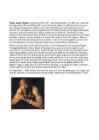
his stage names 2Pac and Makaveli, was an American rapper. In addition to his status as a top-selling recording artist, Shakur was a successful film actor and a prominent social activist. He is recognized in the Guinness Book of World Records as the highest-selling hip hop artist, with over seventy five million albums sold worldwide, including over fifty million in the United States.Most of Shakur's songs are about growing up amid violence and hardship in ghettos, racism, problems in society and conflicts with other rappers. Shakur's work is known for advocating political, economic, social and racial equality, as well as his raw descriptions of violence, drug and alcohol abuse and conflicts with the law. Shakur was initially a roadie and backup dancer for the alternative hip hop group Digital Underground.Shakur's debut album, 2Pacalypse Now, gained critical recognition and backlash for its controversial lyrics
The six million people murdered: the first influential Holocaust revisionist, Paul Rassinier, said the number of Jewish victims was exaggerated and his own estimate was that only about 1,5 million Jews died. Cause of deaths: deniers say the deaths in concentration camps resulted in disease or starvation; that they weren't killed by the Nazis. And if they were, it was because of wartime privations. 300 000 to one or two million Jews were killed in ghettos and camps. The master plan: the deniers say the Nazi's didn't have an intention to exterminate European Jewry, but to deport the Jews out of the Reich (regime or empire). They say that the Holocaust was the invention of the Jews and that the concentration camps were `'inventions of the Jewish mind''. WHY DENY IT? Holocaust deniers deny the happenings of the holocaust to reduce perceived sympathy to Jews; to plant seeds of doubt about Jews and
Dominican Republic the answer, 400-500 in 1940, never goes anywhere. Highest rate of Aliyah from former SU from Birobidzhan. Holocaust Erad's book changed the face of research and teaching Holocaust in IL, Heb, not a whole lot in synthetic way in other langs. 2004, much less conjecture. Rev in 1960s-70s about Eur, not SU. Everywhere but SU, records about ind Js on pathways, ghettoization, labor, murder. SU, no Ger records, system fundamentally diff. Still probs w #s. 2/3 killing in camps, ghettos. 2 mill SU Js. Slave labor complex not known until recently, extensive throughout Europe. Not a straightforward subject, several subjects intertwined, SU Holocaust. Js dying en masse certainly at top. Context of total national mobilization for defeat of fascism. Unthinkable human suffering. Tens of mill SU citizens died, many more suffered. Yet regime would never admit, defeat of Germany meant taking up cause of Js. Rise in popular anti- Semitism, as Red Army losing battle, turns around 42-43
the result of the 7th century conquests of Arab tribes. They brought Islam, Arabic culture and language with them, and they blended with the Palestinians. The Palestines in exile hope to return to their former homeland. The inhabitants in inner exile (in Israel) want their independence and freedom. The Arabs living in Palestinian territories want to be treated as equal citizens, not as ,,non-Jews". If the Jews look back to their diasporaa, ghettos and holocaust, and Arabs to their treatment by the Turks, to the broken promises of Western countries, to the creation of the state of Israel, these two nations know too well what misery means. They have both been treated harshly by other nations ja manipulated by the forces they cannot control. Neither of them trust other nations nor themselves, at the same time they are looking for their identity, freedom and national development.
of tourist, it is the drifter concept that inspires ‘one of the prevalent trends of contemporary tourism’ (Cohen, 1973, p. 90), backpacker tourism. The succinct and less pejorative epithet ‘backpacker’ gained momentum from the late 1990s (O’Reilly, 2006) as a descriptor for predominantly young, budget tourists on extended holiday (Loker-Murphy & Pearce, 1995). More recently, Maoz and Bekerman (2010, p. 426) describe backpackers as ‘relatively young tourists who tend to gather in ghettos or enclaves: places where large numbers congregate to experience home comforts and the company of tourists of similar interests.’ This latter enclavic focus reflects an institutionalisation of the backpacking phenomenon, a mainstreaming decried by some authors (Cohen, 2003; O’Reilly, 2006) for its alignment with the stigma of mass tourism. The homogenisation of backpacking with the rubric of mass tourism, however, is derailed by scholarship that teases out
 annaabi.ee