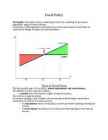
Fiscal Policy Fiscal policy is that policy which is made by government for controlling the government expenditure, supply of money and taxes. Fiscal policy is great equipment in the hand of any country's government to make better tax system and to manage the public loan and expenditures. Types of Fiscal Policy The three possible types of fiscal policy: neutral, expansionary and contractionary. The definitions of these types are as follows: - A neutral stance of fiscal policy implies a balanced economy. This results in a large tax revenue. Government spending is fully funded by tax revenue and overall the budget outcome has a neutral effect on the level of economic activity. - An expansionary stance of fiscal policy involves government spending exceeding tax revenue.
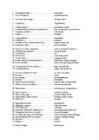
....................................lisareserv 178. Exchange .......................................................vahetuskaubandus 179. Executive .......................................................ettevõtte juhataja 180. Exogenous variable .......................................eksogeenne muutuja 181. Expand ...........................................................laiendama 182. Expansion ......................................................edasiarendus 183. Expansionary fiscal policy ............................ekspansiivne fiskaalpoliitika 184. Expedite .........................................................edendama 185. Expert ............................................................asjatundja 186. Exposure ......................................................... müügiks väljapanek, ülesseadmine 187. Extension ........................................................ laiendus 188. External marketing - ...............................
liquidity to Ukraine as they did to other emerging economies. From 2000 to 2007, Ukraine's real growth averaged 7.4 percent and was thus very similar to Russia's. In both countries, this growth was driven by domestic demand: orientation toward consumption, other structural change, and financial development. In Ukraine, domestic demand grew in constant prices by almost 15 percent annually. It was supported by expansionary--pro-cyclical--fiscal policy generally driven by populism for perceived short- term political gain. Further, industrial capacity left idle in the 1990s was brought into use, capital inflows surged after 2005, and credit growth was fueled by external borrowing. In terms of markets, in 2000, the EU was already the largest, purchasing almost a third of Ukraine's exports. It was followed by Russia and Asia, with a share of just under a quarter for both. In 2009, Asia
 annaabi.ee