Estonian Drama Theatre 1) Estonian Drama Theatre is city theatre in Tallinn. 2) It is the largest non-musical theatre in Estonia. 3) Estonian Drama Theatre is situated right in the heart of Tallinn. The theatre has two halls, cosy bars and elegant foyers. 4) It´s was founded in 1920 under the leadership of Paul Sepp. 5) The Drama Theatre rent the contemporary building which in these days was owned by German Theatre Society. 6) In 1939 Drama studio Theatre finally bought it. 7) At the beginning the theatre was called the Dramastudio but in 1937 theatre was renamed - the new title was Estonian Drama Theatre. 8) Estonian drama theatre has a big auditorium with 426-seats. Then a small stage with 159-seats and it was was opened in 1967. 9) And finally 70-seat Paintshop stage which was opened in 2004. 10) The Estonian Drama Theatre mainly plays classics. 11) The performances are given in Eston...
Estonian Drama Theatre Address: Tallinn, 10148, Parnu mnt. 5 Estonian Drama Theatre is city theatre in Tallinn. The Estonian Drama Theatre is the largest non- musical theatre in Estonia. Estonian Drama Theatre was born in 1920 under the leadership of Paul Sepp. The Drama Theatre rent the contemporary building which in these days was owned by German Theatre Society. In 1939 Drama studio Theatre finally bought it. In 1937 the Dramastudio Theatre was renamed - the new title was Estonian Drama Theatre. In Soviet times its name was The Tallinn Drama Theatre, which was changed back in 1989. The beautiful Art Nouveau building of the Estonian Drama Theatre, built in 1910, is situated right in the heart of Tallinn. The theatre has two halls, cosy bars and elegant foyers. In addition to its 426-seat big auditorium a 159-seat small stage was opened in 1967. In 2004 70-seat Paintshop stage was opened. Estonian...
Report Theatres of Tallinn Student: Supervisor: Tallinn 2008 Table of Contents Table of Contents........................................................................................................................2 Introduction.................................................................................................................................3 The Estonia National Opera........................................................................................................4 Russian Drama Theatre...............................................................................................................5 Tallinn City Theatre.................................................................................................................... 6 Estonian Drama Theatre....................................
Theatres in Estonia Native Estonian theatre, born in 1870 with the plays of the patriotic poetess Lydia Koidula, came into being on the crest of national awakening. Its tastes were at first pretty simple, the favourite genres being folk comedy and romantic melodrama, although both also transmitted halfhidden social and political attitudes. In less than forty years, in 1906, the leading amateur companies, the "Vanemuine" in the university town Tartu and the "Estonia" in Tallinn, could become professional, and in 1911 the "Endla" of P ärnu joined them. Theatre became especially popular amongst Estonians in the second half of the 19th century. Before that time, theatre had mostly been staged in German for the benefit of the local nobility and merchants. Theatre in Estonian emerged in various song and drama societies, the strongholds of national thought. In the early 20th century, th...
School name THEATRES IN TALLINN Term Paper Compiler: Tallinn 2013 Introduction Tallinn is the capital city of Estonia. In Estonia there are many theatres. Tallinn has 8 theatres. Most of them are located in the Old Town or near the Old Town. These 8 theatres are: Estonian National Opera, Tallinn City Theatre, Estonian Drama Theatre, Estonian State Puppet & Youth Theatre, Russian Drama Theatre, VAT Theatre, Theatre NO99 and Von Krahl Theatre. Estonian National Opera The song and drama society `'Estonia'' was founded in 1865. Play-acting started in 1871. The following theatre activites were relatively haphazard, theatre as a tradition really came into being since 1895, when the society began to direct song plays, folk plays and comedies, usually with singing and dancing; in the start of the XX century already saw more serious drama on the stage. In year 1906 Paul Pinna a...
Estonian National Opera Pavel Kornev 9B Tallinn 2009 The National Opera "Estonia" was founded in 1906. Till 1949 the theatre staged both drama and musical productions. In the 1920s its opera and ballet troupes became separate entities; in every genre the theatre was then regarded as the leading one in the country. Its new house opened in 1913. It was the biggest and most imposing of the theatre buildings in Estonia. In World War II its building was bombed, but it was restored more or less in its former shape in 1947. In 1949 the Estonia was turned into an exclusively musical theatre staging operas, ballets and operettas. In 1998 it was officially given the status of National Opera. Art director since 2002 was Arne Mikk, at present the chief conductor of the theatre is Paul Mägi, the...
Tartu Tartu is the second largest city of Estonia. In contrast to Estonia's political and financial capital Tallinn, Tartu is often considered the intellectual and cultural hub, especially since it is home to Estonia's oldest and most renowned university. Situated 186 km southeast of Tallinn, the city is the centre of southern Estonia. The Emajõgi river, which connects the two largest lakes of Estonia, crosses Tartu. The city is served by Tartu Airport. Tartu is also the seat of the Estonian University of Life Sciences, the Baltic Defence College, Estonian Aviation Academy , and the Estonian Ministry of Education and Research. Other notable institutions include the Supreme Court of Estonia (re-established in Tartu in autumn 1993), the Estonian Historical Archives and Estonian national theatre Vanemuine. Historical names of the town include Tarbatu,an Estonian fortress founded in the 5th century,Yuryev named c. 1030 by Yaroslav I the ...
100 th anniversary of Estonian Film Karina Laagus Form 9 First movie The first film was directed in 1912. It is called ,,Vigurlendur Utotskini lend" and filmed by Johannes Pääsuke. My favourite Estonian film star Rasmus Kaljujärv (born March 28, 1981 in Tartu) is an Estonian actor. Kaljujärv started his movie career in 2003 and has played in 10 films and television series. His father Hannes Kaljujärv is also wellknown Estonian actor. My favourite film star Ott Sepp (born 29 June 1982) is an Estonian actor, singer, writer and television presenter. Born in Tallinn, Sepp graduated from the Estonian Academy of Music and Theatre in 2004 and began performing at the Estonian Drama Theatre in 2005. Roles in Estonian films such as Names in Marble (2002), Malev (2005) and Tulnukas.Ott sep has worked with Märt Avandi as cohost...
FAMOUS ESTONIANS Markus Ohtla Ken Koolmeister Koit Toome Born on the 3. January 1979. Koit Toome is an Estonian singer and musical actor. In March 2010, he released his first studio album, named "Kaugele siit" ("Far from here") Koit Toome has also embarked on a voice acting career, dubbing animated films. He provided the Estonian voice for Lightning McQueen in the Disney movie Cars. Ott Sepp Born on the 29. June 1982 he is an Estonian actor, singer, writer and television presenter Born in Tallinn, Sepp graduated from the Estonian Academy of Music and Theatre in 2004 and began performing at the Estonian Drama Theatre in 2005. Since 2006 he has been a principal actor at the Vanemuine theater in Tartu. Sepp has had prominent roles in Estonian films such as Names in Marble (2002), Malev (2005) a...
Lennart Meri Lennart Meri was a writer, a film director and a statesman who served as the second President of Estonia. Meri was a leader of the Estonian independence movement. His lifestory: Lennart Georg Meri was born in Tallinn, 29 March 1929, a son of the Estonian diplomat and later translator Georg Meri, and Estonian Swedish Alice-Brigitta Engmann. Because his father was a diplomat, Lennart left Estonia at an early age and studied abroad, in nine different schools and in four different languages. In addition to his native Estonian, Lennart Meri fluently spoke five other languages: Finnish, French, German, English and Russian. The family was in Tallinn when Estonia was occupied by the armed forces of the Soviet Union in June 1940 and in 1941, the Meri family was deported to Siberia. They came back to Estonia 1945. In 1953, Lennart Meri graduated cum laude fr...
Lennart Meri Lennart Meri was a writer, film director and statesman who served as the second President of Estonia. Meri was a leader of the Estonian independence movement. His lifestory: Lennart Georg Meri was born in Tallinn, 29 March 1929, a son of the Estonian diplomat and later translator Georg Meri, and Estonian Swedish Alice-Brigitta Engmann. Because his father was a diplomat, Lennart left Estonia at an early age and studied abroad, in nine different schools and in four different languages. In addition to his native Estonian, Lennart Meri fluently spoke five other languages: Finnish, French, German, English and Russian. The family was in Tallinn when Estonia was occupied by the armed forces of the Soviet Union in June 1940 and in 1941, the Meri family was deported to Siberia. They came back to Estonia 1945. In 1953, Lennart Meri graduated cum laude from t...
The tour of Tartu Tartu First mentioned in 1030 by Yaroslav the Wise Southern Estonia 2nd biggest city in Estonia http://eope.khk.ee/oo/2011/historical_t 100 000 people (142 Poles artu/tartu_lipp.jpg and 152 Germans) 17 neighborhoods City of Good Thoughts 16 twin towns Urmas Kruuse http://www.zacekfoto.ee/images/pilt2575.jpg Town Hall Built in 1782-1789 3rd building Tartu Town Council and Town Government Planned by Johann Heinrich Bartholomäus Walter (Rostock) Jail, public scale hall, town council Der Grosse Markt the http://static1.fotoalbum.ee/fotoalbum/0/31 town's most important market 8/03180408b7d8.jpg Mix of classicism, baroque and rococo Town Hall Square Surrounded by buildings built in the classical style Christmas trees ...
Comparison of Education in Britain and Estonia When looking into the educational systems of Britain and Estonia, several differences appear. In this essay I am going to point out some of the most distinguish features in the education of both countries. Firstly, there are dissimilarities in the age at which children go to school. In Estonia the age is 7 whereas in Britain children start their educational journey already as young as 5 years old. Primary school lasts 6 years just like in Estonia but the pupils in Britain are 2 years younger when they finish primary school than the pupils in Estonia. However, students in Britain and Estonia finish secondary school at the same age because secondary school lasts 5 years in Britain instead of 3 like it is in Estonia. Altogether, compulsory school in Britain lasts 11 years which is 2 years more than in Estonia. Moreover, there are slight differences as for the compulsory ...
UNO SOOMERE ESTONIAN SYMPHONIC MUSIC. THE FIRST CENTURY 1896-1996. AN OVERVIEW With a Historical and Cultural Summary IN MEMORY OF THE GREAT ESTONIAN COMPOSERS CONTENTS ESTONIA AND THE ESTONIANS FOREWORD IN THE FOLD OF TSARIST RUSSIA. EMERGENCE AND FIRST STEPS ON THE CLASSICAL-ROMANTIC PATH. HISTORICAL INTRODUCTION I. MUSICAL LIFE IN TARTU AT THE TURN OF THE CENTURY. TRAILBLAZERS: ALEKSANDER LÄTE, RUDOLF TOBIAS, ARTUR KAPP. II. THE FIRST DECADE OF THE 20TH CENTURY. ARTUR LEMBA: THE BEGINNING OF ESTONIAN SYMPHONY AND OPERA. III. NEW DEVELOPMENTS IN CULTURAL AND MUSICAL LIFE: THE END OF THE TSARIST PERIOD. THE INDEPENDENT REPUBLIC OF ESTONIA: THE INTRODUCTION OF INNOVATIONS FROM WESTERN ART AND THE EVOLUTION OF NATIONALLY ORIENTED MUSICAL TRENDS. IV. THE TWENTIES. ARTUR KAPP: ROMANTICIST AND DRAMATIST. V. THE INFLUENCE OF NEW WESTERN MUSIC...
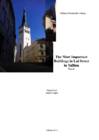
Tallinna Mustamäe College The Most Important Buildings in Lai Street in Tallinn Report Supervisor: Ingrid Teigar Tallinn 2014 Table of Contents Introduction.............................................................................. 3 Lai Street in general.................................................................. 4 The origin of the name "Lai"...................................................... 4 1 Lai Street / 4 Nunne Street...................................................... 5 17 Lai Street............................................................................. 6 23 Lai Street............................................................................. 6 27 Lai Street............................................................................. 8 29 Lai Street...........................................................................
http://www.abiks.pri.ee FREE TIME 1. Is music popular in your family? What music do you like? 2. What musical instruments have you got in your home? 3. Can you play any musical instruments? 4. Do you sing? 5. Have you sung at a song festival? 6. Has your school got a choir? 7. When do you last go to a concert? What concert was it? 8. Have you ever been to an openair concert? What was it like? 9. Do you sing at family parties? Where else Estonians like to sing? 10. Have you got a collection of cassettes, CD´s or LP´s at home? 11. Have you watched a ballet on TV? 12. Which do you prefer ballet, drama or musical? 13. How often do you go to the theatre? 14. Do you prefer going to the theatre or watching TV? Why? 15. Do you prefer buying a cheap ticket and getting a seat at the back or spending more money and sitting in the...
Art Museum of Estonia Art Museum of Estonia was founded on November 17th, 1919, but it was not until 1921 that it got its first permanent building the Kadriorg Palace, built in the 18th century. In 1929 the palace was expropriated from the Art Museum in order to rebuild it as the residence of the President of Estonia. The Art Museum of Estonia was housed in several different temporary spaces, until it moved back to the palace in 1946. In September, 1991 the Kadriorg Palace was closed, because it had totally deteriorated by then. At the end of the year the Supreme Council of the Republic of Estonia decided to guarantee the construction of a new building for the Art Museum of Estonia in Kadriorg. Untill then the Knighthood House at Toompea Hill served as the temporary main building of the Art Museum of Estonia. The exhibition there was opened on April 1, 1993. Art Museum of Estonia premanently closed down the exhibitions in that buildi...
Estonian history between 1710-1850 and 1850-1918 Contents Contents.................................................................................................................................. 2 17101850.............................................................................................................................. 3 Population and social structure........................................................................................ 4 Serfdom and the intensifying manorial economy ............................................................. 4 Influences of Pietism and the Moravian Brethren............................................................. 5 Enlightenment and enlightened absolutism...................................................................... 6 18501918.......................................................................................................................
English lexicology 1. Size of English vocabulary Vocabulary is a sum total of words used in a language by speakers or for dictionary-making. Active and passive vocabulary. The Old English vocabulary was homogenous. There were about 50 000 – 60 000 words, 1/3 of which have survived. o About 450 loans from Latin o About 2000 from the Viking invasions. The Middle-English vocabulary became a heterogeneous hybrid of Germanic and Romanic languages. 100 000 to 125 000 words. o About 10 000 loans from Norman French, 75% are still in use o Continuing Latin influence Early Modern English. 200 000 – 250 000 words o English becomes a pluricentric language. o Polyglot. Cosmopolitan language Modern English. 500 000 words o At present at least 1 billion lexical units 2....
1. STYLE The term "style" is polysemantic (has many meanings): a Latin word "stilus" originally meant a writing instrument used by ancient people. Already in classical Latin the meaning was extended to denote the manner of expressing one's ideas in written or oral form. Jonathan Swift defined style as "proper words in proper places". In present day English the word "style" is used in about a dozen of principle meanings: 1. the characteristic manner in which a writer expresses his/her ideas (e.g. style of Byron) 2. the manner of expressing ideas, characteristic of a literary movement or period 3. the use of language typical of a literary genre (e.g. the style of a comedy, drama, novel). 4. the selective use of language that depends on spheres / areas of human activity (e.g. style of fiction, scientific prose, newspapers, business correspondence, etc.). STYLISTICS Stylistics is the study of s...
FGI 1081 Stilistika (Irina Ladusseva) Kab. 420 2 AP Ends with an exam; lasts only for 1 semester. At the exam you get 2 questions and an exercise (50 sentences: establish the device used, recognize it, and name it). Care about the pronunciation of the terms. Books: - I. Galperin "Stylistics" - I. Ladusseva "Rhythm and Text" - I. Ladusseva "Vocabulary and Style" - I. Ladusseva "Stylistic practice: Book I, Book II" - I. Ladusseva "A Guide to Punctuation" EXAMINATION TOPICS: 1. Style, stylistics, a survey of stylistic studies ...
 annaabi.ee