· The supply function would be perfectly inelastic in this case. The Long Run The long run is a period of time where: technology is constant All inputs are variable Long run period is a series of short run periods. · For each short run period there is a set of TP, AP, MP, MC, AFC, AVC, ATC, TC, TVC & TFC for each possible scale of plant Economies and Diseconomies of Scale Economies of scale, in microeconomics, are the cost advantages that a business obtains due to expansion. They are factors that cause a producer's average cost per unit to fall as scale is increased. Economies of scale is a long run concept and refers to reductions in unit cost as the size of a facility, or scale, increases. There are two typical ways to achieve economies of scale: - High fixed cost and constant marginal cost
Costs per TEU ($US) 500 Trans Atlantic (4,000 miles) 400 300 200 100 0 1000 2000 3000 4000 5000 6000 7000 8000 Capacity in TEU Copyright © 1998-2007, Dr. Jean-Paul Rodrigue, Economies and Diseconomies of Scale in Costs per TEU Container Shipping Capacity in TEU Copyright © 1998-2007, Dr. Jean-Paul Rodrigue,
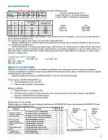
teatud protsendi võrra, siis kogutoodangu maht suureneb suhteliselt rohkem (toodang kasvab ennaktempos). KAHANEV MASTAABIEFEKT (decreasing returns to scale) väljendab seost, et kui suurendada tootmistegurite hulka teatud protsendi võrra, siis kogutoodangu maht küll suureneb, kuid suhteliselt vähem. MASTAABISÄÄST e MASTAABIÖKONOOMIA (economies of scale) ilmneb, kui kulud ühe tooteühiku kohta langevad, samal ajal kui tootmismaht kasvab. NEGATIIVNE MASTAABISÄÄST (diseconomies of scale) ilmneb, kui koos tootmismahu kasvuga hakkavad kulud ühe tooteühiku kohta tõusma. TEHNILISE ASENDUSE (E ASENDATAVUSE) PIIRMÄÄR MRTS MRTS LK = K = MP L L MP K 13 TOOTMISKULUD (KOGU)PÜSIKULUD (total fixed costs, TFC või ka FC)
 annaabi.ee