Global warming Global Warming effects on the natural balance of environment Climate significant change day by day What causes it? Greenhouse gases Fuel burning Ozone layer Deforestation traffic clogging up the city streets rapid growth of unplanned industries the use of CFCs in packaging and manufacturing products Detergents Overpopulation Killing animals like birds, big cats, lions, tigers What it causes? Temperature raising Melting polar ice sheets Currents change its circulation e.g. The Gulf Stream El nino Pollution sea-water to swell up. Natural system Animals deaths Sea level rise reduce mankind's ability to grow foods, destroy wildlife. Agriculture, forestry and fishery damaged Is it dangerous is very dangerous for our existence and survival. sun's scorching heat comes to earth in a direct way
Positive sides of the economic recession The economic recession is inevitable. Without it people would not have any understanding about how economy works and what are the future expectations. During the recession people start thinking about cheaper ways of living. Since the monthly income might not be as brave as it was before, they turn their attention to discounted alternative products and find out that for example it may be possible to use low-priced detergents instead of purchasing a highly recommended one and double the expense. Also, a lot of enterprises and companies gain experience from recessions. They might suffer under lack of different resources for example financial and material crisis. However, if the company overcomes the recession, it gains an invaluable experience how to withstand crisis situations and how to cut balances, even though it might have come with certain sacrifices such as firing workers.
producing. Air pollution the biggest air pollution is in large cities. It´s caused by big factories, a lot cars and deficient environment ordinance. To decrease air pollution we need to use less cars and more public transport. Eutrophication It means water enrichment of nutrient. In eutrophic water there is less oxygen and water quality low. There are some things to improve it: · To disable phosphate use in detergents · Eliminate sources of pollution Example, Estonia eutrophic lakes are Võrtsjärv and Vasula järv. Excessive tree felling Peoples do very often clear cutting and thanks for it animals will lose their place where they live. To decrease this problem we need to do less clear cutting and use less things what is made from wood. ära plakatile kirjuta, lihtsalt pärast loe see ette: What can do one person for estonia evironment: consume sustainably Prefer phosphate-free detergent
Sumatran tigers less than 3 years. In total, 50 million tons of palm oil is produced annually, supplying over 30% of the world’s vegetable oil production. This single vegetable oil is found in approximately 40-50% of household products in countries such as United States, Canada, Australia and England. Palm oil can be present in a wide variety of products, including: baked goods, confectionery, shampoo, cosmetics, cleaning agents, washing detergents and toothpaste. A large proportion of palm oil expansion occurs at the expense of biodiversity and ecosystems in the countries it is produced. Currently, a third of all mammal species in Indonesia are considered to be critically endangered as a consequence of this unsustainable development that is rapidly encroaching on their habitat. There are over 300,000 different animals found throughout the jungles of Borneo and
More often, to delete adsorption products on surface, conditioning by alkalis is applied. Typical conditioning cycle comprises washing with 1 M NaOH, then 0.1 M NaOH, and finally filling the buffer. Before each analysis are performed only the last two steps. Another method consists in washing with a strong acid or with organic solvents such as methanol, dimethylsulfoxide or detergents. Thermal regulation A strong dependence of the input volume and the migration time of the viscosity necessitates thermostation with accuracy ± 0.1 °C using a water or air bath. Although thermostating in liquid is more efficient, air flow of about 10 m / s are suitable for heat dissipation in HECE to 5 W / m
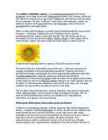
processes and degree of dehulling. C. Industrial Applications: The price of sunflower oil usually prohibits its widespread use in industry, but there are several applications that have been explored. It has been used in certain paints, varnishes and plastics because of good semidrying properties without color modification associated with oils high in linolenic acid. In Eastern Europe and the USSR where sunflower oil is plentiful, sunflower oil is used commonly in the manufacture of soaps and detergents. The use of sunflower oil (and other vegetable oils) as a pesticide carrier, and in the production of agrichemicals, surfactants, adhesives, plastics, fabric softeners, lubricants and coatings has been explored. The utility of these applications is usually contingent upon petrochemical feedstock prices. Sunflower oil contains 93% of the energy of US Number 2 diesel fuel (octane rating of 37), and considerable work has been done to explore the potential of sunflower as an
may reduce microbial contamination on the of E. coli O157:H7 on 240 conventionally external animal surfaces. However, this inter- processed beef carcasses, 240 hides that were vention has variable results and its effective- chemically dehaired before removal, and ness is uncertain. Nevertheless, application on two respective sets of 240 carcasses of low-pressure spray rinses with approved immediately after hide removal at pre- chemicals, such as detergents, organic acids, evisceration in a plant that processed only hydrogen peroxide, and chlorine, on animal dehaired animals. It was shown that the APC hides is practiced in the United States and and Enterobacteriaceae populations on car- Australia (Midgley and Small 2006; Stopforth casses at pre-evisceration that had received and Sofos 2006). chemical dehairing were lower than those on
an antiphosphate ordinance prohibiting the use-and possession!-of laundry or cleaning products containing phosphates. A study done to determine the social im- pact of the law discovered two parallel reactions on the part of Miami residents. First, in what seems a Florida tradition, many Miamians turned to smuggling. Sometimes with neighbors and friends in large "soap caravans," they drove to nearby counties to load up on phosphate detergents. Hoarding quickly developed and, in the rush of obsession that frequently characterizes hoarders, families boasted of having 2o-year supplies of phosphate cleaners. The second reaction to the law was more subtle and more general than the de- liberate defiance of the smugglers and hoarders. Spurred by the tendency to want what they could no longer have, the majority of Miami consumers came to see phosphate cleaners as better products than before. Compared to Tampa residents,
 annaabi.ee