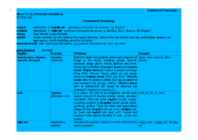
WORD FORMATION (DERIVATION) -er/-or,-ian and ist used to discribe people and work what they do -er -or -ist -ian Dancer Actor Artist Beautician Murderer Director Economist Musician Manager Translator Psychologist liberian Farmer Operator Journalis Derivational suffix adjective -ous DANGER,FAME-dangerous, famous -al MUSIC,POLITICS,INDUSTRY- musical,political,industrial -y CLOUD,FOG,SUN-cloudy,foggy,sunny -ive ATTRACT,CREATE-attractive,creative KERMO MAISTE You need to understand the sentence You have been given. !!!Below phrases need to be learnt!!! · EXCLUDE-exclusive · DANGER-endangered, dangerous · POLLUTE-pollution · SHY- shyness
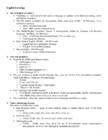
1. Be ready to explain the terms (lecture 1): language, linguistics, synchronic approach to language, diachronic approach to language, linguistic competence, linguistic performance, what is grammar?, prescriptive grammar vs. descriptive grammar; phonology, phonetics, phone, allophone, phoneme; morphology, morphemes (types of morphemes), morphs, allomorphs, types of affixes, derivational affixes, inflectional affixes; open vs closed class words; syntax. Language: a systematic, conventional use of sounds, signs or written symbols in a human society for communication and self-expression. - human language at all levels is rule- or principle-governed. Linguistics: the scientific study of human natural language Synchronic approach to language: Diachronic approach to language: Linguistic competence: Linguistic performance: What is grammar
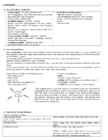
Infixes – A morpheme that is inside of the root word. English doesn’t have these types of affixes. Circumfixes – Morphemes that surround the word stem. English doesn’t have these morphemes either. Affixes can be derivational or inflectional Derivational affix – It may change the meaning in a word by changing the grammatical class of the root. For example: consider (a verb), inconsiderate (adjective), consideration (noun). Inflectional affix – It produces different word forms, not
Adj plus adj (nt, light blue dress) Noun plus participle 2 (nt, man-made) Nouns:noun plus noun (nt, ash-tray) Noun plus adj (nt, black board) 2 Noun plus gerund (nt, smoking room) Noun plus verb (nt, search light) For example: forget -me not formed a compound out of a sentence. It's a syntactic word building (ehk compression) Derivational compounds are compound derivatives (nt, black heared boy). Compounds may be based on reduplication (nt, hush-hush, murmur). Ironic words (nt, pretty-pretty), ablaut combinations two parts with same consonant sounds but different vowels (nt, chit-chat foolish talking). There is also rhyming combinations (hoity-toity) 10. Conversion is a non affixal formation of words. (zero derivation) . Conversion is using a word of one part of speech as a word of some other part of speech. Words with
analytic analüütiline (= uninflected - grammar is focused in the sentence , e.g. English) synthetic sünteetiline (= inflected - grammar is focused in the word, e.g. Estonian, Latin, Russian, Old English) ending lõpp (käände- ja pöördelõpud) marker tunnus (mitmuse, oleviku, lihtmineviku, tingiva kõneviisi, käskiva kõneviisi, kaudse kõneviisi, umbisikulise tegumoe, ma- tegevusnime, oleviku kesksõna, mineviku kesksõna) derivational affix liide, tuletusliide, tuletusafiks (e.g. postwar, anti-American, wiser, greenish) parts of speech sõnaliigid English Estonian Definition Example noun (proper, common, nimisõna, Refers to words which denote classes and categories of book, water, sincerity, Mary,
Common prefixes include anti- (against), co- (with), mis- (wrong, bad), and trans- (across). Prefixation (the process of adding a prefix to a word) is a common way of forming new words in English. Examples: anti-, auto-, circum-, co-, ex-, trans-, inter-, dis-. 20. Suffixes A letter or group of letters added to the end of a word or root (i.e., a base form), serving to form a new word or functioning as an inflectional ending. A derivational suffix (such as the addition of -ly to an adjective to form an adverb) indicates what type of word it is. An inflectional suffix (such as the addition of -s to a noun to form a plural) tells something about the word's grammatical behavior. -able, -al, -ness, -ist, -dom 21. Infixes – An infix is an affix that is inserted inside its base. A word element (a type of affix) that can be inserted within the base form of a word (rather than at its beginning or
De – reversing prefix Odor – base 1)free – can be separate words 2)bound – can’t occur separately -ize – verb forming suffix Deodorization + - ation – suffix 18. Prefixes A prefix is an affix that precedes its base. An element placed at the beginning of a word to adjust or qualify its meaning. o De-, un-, mis-, re-, etc In english all prefixes are derivational, thus creating new lexemes instead of inflected forms of words. o Happy – unhappy, contaminate – decontaminate 19. Suffixes A suffix is an affix that follows its base. An element placed at the end of a word to form a derivative, such as –ation, -fy, -ing, frequently one that converts the stem into another part of speech. While the prefixes do not change anything in the pronunciation of shape of the base words, the suffixes have such an effect.
 annaabi.ee