LOODETE ENERGIA LOODED Looded on maailmamere veetaseme kõikumised, millel on kindel ööpäevane rütm. Maailmamere loodeid nimetatakse tõusuks ja mõõnaks, vastavalt sellele, kas meretase on loodete tõttu keskmisest kõrgemal või madalamal. Tõusu kõrgus või mõõna langus on väga koha-spetsiifiline, sõltudes kaldajoone ja merepõhja profiilist. Ookeaniavarustel on nende kõrgus poole meetri ringis ja suureneb oluliselt lehtrikujulistesse lahtedesse ja jõgede suudmetesse sisenedes, kui vood peavad kitsenema. On kohti, kus loodete ulatus küünib 15 meetrini. Suletud veekogudes looded praktiliselt puuduvad. Loodelise veeliikumisega seotud tõusu perioodiks on 12 tundi 25 minutit (ööpäevas 2 tõusu ja 2 mõõna). LOODETE TEKKIMINE Looded tekivad Kuu gravitatsiooni ja Maa pöörlemise tsentrifugaaljõu koosmõjul. Maa keskpunktis on need jõud omavahel tasakaalus, kuid Maa Kuu-poolsel küljel saab Kuu gravitatsioonijõud ülekaalu...
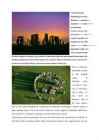
ritual landscape and was joined to Durrington Walls by their corresponding avenues and the River Avon. The area around Durrington Walls henge was a land of the living, whilst Stonehenge was a domain of the dead. A journey along the Avon to reach Stonehenge was part of a ritual passage from life to death, to celebrate past ancestors and the recently deceased. [11] On the other hand, Geoffery Wainwright, president of the Society of Antiquaries of London, and Timothy Darvill have suggested that Stonehenge was a place of healing the primeval equivalent of Lourdes. [12] They argue that this accounts for the high number of burials in the area and for the evidence of trauma deformity in some of the graves. However they do concede that the site was probably multifunctional and used for ancestor worship as well.[13]
However, conventional techniques using Neolithic technology have been demonstrably effective at moving and placing stones of a similar size. Proposed functions for the site include usage as an astronomical observatory, or as a religious site. More recently two major new theories have been proposed. Professor Geoffery Wainwright OBE, FSA, president of the Society of Antiquaries of London, and Professor Timothy Darvill, OBE of Bournemouth University have suggested that Stonehenge was a place of healing the primeval equivalent of Lourdes. They argue that this accounts for the high number of burials in the area and for the evidence of trauma deformity in some of the graves. However they do concede that the site was probably multifunctional and used for ancestor worship as well. Isotope analysis indicates that some of the buried individuals were from other regions. A
ciationȱPublishing.ȱ Aoki,ȱ Y.,ȱ Kato,ȱ N.,ȱ &ȱ Hirashawa,ȱ M.ȱ (eds)ȱ (2003).ȱ Josangakuȱ Taikeiȱ 8ȱ Josanȱ Shindanȱ GijytsuȬgakuȱ 2ȱ [MidwiferyȱSystem.ȱVol.ȱ8:ȱMaternityȱdiagnosesȱandȱtechniquesȱ2].ȱTokyo:ȱJapaneseȱNursingȱAssoȬ ciationȱPublishing.ȱ Callister,ȱL.C.ȱ,ȱHolt,ȱS.T.,ȱ&ȱKuhre,ȱM.ȱ(2010).ȱGivingȱbirth:ȱTheȱvoicesȱofȱAustralianȱwomen.ȱJournalȱ ofȱPerinatalȱandȱNeonatalȱNursing,ȱ24(2),ȱ128–136.ȱ Darvill,ȱ R.,ȱ Skirton,ȱ H.,ȱ &ȱ Farrand,ȱ P.ȱ (2008).ȱ Psychologicalȱ factorsȱ thatȱ impactȱ onȱ women’sȱ experiȬ encesȱofȱfirstȬtimeȱmotherhood:ȱAȱqualitativeȱstudyȱofȱtheȱtransition.ȱMidwifery,ȱ26(3),ȱ357–366.ȱ Furber,ȱC.,ȱGarrod,ȱD.,ȱMaloney,ȱE.,ȱLovell,ȱK.,ȱ&ȱMcGowan,ȱL.ȱ(2009).ȱAȱqualitativeȱstudyȱofȱmildȱtoȱ moderateȱpsychologicalȱdistressȱduringȱpregnancy.ȱInternationalȱJournalȱofȱNursingȱStudies,ȱ46(5),ȱ 669–677.ȱ
 annaabi.ee