• Reduces crop quality and health – increases moisture and disease levels • Delay harvesting – conservation of moisture may delay ripening Beneficial effects of weeds • Valuable indicators • Help against erosion • Many weeds are used as herbs for flavouring • Some weeds are used for their medical properties Seed bank • The reservoir of viable seeds found in the soil or at its surface • Depends on the intensivity, soil type, previous cropping, cultivation and herbicide use • 1000 seeds/m2 in pastures or intensively managed arable fields • 80000 seeds/m2 in less intensively managed fields Different ways to deal with weeds • Herbicide • Non-chemical • Integrated weed management • Biological control of weeds Herbicides • ‘’Weedkiller’’ • Pesticides used to kill unwanted plants • Selective herbicides kill specific targets while leaving the desired crop unharmed
Wojtkowski, who is very famous as leading proponent and analyst. This book presents a wide range of new and diverse techniques for sustainable agriculture for the purpose of enhancing economic interest. Since agriculture is growing really convivially, the emphasis is on changing from conventional agriculture to more efficient systems and practise. This book is very educational because it explains how is the best way to analyze the experimental results from intercropping and multiple cropping trials. Also offers a means for risk assessments. I chose this book because my family also is engaged to farm business and agriculture. This book has 293 pages which includes 16 chapters, it was first published in 2008, so it is quite new book. It was very interesting to read about because there were lots of themes and tips about how to cultivate our soil. I think that a lots of farmers could get help from this book
million head of cattle and Alberta beef has a healthy worldwide market. Nearly one half of all Canadian beef is produced in Alberta. Alberta is one of the prime producers of plains buffalo (bison) for the consumer market. Sheep for wool and mutton are also raised. Wheat is primary farm crop, with Alberta leading the provinces in spring wheat production; other grains are also prominent. Much of the farming is dryland farming, often with fallow seasons interspersed with cultivation. Continuous cropping (in which there is no fallow season) is gradually becoming a more common mode of production because of increased profits and a reduction of soil erosion. Across the province, the once common grain elevator is slowly being lost as rail lines are decreasing; farmers typically truck the grain to central points. Alberta is the leading beekeeping province of Canada, with some beekeepers wintering hives indoors in specially designed barns in southern Alberta, then migrating north during the summer
In 1931, Leger visited New York City and decorated Nelson Rockefeller's apartment.[13] In 1935, the Museum of Modern Art in New York City presented an exhibition of his work. During World War II Léger lived in the United States, where he found inspiration in the novel sight of industrial refuse in the landscape. The shock of juxtaposed natural forms and mechanical elements, the "tons of abandoned machines with flowers cropping up from within, and birds perching on top of them" exemplified what he called the "law of contrast".[14] His enthusiasm for such contrasts resulted in such works as The Tree in the Ladder of 1943-44, and Romantic Landscape of 1946. A major work of 1944, Three Musicians (Museum of Modern Art, New York), reprises a composition of 1930. A folk-like composition reminiscent of Rousseau, it exploits the law of contrasts in its realistic juxtaposition of the three men and their instruments.
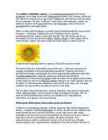
) pan width enables harvesting diagonal to the row, which produces fewer harvest losses in some situations. Windrowing has been demonstrated to be effective, but probably would not be economical, given the added cost of windrower and pickup-modifications. VII. Economics of Production and Markets: The cost of production and return over variable costs for sunflower is similar to that for small grains. The culture of sunflower and growing season requirements makes them a good niche in cropping systems where small grains are the predominant crops. Markets are generally available in most areas where sunflower has been traditionally grown. However, if a grower considers sunflower as an alternative crop, marketing opportunities should be pursued prior to making the decision to grow sunflower, particularly for non- oilseed varieties. Sunflower is the common seed name for the genus Helianthus. The sunflower is native to
5 support young trees to prevent damage e.g. from grazing animals; 6 species planted that are suitable for prevailing conditions / native spp; 7 softwood sp. / conifers / named conifer / fast growing sp. planted; 8 deciduous broadleaved species around edges for aesthetic reasons; 9 creates different habitats / named habitat / protected habitats/ some fallen trees left to rot; max 3 marks for felling/cropping strategy: 10 ref. to clear felling having negative effects e.g. soil erosion; 11 only mature trees removed / selective felling / individual trees; 12 some clearings / rides / glades in woodland / strip felling; 13 control of, pests / diseases / fire prevention; 14 ref to coppicing / pollarding; 15 (deciduous trees) regrow from base/ idea of rotation/ cycle; 16 standards / large trees not coppiced, as encourages biodiversity; 7
 annaabi.ee