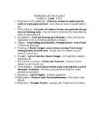
People die of hunger 5. Flooding Climate changes cause excessive raining, Polar icecaps melting (makes sea levels rise) People lose their homes, Loss of animals, Loss of land 6. Drought Lack of rain due climate changes All vegetation, animals and people die 7. Holes in the ozone layer Fumes and chemicals Sunrays become dangerous (skin cancer risk) 8. Overpopulation Lack of opportunities to get contraceptives, Lack of education, Traditions We need to produce more food (but it puts pressure on our planet) 9. Epidemics Lack of hygene Reduces population 10. Earthquakes Planet is tired, Natural phenomena Mud slides (maa lihked) 11. Forest fires Drought, Too dry Animals die, People lose their homes
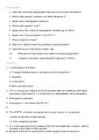
Ageing Changes in family module (1-3 children in family) Percentage of elderly people 25% DR and BR quite low/equal Demographic crisis, DR sometimes higher than DR MODERN ALTERNATION OF GENERATIONS BR and DR quite low, close to zero Different age complement (vanuse kooslus): -working age 51... % -children 25...% -elderly ...20% BR influenced by: Women: -the number of women at fertile age -the age of women giving birth to a baby -religion -the availability of the contraceptives -the possibility of abortion -traditions of living together (cohabitation) -values: how people take the role, society's influence -role of society: different subsidies, supports or not -traditions: how many children are so called normal -role of men and women in the society -economic situation of the society (democratics, military reigme) DR influenced by: -age -povery and famine -different diseases, bad healthcare -unhealthy ways/habits of living (drinking, smoking etc)
hidden-employment; marginal population (latin America, not black Africa. Big cities, better future) 7. The balance of migration is the discrepancy between emigration and immigration. Developed countries (EUROPE): started in the 15th c and peaked in the 18th c. 40% is children. Developing countries : the quick demographic explosion didn't start until the 1950s and hasn't stopped to this day. The per cent of children is higher than 60%. 8. Education, contraceptives, society, healthcare, number of women at the right age(vms), possibility of taking abortion. 9. 1. Diseases of heart & blood vessels, 2. Cancer, 3. Accidents, 4. AIDS, 5. Suicides, etc. Spikk II 2. moral trad. (40y), work-labour 3.education compulsory, prohib. of children's work Spread of women's wage work, new insurance syst. 4. 1-3 child.BR-low, DR-low, demographic crisis 5. 6. sub-empl, hidden-empl, marginal pop.
ainult naissoost isikutele) tõepärast informatsiooni ning neile arusaadavalt seletada erinevate kontratseptsioonimeetodite toimemehhanismi. Koolide tervise-, perekonna- või seksuaalõpetuse tundidel on selles eriliselt vastutusrikas ülesanne. 12 Kasutatud Internetimaterjal: http://www.webmd.com/sex-relationships/guide/birth-control-contraceptive-myths http://www.advocatesforyouth.org/youth/health/contraceptives/mythsfacts.htm http://www.clevelandclinic.org/health/health-info/docs/2400/2425.asp?index=9137&src=newsp http://www.sexualityandu.ca/teens/contraception-5.aspx http://womenshealth.about.com/cs/birthcontrol/tp/10birthcontrol.htm http://news.bbc.co.uk/2/hi/health/1441898.stm http://www.thesite.org/sexandrelationships/sexuality/awareness/sexmyths http://www.nzgirl.co.nz/articles/2598 http://contraception.about.com/od/contraceptionmyths/tp/pillmyths.htm http://www.bebashi.org/Contraception.htm
835 (normal is 280800), but my libido and vitamin D decreased, the latter to 31.3 (normal is 32100). Be smart and test regularly. Even with the perfect diet, it is possible to develop nutrient de ciencies. How? By using drugs that prevent speci c nutrient absorption, or by overengaging in training that taxes a particular biochemical system. Here is a small sample of drugs and training regimens matched to some of their associated deficiencies. Have you used any of them? Oral contraceptives Used for: birth control Associated deficiencies: folic acid, vitamins B-2, B-6, B-12, and C, zinc, magnesium Stimulants (e.g., the "greenies" used by baseball players, the "go pills" used by air force pilots, or high-dose run-of-the-mill caffeine) Associated deficiencies: molybdenum, B-5, potassium, magnesium, vitamin C Antibiotics Used for: bacterial infections Associated deficiencies: B vitamins, folic acid, vitamins D and K11 Antidepressants Used for: depression
 annaabi.ee