count is incremented. In many cultures, the event is celebrated in some manner. The New Year of the Gregorian calendar, today in worldwide use, falls on 1 January, as was the case with theRoman calendar. There are numerous calendars that remain in regional use that calculate the New Year differently Independence Day Independence from the Russian Empire in 1918. Independence re-declared from the Soviet Union in 1991 An Independence Day is an annual event commemorating the anniversary of a nation's assumption of independent statehood, usually after ceasing to be a group or part of another nation or state; more rarely after the end of a military occupation. Most countries observe their respective independence days as a national holiday, and in some cases the observance date is controversial or contested. Good Friday Moveable Friday Good Friday is a religious holiday observed primarily by Christians commemorating
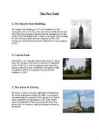
Boulevard and an underground shopping center. Construction works started in 2008. History In 19th century Freedom Square was called Peetri plats. During the Soviet period, Freedom Square was known as the Victory Square. Before Freedom Square there was a parking lot. It was opened on 23 June 2009 as a memorial for those who fell during the Estonian War of Independence. This cost to Estonia about 26,9 million euros. Victory Column It is also there to commemorating the Estonian War of Independence 1918 1920. The idea of creating a monument was conceived in 1919, before the end of the war. In 2006, a design competition for the monument received more than 40 entries. The winning entry "Libertas" was designed by Rainer Sternfeld, Andri Laidre, Kadri Kiho and Anto Savi. Facts Freedom Square area where it is located is 7752 m². To avoid birds, on the top of the Victory column there are speacial grillwork.
Independence day 24 February. Estonian people often have a day-off from school and work, to celebrate this day. People often make big dinners and sit around in the circle of family. They often light a few candles on the window and all houses have an Estonian flag out. This is by law the most important holiday, commemorating the declaration of independence in 1918. New Year's Eve 31December The New Year's Eve is an event that happens when Estonians celebrates the end of one year and the beginning of the next year. Estonians launch a big amount of fireworks up to the sky at midnight. It's a celebration with family and friends. After launcing the fireworks people watch and toast and wich a happy new year to each other. Christmas Eve 24 December
and the day before New Year's Day. New Year' s Eve is celebrated all around world because it's final day of the Gregorian year. New Year's Eve is usually celebrated with families or with friends. Few hours before and after midnight, people usually party and eat a nicer dinner, often three courses. New Year's Eve is celebrated with large fireworks displays throughout the country, especially in the cities. Independence Day An Independence Day is an annual celebration commemorating the anniversary of a nation's assumption of independent statehood, usually after ceasing to be a colony or part of another state, more rarely after the end of a military occupation. In Estonia it's celebrated on February 24.Estonia got independence from the Bolshevist Russia in 1918.Estonia regain independence in 1991 from NSVL when it fall a part. St John`s Day (jaanipäev) In Estonia, aside from Christmas, St John's Day is the most important days in the calendar
in 1972. 2. Central Park. Central Park is an urban park that occupies about 1.2 square miles (341 hectares, or 843 acres) in the heart of Manhattan in New York City. It is host to approximately twenty-five million visitors each year. Central Park was opened in 1859, completed in 1873 and designated a National Historic Landmark in 1963. 3. The statue of Liberty. The Statue of Liberty officially titled Liberty Enlightening the World, dedicated on October 28, 1886, is a monument commemorating the centennial of the signing of the United States Declaration of Independence, given to the United States by the people of France to represent the friendship between the two countries established during the American Revolution. 4. Skyscrapers and the Stars and Stripes. 40 Wall Street: Built in 1929 as the headquarters of the Bank of Manhattan, this was intended to be the world's tallest building. The building became known for its 70th floor observatory and its 43 high-speed
with large fireworks displays throughout the country, especially in the cities. People over 18 are allowed to buy fireworks, which are sold by local stores or by private persons. While watching or lighting up fireworks at midnight, people usually drink champagne. This day is also the occasion to make bonfires of discarded Christmas trees in some countries. Before new year people gives promises for coming year. Independence Day An Independence Day is an annual celebration commemorating the anniversary of a nation's assumption of independent statehood, usually after ceasing to be a colony or part of another state, more rarely after the end of a military occupation. In Estonia it's celebrated on February 24.Estonia got independence from the Bolshevist Russia in 1918.Estonia regain independence in 1991 from NSVL when it fall a part. People make some preparations before Independence Day, like they look up if they have a flag.
have become a tradition and will be crowned by the International Hansa Days to be organized by Pärnu in 2010, brings artists onto the streets. The main centers for cultural activities are Enda Theatre, built in the 1960s, which greets visitors riding in from Tallinn and the Pärnu Concert Hall, located on the riverbank next to the bridge, which has a grand hall with an organ and extraordinary acoustics. Of the Pärnu festivals, many are related to music. The largest of these is the festival commemorating David Oistrakh, the world-famous violinist, also Neeme Järvi organizes festivals in Pärnu. Along with classical music, which culminates in the Glass Pearl Festival in July and August, the improvisation competition on the year's shortest night lives: here musicians improvise well-known melodies, and there is always room for jazz and pop music. Sources 1. http://www.koitjarv.pri.ee/files/2003%20AEU%20-%2072dpi.pdf 2. http://www.visitestonia.com/index.php?page=723 3. http://www.ecotourism
Chapter Fourteen Declaration Bella, Edward, and Alice are in the school cafeteria discussing their upcoming graduation party. Bella thinks the planned assault on the newborns makes a party inappropriate. Alice counters that they need time to get a few things in order before the battle, and commemorating Bella's first (and only human) high-school graduation is entirely appropriate. Edward informs Bella of Jasper's concern that they get help in their fight against the newborns. Jasper and Carlisle are trying to track down old friends to join the fight including Maria, but nobody wants to involve the southerners. Edward is convinced that someone will help them: no one wants a visit from the Volturi. Bella feels physically ill at the thought of the
The Hotel Adlon, which overlooks the Brandenburg Gate from the eastern side, was already Berlin's most famous hotel way back before World War II. It was naerly bomb-proof, and known as the place where foreign dignitaries and celebrities would stay whenever they visited town. In fact, I happened to be walking by its front entrance in 1999 when I saw a commotion that included Mikhail Gorbachev, George HW Bush and Helmut Kohl emerge from cars for a celebration there commemorating the 10-year anniversary of the fall of the Berlin Wall. Then in 2002 Michael Jackson bizarrely dangled his son out one of the windows, and that has been its calling card ever since. Massage and Body Treatments Beauty Treatments Yoga and Relaxation Training Spa Suites Gym Pool Personal training Beauty Salon Hair salon http://www.kempinski.com/en/berlin/hotel-adlon/welcome/ Paris Hôtel Ritz Paris
most influential member of NATO and therefore we can say that in the sense of national security we depend on them. For this reason Estonian politics are very much interested in having good political relations with the United States and therefore some political decisions in Estonia might be influenced by the United States even if this impression might be withheld from the public. For instance, one example that comes to mind is the removal of the Monument of Lihula, which is a monument commemorating the Estonians who fought on the German side for Estonia against the Soviet Union in World War II. In Estonia the influence of the United States is felt the most in cultural sphere. We live in a society that is no longer limited by state borders when it comes to consuming different goods and media. The United States are not the only cultural imperialists, but I would say that in Estonia their influence is the biggest
was built. The only surviving artifact from the old Cathedral was a statue of John Donne which can now be seen in the South Aisle. Building was completed 1710. During the Second World War's Blitz, St Paul's Cathedral became a great symbol of how Londoners could 'take it'. After each night's bombing, there was St Paul's, still intact. That is not to say it survived unscathed. A bomb hit the north transept and another destroyed the High Altar which was replaced by one commemorating the dead of the First and Second World Wars. The chapel behind the High Altar, also damaged, was restored. It is called the American Chapel and dedicated to the Americans who died in Britain during the Second World War. St Paul's has been the scene of many great State ceremonies including: · a thanksgiving for the end of the Napoleonic Wars · the Duke of Wellington's funeral · the wedding of Prince Charles and Lady Diana Spencer
to founder (13) (of a plan or undertaking) fail or break down as a result of a particular problem. Situation: Aurelia foundered when talking about June but then her voice got stronger and she asked explained that June had nothing to come home to. a cairn (16) - a mound of rough stones built as a memorial or landmark, typically on a hilltop or skyline. Situation: Albertine was explaining that when she was young, her grandma seemed to her the same size as the rock cairns commemorating Indian defeats around there. to cut a figure (17) - present oneself or appear in a particular way. Situation: Albertine was telling that she adored June for adult confidences and for the figure she cut when she was talking. morosely (26) - not feeling very cheerful. (gloomily) situation: King was upset and sat morosely in the car with a beer. to cajole (36) - persuade (someone) to do something by sustained coaxing or flattery.
national tradition, being held every 4-5 years. This all lead to Estonia's independence on 24 February 1918. In June 1940 Estonia became a part of the Soviet Union. On 20 August 1991 the Republic of Estonia was restored without any bloodshed. CULTURE? National emblems. The Estonian blue-black-and-white national flag was originally the flag of the Estonian Students' Society, consecrated in Otepää Church in 1884. Today there is a memorial plaque on the church wall commemorating the event. The Flag Museum was opened in 1996. During the Soviet time the flag was prohibited. But many people hided their flags somewhere and the flag was seen again in 1988 in public. A meeting was held in Tartu and elderly people were carrying the flags, nationalistic speeches were told and patriotic songs were sung. Tears were rolling down people's cheeks. The Estonian flag is hoisted every morning at sunrise and lowered at sunset.
while the Arab scholar alIdrisi was the first one to mark it on a map (as ASTLANDA). To the ancient Scandinavians the land was known as EISTLAND; to modern Scandinavians it is known as ESTLAND. Most contemporary languages use the Latin name ESTONIA. FLAG The Estonian blueblackandwhite national flag was originally the flag of the Estonian Student's Society, consecrated in Otepää Church in 1884. today there is a memorial plaque on the church wall commemorating the event. The Flag Museum attracts tourists who take an interest in the history of the flag. After about half a century, during which it was prohibited by the Soviet authorities, the flag was sen again in public for the first time in Tartu. Many elderly people were carrying the flags they had kept in secret hiding places durin the Soviet years; tears were rolling down their cheeks. On 24 February 1989, Estonia, still part of the Soviet Union, hoisted its tricolour on the tower
and the widest is Emajõgi. About 50% of the country is covered by forests while wetlands cover 30%. The landscape of Estonia, through covering a small area, is varied and unique. Lake Peipsi is Estonia's largest lake and Europe's fourth largest freshwater lake. 5. Symbols The flag The Estonian blue-black and white national flag was originally the flag of the Estonian Students' Society and was consecrated in Otepää Church in 1884. Today there is a memorial plaque on the church wall commemorating the event. The Flag Museum, opened in an annex in 1996, attracts tourists who take an interest in the history of the flag. After about half a century, during which it was prohibited by the Soviet authorities, the flag was seen again in public for the first time in Tartu in May 1988. 24 February 1989, Estonia, still part of the Soviet Union, hoisted its tricolor on the tower of Pikk Hermann in Tallinn. Since then the flag has always been hoisted with ceremony on that day, which is the national
It was a relatively mild authoritarian regime, yet it cannot be considered a total dictatorship. 1 The “official nationalism” with its corporative nature was criticised by intellectuals. The Estonian Writers’ Association, however, supported the steps taken by the government. Social life stabilized and the economic situation improved. Eesti Raamatu Aasta (Year of the Estonian Book) in 1935 was a great national cultural event, commemorating the 400th anniversary of the publication of the first book in Estonian (Simon Wanradt and Johann Koell: The Lutheran Catechism, printed in Wittenberg). Prizes were awarded to writers, scientists and book illustrators. 1 The sentiments of the apologists of the regime at the time: compared to Poland, Portugal, Spain, Italy and Germany, it almost had the air of accuracy. Since the beginning of the Thirties writers and artists concentrated on national themes, including history
 annaabi.ee