Slumdog Milionaire Robi Kivi LGA18 Describe at least ONE idea that was worth learning about in the text. Explain why the idea was worth learning about in the text as a whole, using examples of visual and / or oral language features to support your ideas. In Slumdog Millionaire directed by Danny Boyle "Love conquers all" is an idea worth learning about. Boyle uses cinematography, dialogue & gesture and flashbacks to show this. Love conquers all is an idea worth learning about because you may come across it in many texts, it's a universal idea and it's appealing to us as an audience. Love conquers all is the common theme in the texts, especially those which feature young love. Other texts such as the well-known play Romeo and Juliet by William Shakespeare, to the novel feed by M.T Anderson and even music such as Right by my Side by Nicki Minaj
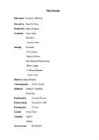
Film Review Film name: Scarface (1983 film) Directed by Brian De Palma Produced by Martin Bregman Written by Oliver Stone Ben Hecht Howard Hawks Starring Al Pacino Steven Bauer Michelle Pfeiffer Mary Elizabeth Mastrantonio Robert Loggia F. Murray Abraham Harris Yulin Music by Giorgio Moroder Cinematography John A. Alonzo Editing by Gerald B. Greenberg David Ray Distributed by Universal Pictures Release date(s) December 9, 1983 Running time 170 min. Country United States Language English Spanish Gross revenue $25,000,000 The film begins with a description of how, in 1980, Cuban President Fidel Castro let the gates
characters who manage themselves through the grimy and violent city. Frank Miller had bring some remarkable characters into his comic novel like Marv, who is huge hulking thug and almost impossible to kill. I was very impressed by that film. It gave me a whole new movie experience. Every scene looked like a masterpiece. Actually every frame was like a perfect photo of a city full of violence and passion. Sin City is a "must see" movie. It gives a very much new ideas about cinematography. For someone who loves Frank Millers work should certainly see Sin City as a film.
cinema; it is only a part of the total Indian film industry, which includes several regional film industries sorted by language. Bollywood is the largest film producer in India and one of the largest centers of film production in the world. Bollywood films are multi-million dollar productions, with the most expensive productions costing up to 100 crores rupees (roughly USD 20 million). Sets, costumes, special effects, and cinematography were less than world-class up until the mid-to-late 1990s, although with some notable exceptions. Bollywood sold 3.6 billion tickets and had total revenues (theatre tickets, DVDs, television etc.) of US$1.3 billion, whereas Hollywood films sold 2.6 billion tickets and generated total revenues (again from all formats) of US$51 billion. Bollywood's biggest problem is piracy - where people copy the films and either sell them or
and at first, its seems that he could do really well. But after a while he understand, that the school is probably the worst place where to be, when you want a peaceful life. The teachers look the other way as the older students are very brutal to younger, creating a hierarchical society based on class and age. The film was made in 2003 and directed by Mikael Håfström. Andreas Wilson plays the leading role of Erik Ponti. It has been named Best Film, Best Cinematography, Best Production Design (2004 Swedish Film Awards); Audience Award for Best Feature (2004 Miami International Film Festival). And it was nominated in the Best Foreign Language Film category in the 2004 Oscars. The plot of the film is basically the same as the books, but in the film, the director has tried to make Erik seem better. In my opinion it was unnecessary because although Erik was more violent in the book, he still made a positive impression
Dunaway and John Huston. Director Roman Polanski was recognized for this amazing movie. The film has categorized as mystery and psychological drama and for multiple times it has been listed among the greatest films in world cinema. 1 In 1975 the film was nominated for eleven Academy Award, which were Best writing-Original screenplay, Best actor in Leading Role, Best Actress in a Leading Role, Best Art Director-Set Decoration, Best Cinematography, Best Costume Design, Best Director, Best Film Editing, Best Music-Original Dramatic Score, Best Picture and Best Sound. An Oscar went to Robert Towne for Best Writing-Original Screenplay. It also has won three BAFTA Film Awards for Best Actor, Best Director and Best Screenplay, Edgar Allan Poe Award for Best Motion Picture, four Golden Globes and many more.2 Chinatown is a layered film, which takes place in Los Angeles in the 1930s. It narrates a story of a private detective J.J
How genre and narrative makes meaning in ``The Black Dahlia`` When analyzing a film, people understand the movie is much more complicated than it seems. To make a difference, to give a meaning to the film, film-makers have used different visual and thematic features. There are macro features (genre, narrative) as well as micro features (mise en scene, cinematography) and they are linked together in many ways. I have chosen to analyse the closing sequence of ``The Black Dahlia``, directed by Brian de Palma, and I will focus on macro features in this essay. Brian de Palma is well known director, who is focused on noir area through his career (he was once considered as a Hitchcock imitator) ``The Black Dahlia" can be classified as Film Noir. The genre is called Film Noir due to the `serie noir` books, which were
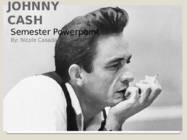
years wrote for him, about him. "Hurt" 1994 was first written and recorded in by the "Nine Inch Nails" Trent Reznor, and in 2002 Cash put his own country twist on it and made the song his own in his album - "American IV: The Man Comes Around." The accompanying music video, directed by Mark Romanek is nominated for seven MTV Vido Awards and wins for Best Cinematography. Cash claimed, "It is the best anti-drug song I had ever heard." The song touched Cash as he could relate H to each individual word sang. The song talks about hurting yourself, and that each person has the choice to make the pain stop, it's whether or not you make the right decision. U R T April 2, 1956 Cash recorded his single "I Walk the Line" . May 1, 1956 the
Filmiography: un chien andalou, l'age d'or, los olivados, viridiana, le journal d'une femme de chambre, belle de jour, le charme discret de la bourgeoisie, cet obscur du desir 1930- l'age d'or. Portrays two lovers and their ,,amour fou" who are facing obtacles of society in the pursuit of their passion Technical features: Narrative: questioning of the narrative logic of films, questioning of the validity of perception, often open end narratives, radical shifts of focus within the narratives Cinematography: long takes, often long pan shots, in his later career: long, mobile, fluid camera shots Directing actors: bunuel often refused to give any indications to his actos Sound: very ecnomical use of non-diegetic sounds (often only sound effects, rarely music) 27.02.12 Jean Renoir Humanism on celluloid Was born in a bohemian, wealthy family in Paris, son of August Renoir. Worked as a potter and ceramics. Served in the French army during the first world war. After the end of the war
rhododendron, stigma, synthesis, thesis. With Latin endings o Brontosaurus, chrysanthemum, diplodocus, hippopotamus, Pliohippus Endings dropped or adapted o Agnostic, agnosticism, alphabet, alphabetic, analyst, analytic, anthocyanin, astrobleme, atheism, automatic, biologist, biology, blasphemy, charismatic, chemotherapy, chronobiology, cinematography, critic, criticism, dinosaur, dogmatic, dogmatism, dramatic, dramatist, electric, electronic, enigmatic, epistemic, epistemology, gene, genetic, herpetology, narcolepsy, odyssey, oligarchy, patriarch, phenomenology, photograph, pterodactyl, sympathomimetic. Modern o Bouzouki, moussaka, ouzo, rebetika, sirtaki, souvlaki. 6. Celtic borrowings Later Celtic borrowings o clan offspring, family, stock,
innovative both in thematics and form: reflections on Man, homeland, world and universe in their connections and antagonisms, scepticism and disillusionment are illustrated in a mature and individual formulation. Drama was rising to a new level tackling complicated social problems: August Kitzberg’s tragedy Libahunt (The Werewolf, 1912). Before the historic watershed of 1917, the main genres of Estonian literature had attained a notable artist level. At the same time Estonian cinematography took its first steps. Cinematographic achievements had been first demonstrated in Tartu and Tallinn in 1896. The first stationary cinema was built in Tallinn in 1907. The first Estonian filmmaker was Johannes Pääsuke (1892-1919) from Tartu. He is the author of the first Estonian feature film: Karujaht Pärnumaal (Bear Hunt in Pärnu county, 1914), a political satire involving the Mayor of Pärnu. The main centre for national romantic art ideology and practice was the atelier
 annaabi.ee