Signed a joint contract with Interscope, Polydor and Stranger Records (July, 2011) Born To Die (January, 2012) List of her most famous songs Summertime Sadness Young And Beautiful Video Games Blue Jeans Born To Die Ride https://www.youtube.com/watch?v=nVjsGKrE6 E8 Musical influences Elvis Presley Amy Winehouse Janis Joplin Nirvana Eminem Bruce Springsteen Britney Spears Musical style Cinematic sound Refrences to various aspects of pop culture ''A torch singer of the internet era'' ''The anti-Gaga'' Attributed to many genres, Del Rey's sound has been primarily linked to indie and baroque pop Writes her own music Awards Q Award for ''Best New Thing'' GQ Award for ''Woman of the Year'' Two BRIT Awards EMA for ''Best Alternative Act'' Personal quotes I'm a writer first and a singer second. I write my own songs
jazz 20 saj saksofon, kitarr, klaver, el pillid, erinevate rahvaste motiivid ja tämbrid, rütmilised, tantsulised, lõõgastav, vaba improvisatsioon, elektrilised võimendused, müra, erinevad rütmifiguurid, free funk (tantsuline, rütmikas, jazz rocki rütmid, vaba improvisatsioon, Ornette Coleman), no wave (James Blood Ulmer kitarr), hiphop jazz (Gang Starr, ansambel), new age jazz (Dave Liebam), acid jazz (James Taylor Quarter), smooth jazz (George Benson), nu jazz (Cinematic Orchestra), new traditionalism (Wynton Marsalis, David Murry).
embargos. Soviet cinema after the october revolution: 1919 the first film school: bring the cinema to the countryside. Agit trains-theatergroup performing a pie ce of communism. New generation of filmmakers start to create avant-grade: verto, kuleshov, pudovkin dovzheno, eisenstein The age of soviet montage cinema: the classical perion 1920s. The idea behind montage cinema: · promotion of communist ideals via the means of film · editing is the tool to achieve new expression, a new cinematic language · two tendencis: eisenstein: reproduction of historiccal events in feature films. · Vertov: radical realism, only documentary films, feature films are ,,impotent" The kuleshov workshop Lev kuleshov was one of the few pre-revolutionary filmmakers who stayed in russia Gave a workshop at the VGIK that turned out to be influential for Soviet Cinema Aim: tried to define general principles. Showed films to people and tried to understand how to they interact to those images
- James Taylor Quartet. New traditionalism e neobop. - Proovib jazz’i viia tagasi bebop’i ajastusse. - Wynton Marsalis. Smooth jazz - Ajaviiteline, lõõgastav ja rahustav instumentaalne taustamuusika. - Tantsuline, peamiselt stuudios toodetud. - Boney James, George Benson. Nu-jazz - 2000- - House-muusika, elektroonilise tantsumuusika ja jazzi elementide sümbioos. - Peetakse ka acid jazz’i järeltulijaks. - Cinematic Orchestra Drum’n’bass jazz - Segu elektroonilistest bassirütmidest ja improvisatsioonist. - Kasutavad paljud muusikud - Herbie Hancock, Courtney Pine, John Coltrane Jazz-muusika Eestis - Jõudis Eestisse 1920.aastatel. - Esimene avalik jazz-muusika kontsert toimus 1936.aastal Estoias - Priit Veebeli juhatusel. - Algul halvustati jazzi. - Enne II maailmasõda viljeles üle maailma levinud svingi orkester Kuldne Seitse.
When the new school year starts, Elizabeth is kinder to her co-workers, has started a relationship with Russell, and did not get the breast enlargement because she feels that she looks fine the way she is. Elizabeth also has a new position in the school as the new guidance counselor. Inception A maze. A trap. An enigma wrapped inside an enigma. Call Inception what you will, but overall it's a mind blowing cinematic experience. Written and directed by Christopher Nolan, this visually stunning film takes us on a journey through the dream scape. It's difficult to describe. It's a heist movie. It's a love story. It's a psychological thriller like no other before it. Leonardo DiCaprio plays Dom Cobb. Dom is a professional extractor, paid to invade people's subconscious and steal information that lays nuzzled in their psyche. His team
color. His still life compositions from this period are dominated by stable, interlocking rectangular formations in vertical and horizontal orientation. The Siphon of 1924, a still life based on an advertisement in the popular press for the aperitif Campari, represents the high- water mark of the Purist aesthetic in Léger's work.[7] Its balanced composition and fluted shapes suggestive of classical columns are brought together with a quasi-cinematic close-up of a hand holding a bottle. As an enthusiast of the modern, Léger was greatly attracted to cinema, and for a time he considered giving up painting for filmmaking.[8] In 1923-24 he designed the set for the laboratory scene in Marcel L'Herbier's L'Inhumaine (The Inhuman One). In 1924, in collaboration with Dudley Murphy, George Antheil, and Man Ray, Léger produced and directed the iconic and Futurism-influenced film, Ballet Mécanique (Mechanical Ballet).
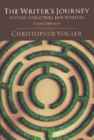
xi THE WRITER'S JOURNEY ~ THIRD EDITION Christopher Vogler gone back to the H o l l y w o o d studio world with a tour of duty at Paramount Pictures and a number of consulting jobs for other studios. I tried my hand at a new form, writing the first installment of Ravenskull, a story for a "manga," a highly stylized k i n d of comic book from Japan. T h i s is a highly cinematic form, much like writing a screenplay and with a great deal of emphasis on the visual. I hope something of what I have learned from collaborating with artists has found its way into this latest edition. It has been an intense pleasure to work with my artist friends Michèle M o n t e z and Fritz Springmeyer, whose illustrations provide the chapter headings in this volume. A n d while I'm cataloguing the influences of recent years that inform the
A four-bar theme in the Finale is sounded in strings and repeated at the end: 1 The first performance took place on 21 Dec. 1961. ERSO was conducted by Roman Matsov. 2 The first performance took place on 3 Nov. 1967, ERSO was conducted by Neeme Järvi. Example 91. Rääts does not make anything out of it; it would be against his principle of variegation, abruptness and instability. This “cinematic” principle penetrates into the orchestration and disrupts its unity. About “good” or ”bad” sound one cannot speak, everything is possible. The aesthetic value of the composition has been diminished. The Latvian musicologist Dr. Arnolds Klotinsh said: This is an attempt towards variegation of musical dramaturgy... As a result we recognise a certain turn towards philosophical dramatic symphonism, though it is confined in
 annaabi.ee