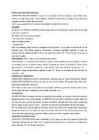
parallels. Contrast is often created by antonyms. NT: A time to be born, and a time to die; a time to plant, and a time to pluck up that which is planted; a time to kill, and a time to heal; a time to break down, and a time to build up; a time to weep, and a time to laugh; a time to mourn, and a time to dance; NT: I am the poet of the body and the poet of the sole. NT: I was his family's devoted friend, and she was my family's secret enemy. CHIASMUS 3 4 Syntactic CHIASMUS (reversed parallelism) means that the word order of one sentence is inverted compared to that of the other sentence or clause. NT: Up went the curtain, the curtain went up.Lexical chiasmus means that
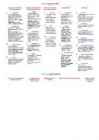
is unable or unwilling to proceed. one. active ("Who Function suggest strong emotions. proceeded by can stop me?") predicate 3. CHIASMUS 3. 3. ANAPHORA "go I must"; - reserve parallelism word order of second NOMINATIVE (*... *... *...) repetition of sent-e is inverted compared to first one. 2. EXCLAM
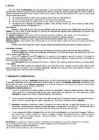
g. "In the beginning, blankness. In the end, voidness.") b) partial parallelism some deviations from the pattern. 2. Antithesis is the opposition of 2 strongly contrasted ideas combined with syntactic parallelism (e.g. "I am the poet of the body / I am the poet of the soul."). The function of antithesis is to strengthen a controversial nature of things. Antonyms are used. 3. Chiasmus is reverse parallelism the word order of the second sentence is inverted compared to the first sentence. a) lexical chiasmus words change their places, but the word order remains the same (e.g. "I love my dog and my dog loves me."). b) grammatical chiasmus the word order of the second part is inverted (e.g. "Up went the curtain, the curtain went up."). 4
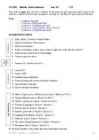
Vowel Tautology Spenserian stanza Consonant Polysyndeton Ottava rima Compound Inversion Sonnet: Eye-rhyme Detachment Italian Internal Antithesis Shakespearean Head r. Chiasmus Blank verse Couplet r. Anaphora Limerick Cross r. Epiphora Accented verse Frame r. Climax Monometer Lexical SD Anticlimax Dimeter Metaphor: Suspense Trimeter Trite Rhetorical q
structure to make stronger the emotional colouring of the sentence. · Complete parallelism--the pattern is exactly the same (The boy is sitting, the girl is singing) · Partial parallelism--there are some differences in the pattern (nobody thinks nowadays, nobody gives a damn) Antithesis is the opposition of 2 strongly contrasted ideas combined with syntactic parallelism (I'm your friend. I'm your enemy) Function: to stress the controversial nature of feelings, etc. Chiasmus (also called reversed parallelism)--the word order of one sentence is inverted compared to that of the other. · Syntactic (that's an evil laugh of yours, that laugh of yours is evil) · Lexical--there is no inversion, the words just switch their places (I know the world and the world knows me) It is an empathic construction. Emphasis is on the 2nd part. Detachment is a syntactic separation of secondary members of the sentence by using
 annaabi.ee