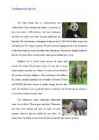
Endangered species The Giant Panda lives in central-western and southwesterns China. Although the panda is a carnivore, he has a diet which is 99% bamboo. Like most subtropical mammals, but unlike most bears, the giant panda does not hibernate. The Giant Panda is endangered as there are only 2,000-3,000 of them living in the wild and about 270 living in captivity. They have become endangered due to the destruction of their habitat and the variety of bamboo that is decreasing. They are also illegally hunted for their fur. To protect them, there have been many special wildlife parks set up.
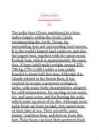
Polar Bear Kristjan Paal 6.c The polar bear (Ursus maritimus) is a bear native largely within the Arctic Circle encompassing the Arctic Ocean, its surrounding seas and surrounding land masses. It is the world's largest land carnivore and also the largest bear, together with the omnivorous Kodiak bear, which is approximately the same size. A boar (adult male) weighs around 350 700 kg (7701,500 l while a sow (adult female) is about half that size. Although it is closely related to the brown bear, it has evolved to occupy a narrower ecological niche, with many body characteristics adapted for cold temperatures, for moving across snow, ice, and open water, and for hunting the seals which make up most of its diet
tavalisem. Vahest eralduvad hambad või kondid ülejäänud kehast tänu raipesööjatele või vee liikumisele. Õppeainet, mille käigus saadakse teada mis juhtub kondiga alates ajast mil organism sureb kuni ajani mil ta avastatakse, kutsutakse taphonomyks(The study of what happens to bones and other materials between the time they are deposited and the time they are discovered. This includes the study of how objects deteriorate, carnivore and scavenger activity, erosion, weathering, and other processes.). suured kivististe leiukohad avastatakse tihti juhuslikult kaevurite või algajate koopauurijate poolt, aga enamasti avastatakse need hoolika teadusliku uurimuse( ja planeeritud kulmineerumise) käigus. piirkonna geoloogia ja endine kliima võivad anda palju vihjeid tõenäolise kivististe asukoha kohta. samuti ka inimeste tegevusalade kohta. Uurijad kasutavad ka satelliitpilte, et saada maastikust korralik ülevaade
Unit 8: vocabulary 1. slap-up meal (n) a fancy and expensive meal 2. carnivore (n) meat eater 3. succulent (adj) - juicy 4. mouth-watering (adj) tasty-looking 5. raw (adj) - uncooked 6. rare (adj) barely cooked 7. well-done thoroughly cooked 8. to boil (v) to prepare food in boiling water 9. to stir (v) to mix 10. to scramble (v) to cook while stirring 11. tender (adj) soft and delicate 12. utensil (n) tool used for eating 13. cooker (n) - stove 14. oven (n) a chamber for baking, roasting etc 15
• The species may have disappeared entirely from 5. ANDEAN BEAR • Also called spectacled (prill) bears. • Andean bears roam (rändama) a variety of types of habitats from Argentina to Panama. • Poaching, agricultural development, and increasing mining (kaevanamine) and oil exploration have threatened the long-term survival of South America's last remaining bear species. 6. POLAR BEAR • Listed as vulnerable (nõrk), the world's largest land carnivore is one of six bear species threatened with extinction. • The polar bear poulation is imperiled (ohustama) by climate change-induced melting of Arctic sea ice, which the bears depend on for hunting marine mammals. • Pollution, tourism, and oil development are 7. BROWN BEAR • The brown bear, the most widely distributed bear species in the world, was named a species of "least concern"—meaning the bears are not threatened with extinction.
section of the fence once every week. They gather the corpses of dingoes who have been died in the traps. They reset the trap and cover it with sand. THE DINGO The dingo looks like a small wolf cousin to the coyote and the jackal. It’s a leggy dog, short pointed ears and bushy tail. The most common colour is ginger and yellowish-tan. It has a short fur. Dingoes rarely bark. They yelp and howl. The dingo is Australia’s largest carnivore. They hunt alone or in small packs. They hunt mostly at night. They eat rats, kangaroos, rabbits, lizards, and of course sheep. Sheep are really easy to catch because they are slow, panicky, and have nowhere to hide. The dogs pull them down by their necks and with powerful jaws tear the sheep into pieces. A dingo will kill up to 50 sheep at night, killing far more than it needs for food. They swallow meat in large chunks. Dingoes came to Australia more than 3500 years ago
They come out when they are about six months old. The possum is a furry animal that lives in the trees of Australia. It is a marsupial and a very good climber. Possums move about at night and some of them come to cities to find food in gardens and dustbins. There are more than 40 species of possum in Australia. Some of them are called gliders as they have skin between their legs which they use like wings for gliding from one tree to another. The Tasmanian devil is the only native carnivore that lives on the Australian island of Tasmania. The Tasmanian devil is about one metre long and it is usually black. It eats small mammals and lizards and even dead animals. As it is a marsupial, its babies grow up in its pouch. The Tasmanian tiger (often also known as the Tasmanian wolf) also lived on Tasmania a hundred years ago. It had stripes on its back like a tiger. It was more than 1.5 metres long. Scientists believe that hunters killed all of them at the beginning of the 20th century.
and the tips of their ears. They have three to four litters a year with one to eight in each litter. The snowshoe rabbit can run up to 27 mph and jump 10 feet in one hop. Since they are herbivores they are mainly prey. They are experts at escaping predators like the wolf, bobcat, or lynx. When a predator chases it, the rabbit will quickly change direction. They are also good swimmers and will jump in the water to make an escape. Polar bear Polar bear is the largest carnivore on land. The polar bear's fur is clear, not white. Light reflects off the fur and makes it look white. Their teeth and claws are very sharp so they can catch their prey easily. They hunt and eat seals, whale and walrus carcasses. In the summer they also eat lemmings, arctic foxes, ducks and some plants. They live for 15 to 20 years and spend most of their time on drifting packs of ice, eating and resting. The bears reach sexual maturity 3 to 5 years after birth.
But also some of the most impressive nature, which is great for outdoor activities, like hiking, skiing, rafting and fishing. It is because of the different biomes that appear in that country. One can do everything one wants to do in different parts of the land. The animal life is also diverse in Canada. There are many interesting animals. Badger is one of them. It belongs to the weasel family. It is one of the biggest in that carnivore family. Good paintbrushes are made from its fur. They eat snakes, squirrels and insects. Snake poison doesn't harm these mammals unless the snake strikes its nose. Moose live also in Canada. They live in marshy areas all around the country. They are reddish brown and the males are bigger than the females. Moose are herbivores. The male moose have big antlers, female ones don't have them. Prairie dogs are very funny-looking animals. They are rodents who live in tunnels under the ground
Along the coast of the Gulf of Mexico live large and more colourful birds such as pelicans and flamingos. Alligators can also be found there. Bison (buffalo) are popularly associated with the grasslands, although they once ranged over most of eastern North America before becoming nearly extinct because of hunting. Now they exist only in protected areas. In the western areas live elk, deer, bighorn sheep, mountain goats and a small number of brown bears. The Kodiak bear, the largest carnivore in North America, is found in Alaska. 7 History The first people to live in North America came from Asia between 10,000 and 30,000 years ago. At that time, North America and Asia were connected by a land bridge. Eventually North America became populated by many different tribes of people. They fished, and where soil permitted, planted crops and farmed the land. After the native people came the Vikings
Animals The moose ranges throughout the northern US. In the eastern forests live elks, black bears, deer, foxes, raccoons, skunks and squirrels. Along the coast of the Gulf of Mexico live large and more colorful birds such as pelicans and flamingos. Alligators can also be found there. Bison (buffalo) exists now only in protected areas. In the western areas live elk, deer, bighorn sheep, mountain goats and a small number of brown bears. The Kodiak bear, the largest carnivore found in North America, is found in Alaska. Plants The vegetation of Northern Alaska consists of lichens, mosses, low shrubs and flowering plants. In the southern part of Alaska grow conifers, spruces and firs. Around the Great Lakes and New England are mixed forests of pines, maples, elms, birches, oaks etc. Along the Gulf of Mexico grow magnolia, red and black gum, cypress and mangrove. In the west grow forests of sequoia.
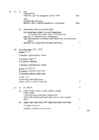
15 (deciduous trees) regrow from base/ idea of rotation/ cycle; 16 standards / large trees not coppiced, as encourages biodiversity; 7 [7] 16. population; habitat; community; ecosystem; (first) trophic; R tropic producers/(photo) autotrophs/autotrophic; (primary) consumers/heterotrophs/heterotrophic/herbivore; R carnivore/other qualified consumer 7 [7] 17. 1 mark per correct row Look for both ticks and crosses. If a table consists of ticks ONLY or crosses ONLY, then assume that the blank spaces are the other symbol. If a table consists of ticks, crosses and blanks then the blanks represent no attempt at the answer.
263 T H E W R I T E R ' S JOURNEY ~ T H I R D EDITION Christopher Vogler I do feel, however, that the movie is weakened by the turn it takes in Act Two. T h e almost photographic realism of the Act One animal scenes is replaced with a more old-fashioned Disney cartoon style, especially the comic rendering of T i m o n and Pumbaa. S i m b a is a growing carnivore and there is nothing realistic about h i m subsisting on a diet of bugs. I feel the movie missed a big chance to follow through on the promise of the first act with a realistic series of T E S T S , leading to a life-threatening O R D E A L near the midpoint. Someone should have been teaching S i m b a real survival skills, how to stalk his prey, how to hunt, how to fight for what is his. I offered a range of possibilities. T i m o n and Pumbaa could teach him, he could
 annaabi.ee