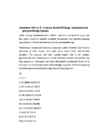
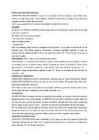
Adjustment Statistics **************************************** Iterations = 2 Redundancies = 3 Reference Variance = 1.318 Reference So = ±1.1 Passed X² test at 95.0% significance level! X² lower value = 0.22 X² upper value = 9.35 A priori value of 1 used for reference variance in computations of statistics. Data snooping used. Possible blunder in observations with Std.Res. > 3.777 Convergence!
Manchester Civil Olga Simonova Justice Centre; Mott Teosed Kundera tuntuim romaan on 1984. aastal ilmunud „Olemise talumatu kergus“("Nesnesitel ná lehkost bytí", eesti keeles 1992; 2000, tõlkinud Leo Metsar). Eesti keelde on veel tõlgitud "Surematus", "Nali", "Teadmatus", * Monologues, 1957-1964-1965 Plays: * The Owner of the Keys, 1962. * Two Ears, Two Weddings (Slowness), 1968 * The Blunder, 1969 * Jaques and His Master, 1971 (Hommage to Diderot in 3 acts) Fiction: * The Joke, 1965 * Laughable Loves, 3 parts: 1963-1965- 1968, complete 1969 * Life is Elsewhere, 1969/70 * The Farewell Waltz (earlier translation: Party), 1970/71 * The Book of Laughter and * Forgetting, 1978 Essays: * About the Disputes of Inheritance, 1955 * Art of the Novel, 1960 * The Czech Deal, 1968 * Radicalism and Exhibitionism, 1969 * The Stolen West or the Tragedy of Central Europe, 1983
Research paper Liisi Pajula 11 b The Inchcape Rock by Robert Southey The Inchcape Rock is a poem about Sir Ralph the Rover, an evil man, who wants to sink other ships, so he could use his own ship to blunder villages and towns. He removes a warning bell that warns sailors about a secret underwater rock. By doing this, he signs his own death sentence. At a dark night, he crashes his ship to the Rock, because there was no bell to warn him. In the first stanza of the poem Southey describes the surroundings. The tone of the poem is set, at the begging it is very serene and relaxed. The weather and sea are calm, the ship stands, undisturbed, in the water
37. Bagel kringel, kukkel 38. Balcony veranda 39. Banish- pagendama, maapakku saatma 40. Bankrupt- pankrot 41. Basement parking under buildings - keldris asuv parkimiskoht 42. Batch- partii 43. Beckon- viipama, tervitama 44. Behalf- millegi eest, millegi nimel 45. Belch röhitsema, röhatama 46. Beverage- karastusjook 47. Bids- panused, pakkumised 48. Biodiversity - bioloogiline mitmekesisus 49. Blame- hukkamõist, süü, süüdistama 50. Bland housing - maitsetu majade paigutus 51. Blunder- rumal eksitus, prohmakas 52. Board- juhatus 53. Boast- uhkustama 54. Bond- võlakiri 55. Bottling-villimine 56. Bound- seotud 57. Branch- haruettevõte, osakond 58. Brazen- jultunud 59. Brewers- pruulijad 60. Brick paviours - tellistest tänava parkett 61. Brisk- vilgas, energiline 62. Broad- laialdane 63. Broadly- üldjoontes 64. Brownfield - varem olnud tööstus piirkond 65. Bulk- enamjagu, suurem osa 66. Burgeoning- puhkemine, punga minek 67. Burst- lõhkemine C 68
that of the other sentence or clause. NT: Up went the curtain, the curtain went up.Lexical chiasmus means that both parts of the parallel construction have the normal word order and practically the same words are repeated. NT: I know the word, and the word knows me. CLIMAX CLIMAX means the arrangement of the words and phrases in such a way that their meaning becomes stronger in each case and reaches the peak of intensity in the end. NT: It was a mistake, a blunder, a lunacy. (creates gradation) NT: He wanted to weep, to vomit, to die. There is also a logical climax the way the author sees the things happened. The function of climax is to show the significance of things as the author sees them. ANTICLIMAX ANTICLIMAX means a comic, satiric effect by arranging sentences in such a way that the aroused expectations are disappointed. (paradoxes are often based on anticlimax). NT: Women have a wonderful instinct of things
o Take, call, cast, hit, thrive, want, raise, window, husband, fellow, gate, sky, skin, skill, ill, odd, ugly, Law terms: o Law, thrall Place names o –by – Derby, Whitby. –beck – Troutbeck (trout brook). –thorp(e), Icelandic: o auk, eider, geyser, saga. Norse: o anger, balderdash, bing, bleak, blether, blink, bloom, blunder, blur, call, clamber, creek, crook, die, dirt, dowdy, doze, dregs, egg, fellow, flat, flaunt, flaw, fleck, flimsy, gasp, gaunt, gaze, girth, glint, glitter, gloat, happen, harsh, inkling, kick, kilt, law, leg, loan, meek, midden, muck, muggy, nasty, nudge, oaf, odd, raise, root, scalp, scant, scowl, seat, skerry, skewer, skid, skill, skin, skull, sky, sniff, snub, squall, squeal, take, they, thrall, thrift, thrust,
a) lexical chiasmus words change their places, but the word order remains the same (e.g. "I love my dog and my dog loves me."). b) grammatical chiasmus the word order of the second part is inverted (e.g. "Up went the curtain, the curtain went up."). 4. Climax gradation; constructing the sentence so that each new part grows in intensity (e.g. "It was a mistake, a blunder, lunacy."). The function of climax is to show the significance of things as the author sees them. a) quantitative climax is based on words whose choice is logical (e.g. "An hour, a day, a week, a month, a year passed."). Numerals appear here. b) qualitative climax reflects the individual way the author views an event happening, etc. (e.g. "He wanted to weep, to vomit, to die."). 5
a) lexical chiasmus words change their places, but the word order remains the same (e.g. "I love my dog and my dog loves me."). b) grammatical chiasmus the word order of the second part is inverted (e.g. "Up went the curtain, the curtain went up."). 4. Climax gradation; constructing the sentence so that each new part grows in intensity (e.g. "It was a mistake, a blunder, lunacy."). The function of climax is to show the significance of things as the author sees them. a) quantitative climax is based on words whose choice is logical (e.g. "An hour, a day, a week, a month, a year passed."). Numerals appear here. b) qualitative climax reflects the individual way the author views an event happening, etc. (e.g. "He wanted to weep, to vomit, to die."). 5
country, it might have to concentrate the cryptanalysts that would be assigned to it on a Russian system that could be expected to yield more valuable results. How long it will keep a team working upon a system probably depends upon the information it thinks it will obtain. The agency may well keep a team examining cryptograms in a given system for two or three years, even though it has had no success, in the hope that one of the cipher clerks may some day blunder and open the way to a solution. For in modern systems, properly used and with frequent key changes, a cryptographer's error is the cryptanalyst's only hope. And when nations will pay their code clerks only $60 a week, as Italy did in Washington in the 1960s, to await such errors may not be pointless. In addition to the general cryptanalytic effort, N.S.A. may mount special attacks if one of its customers requests it. The State Department, for example, may request such a solution in
 annaabi.ee