Such words are frequently used, they're stilistically neutral, they take part in word building. (nt, master, -ly,-ful, mastermind). Partial assimilation are divided into: 1)words are not assimilated semantically meaning they have a certain meaning (nt, sari, rikshaw) 2) words not assimilated gramatically(crises, bacillus-bacilli) 3)words not completely assimilated phonetically(nt, police, prestige, mascine). 4)words not assimilated grafically (nt, ballet, buffet, café). Barbarisms or unassimilated words they sound strange. (nt, ciao). The degree of assimilation depends on the time of borrowing. The older the borrowing, the greater the degree. If borrowed words are widely used , they may be assimilated. (nt, clinic). 19. Words of native origin. Influence of borrowings. Native words belong to very important semantic group (modal verbs-shall, will, can, may; pronouns- I, you, he, my, his; preps- in, out, under; numerals and conjunctions(but, till, as
function of the terms changes. In fiction terms may be used to recreate a true-to-life atmosphere of some profession. E.g. Arthur Hailey "The Final Diagnosis", "The Airport". Secondly to suggest characters educational status, social backround. To create irony when describing the interest and hobbies of common people. Aldington "Death of a hero" describes uses of psychology terms. Lastly, for the sake of humour when terms are used instead of everyday words. Foreign words and barbarism Barbarisms are words from other languages borrowed into English but no assimilated to the full extent. However, registered in dictionaries. E.g. vacuum, bizarre, stiletto Foreign words and phrases are facts of other languages. They don't belong into English. E.g. mein Gott! Avanti (go ahead), soleil (sun), kummel (vodka). Appear in italics. The function: 1. to supply local colour writer is describing. E.g. spain and used Spanish. 2. suggest persons nationality 3. to suggest a social status 4
). a) Outside their direct application the function of term changes (e.g. in fiction they may be used to reflect the true to life atmosphere of some professionals). b) They may suggest character's educational status or social background. c) Their effect may be irony (e.g. R. Aldington's "Death of a Hero"). d) Their effect may be humour, when applied to everyday concepts. 2. Foreign words and barbarisms (barbarisms are borrowed foreign words that are not assimilated but are still English and are registered in dictionaries: "bizarre", "stiletto", "vacuum", saga"). Foreign words are facts of other languages and not belong to English: "Mein Gott!" (German). Such words appear in Italics. In fiction they are used: a) to supply local colouring (usually a couple of such words is enough) b) to suggest the speaker's or character's nationality
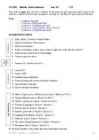
Metonymy Under / overstopping Octometer Synecdoche Indented line Antonomasia Graphon Phrasing Irony Common Lit. Voc. Syntagm Epithet: Special Lit. Voc. Monotonous rhythm Syntactic Terms Jerky rhythm Phrase Barbarisms / Alternating rhythm Sentence foreign w. Rambling rhythm Metaphorical Archaic w. Grading rhythm Transferred Poetic diction Oxymoron Neologisms Functional styles / registers Hyperbole STYLE AND STYLISTICS FGI 1081 Stylistics (I. Ladusseva) 2
 annaabi.ee