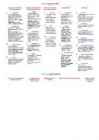
(+clichés idea. Is independent when taken SYNECDOCHE ("I am all ears) notions. objects without "blind as a bat") out of context. logical connections. 3. HYPERBOLE 3. ANTONOMASIA is an exaggeration used to Function to render 3. EUPHEMISM 5. PROVERBS & IDIOMS "name instead". evoke emotional response, chaotic description.
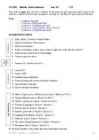
Metaphor: Suspense Trimeter Trite Rhetorical q. Pentameter Genuine Exclamation Hexameter Sustained Graphical Means, SD Heptameter Metonymy Under / overstopping Octometer Synecdoche Indented line Antonomasia Graphon Phrasing Irony Common Lit. Voc. Syntagm Epithet: Special Lit. Voc. Monotonous rhythm Syntactic Terms Jerky rhythm Phrase Barbarisms / Alternating rhythm Sentence foreign w. Rambling rhythm
dots are used to render the speech realistically. To show that speakers don't listen one another. Quotation mark serve to single out either the speech of characters or their thoughts that remain unuttered. Words or phrases may be used with quot marks to imply that they belong to other characters and the author himself feels ironic about them. Sometimes quot marks are used to show that words are used in some specific or narrower meaning. Capital letters are involved in personification and antonomasia. Words may contain only capital letters for emphatic purposes. E.g. WILL YOU BE QUIET! He shouted. It is a tradition to begin every poetic line with a capital letter. It has been a tradition in every language but nowadays it is chopped either partly or altogether to create intimacy with the reader. Even in headings small letters tend to be used. E.g. under milk wood (by dylan thomas). The arrangement of lines on a page has become very significant in poetry. The so called figure poems
· The office may stand for the employees (the factory) · The feeling may stand for the person who excites the feeling (he is the pride of our family) · Nouns or substanitvized numerals express metonymy (she is a pale 16) Synecdoche is a subtype of metonymy. It is a figure of speech used for the whole ore the whole for a part; single for the plural or vice versa (I'm all ears, she was nothing but legs, I'll never let a man into my life) Antonomasia--(Greek for name instead) use of names · The use of the proper name instead of a general idea (Don Juan) · Spelling a word or phrase with a capital letter as if it were a proper name. It can be perceived only in writing (our Little Group of Serious Thinkers)--irony · A meaningful name, especially family names which characterize a personage (Little Miss Rich Bitch) Irony--use of the word in its opposite meaning (He is a nice, kind family man who
") These were cases of trite metonymy (often used). Genuine (original) metonymy is created by unexpected accessions (e.g. "asked the moustache to show the way."). Metonymy is expressed by nouns or substantivized numerals (e.g. "She was a pale eighteen."). SYNECDOCHE is a subtype of metonymy. Synecdoche is a part that stands for a whole or vice versa; the singular for the plural or vice versa (e.g. "I am all ears."). 3. Antonomasia from Greek "name instead". It is the use of proper name instead of the general idea (e.g. "He is a Napoleon of crime."). In the book a word or phrase may be spelled with the capital initial letters, which resembles a proper name - the effect is often irony. The use of meaningful names, which serve the writer to characterize a person (e.g. Snearwell, Mr. Snake, Mr. Blackbite, Mr. Boastall, etc.). 4
 annaabi.ee