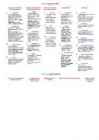
utterance tense & emotional, help to passage. of word order. partial deviations from the pattern) answer, used to stress important elements. Function to emphasized the 2. ANADIPLOSIS (...*. *....) catch repetition emphasize part 2. ANTITHESIS point. Function 2. APOSIOPESIS repeating w-d or phrase at of sentence. - opposition of 2 contrasted ideas. Function to make
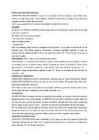
NT: It was not Cape town, where people only frowned when they saw a black boy and a white girl... but. (here he loved her) SSD-s that are based on REDUNDANCY OF ELEMENTS OF SPEECH are: (Here belong devices based on repetition) FRAMING FRAMING means repeating the same word, phrase or sentence at the beginning and at the end of a sentence or passage.In this way the repeated unit is emphasised. NT: the street, so soft and sunny. Here he comes. She smiles and stretches out her hands. ANADIPLOSIS ANADIPLOSIS means repeating a word or phrase at the end of the clause or sentence and at the beginning of the next one. NT: Such was life. Life without hope. NT: Three fishers went sailing out in the West. Out in the West, as the sun went down. ANAPHORA ANAPHORA means repeating a world, phrase or sentence at the beginning of several clauses or sentences in succession (happening one after another). NT: Heroes come and go. Heroes eat and drink. Heroes kiss women and enjoy their lives
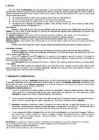
The gap-sentence link makes the reader very active. (9) II. Devices based on the redundancy of elements of speech (Syntactic Stylistic Devices) Types of REPETITION: 1. Framing is repeating the same word, phrase, sentence at the beginning and at the end of the sentence or passage. Function is to make the repeated part stronger, to emphasize it (e.g. "The street (word), so soft and sunny, the street (word)."). 2. Anadiplosis (catch repetition) is repeating a word or a phrase at the end of a clause, or sentence, and at the beginning of the following one (e.g. "Such was his life life without hope."). 3. Anaphora repetition of a word or phrase at the beginning of several clauses or sentences in succession (e.g. "Supposing she does come, supposing the darkness lift, supposing"). Anaphora involves notional parts of speech - usually nouns, adjectives, or verbs are repeated. 4
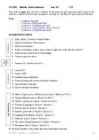
Onomatopoeia Nominative sent. Pyrrhic Alliteration Asyndeton Rhythmic invers. Assonance Apokoinu Run-on line Rhyme: Gap-sentence link Stanza: Full Framing Heroic couplet Incomplete Anadiplosis Ballad stanza Vowel Tautology Spenserian stanza Consonant Polysyndeton Ottava rima Compound Inversion Sonnet: Eye-rhyme Detachment Italian Internal Antithesis Shakespearean Head r
them. Often dots used there. The function: to introduce the interior monologue, to give a subjective evaluation of facts. To introduce an effect of some cause. 2) SSD-s based on the redundancy of elements of speech Here belong different kinds of repetition. Framing--repeating the same word, phrase or sentence at the beginning and at the end of a sentence or a paragraph. Function is to stress. (The street, so soft and sunny, the street) Anadiplosis--catch repetition--repeating the same w or a phrase at the end of a sentence or at the beginning of the next one. (Such was her life--life without hope.) Anaphora--repeating aw or a phrase at the beginning of several clauses, sentences or paragraphs in succession (Heroes come and go. Heroes eat and drink. Heroes kiss women and enjoy life) Epiphora--repetition at the end of clauses, sentences, paragraphs. Tautology--it is produced by us not thinking. It is redundancy in words which is
 annaabi.ee