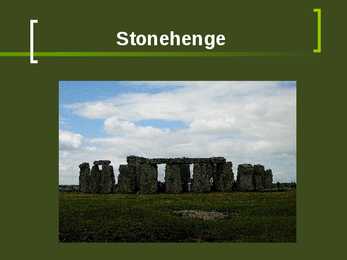
Stonehenge About Stonehenge History "Mystery of Stonehenge" Construction Location Stonehenge Tour Location South-England 90 miles west of London 3.2 kilometres west of Amesbury, 13 kilometers north of Salisbury. History Evolved between 3,050BC and 1,600BC Constructed in three main phases: 3050BC, circular ditch and bank 2600BC, wooden structure constructed at centre 2500-1500BC, monument constructed, arranged and re- arranged "Mystery of Stonehenge" Multiplicity of theories: Stonehenge was domain of the dead, Woodhenge was land of the living. Place of healing. Observatory, temple
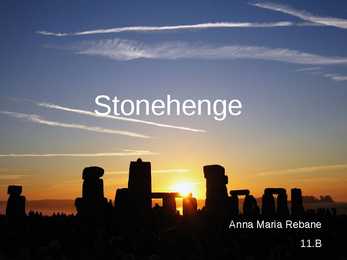
Stonehenge Anna Maria Rebane 11.B Facts about Stonehenge · 5000 year old prehistoric ritual monument · the most famous prehistoric monument in Europe · one of the most ancient and mysterious structures in the world · 3.2 kilometers west of Amesbury and 13 kilometers north of Salisbury · south-western England; in the English county of Wiltshire · built in the late Stone Age (Neolithic) and the Bronze Age The History of Stonehenge · "The Mystery of Stonehenge" · the building began in 3000 BC by semi-nomadic peoples · The first stone to be placed - Heel Stone. · some stones weigh about 45 tons each and are 7m high · the largest stone weights as much as 50 tons
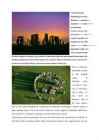
in the English county of Wiltshire, about 2.0 miles (3.2 km) west of Amesbury and 8 miles (13 km) north of Salisbury. One of the most famous sites in the world, Stonehenge is composed of earthworks surrounding a circular setting of
England Sightseeings Stonehenge Is a prehistoric monument located in the English county of Wiltshire, about 3.2 kilometres (2.0 mi) west of Amesbury and 13 kilometres (8.1 mi) north of Salisbury. The dating of cremated remains found that burials took place as early as 3000 B.C, when the first ditches were being built around the monument. One of the most famous prehistoric sites in the world. The site and its surroundings were added to the UNESCO's list of World Heritage Sites in 1986 in a co-listing with Avebury henge monument, and it is also a legally protected Scheduled Ancient Monument. Biggest stone is press 26 ton.
Stonehenge Stonehenge is a prehistoric monument located in the English county of Wiltshire, about 3.2 kilometres (2.0 mi) west of Amesbury and 13 kilometres (8.1 mi) north of Salisbury. One of the most famous prehistoric sites in the world, Stonehenge is composed of earthworks surrounding a circular setting of large standing stones. Archaeologists had believed that the iconic stone monument was erected around 2500 BC, as described in the chronology below. However one recent theory has suggested that the first stones were not erected until 2400-2200 BC,[1] whilst another suggests that bluestones may have been erected at
-vask oli eksootiline, haruldane -> sümboolse tähendusega, sotsiaalse staatuse näitaja (esimesed esemed olid ehted jm pisikesed esemed) -järk-järguline muutus inimeste mõttelaadis, mille tulemusena eelistati innovatsioone Hilisneoliitilsed kultuuritraditsioonid 2900 - 2400 eKr -nöörkeraamika (Ida-Euroopa) -kellpeekrite (Atlantiline ja Kesk- Euroopa) Nöörkeraamika matuse tunnused : venekirves, potikild, tulekivist nuga Kellpeekrite matuse tunnused (Amesbury vibumees) :randmekaitsmed, potikillud, vasest noad, vask pistodad Kas nendel kultuuridel on oma kindel kodumaa, kus tunnused kujunesid välja ja siis levisid, või oli tegemist ideede levikuga? Kellpeekrite vanad asulad Hispaanias(varem avastatud) aga ka Prantsusmaal (hilisemad andmed) Kellpeekritel tekkis sotsiaalne süsteem -> teatud elitaarne esemete komplekt hakkas levima pealikute haudades Hilisneoliitiliste kultuuride iseloomustavad märksõnad -sõjakus -individuaalsus
 annaabi.ee