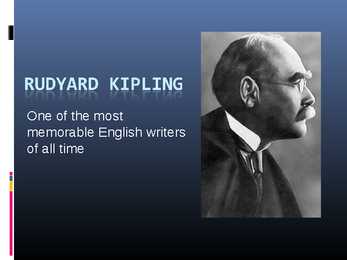
(short stories) stories) "If--" (1895) (poetry) Limits and Renewals (1932) The seven seas (1896) The Gods of the Copybook Captains Courageous(1897) Headings(1919) The Jungle Book - 1894 using animals in an anthropomorphic manner to give moral lessons allegories of the politics and society of the time its moral tone - motivational book by the Cub Scouts Kim (novel) - 1901 political conflict between Russia and Britain in Central Asia detailed portrait The reader is left to decide whether Kim will henceforth follow the prideful road of the Great Game, the spiritual way of Tibetan Buddhism, or a combination of the two
Transcendentalism. Although the Am frontier was being pushed westward, Massachusetts and Virginia, the Puritan strongholds in the east, remained the centre of cultural activity. The Puritan heritage is clearly evident in the work of Nathaniel Hawthorne, who wrote about the conflict between the good and evil set in the dark, Puritan, New England past. In his masterpiece The Scarlet Letter he uses a mixture of fantasy and realism, symbols and allegories to explore one of his constant themes: the relationship between the individual and society. Herman Melville dedicated his greatest work, Moby Dick, to Hawthorne, in recognition of his friendship and the contribution he made in revising the first draft of the novel. When it first appeared, Moby Dick was described as a `wild and mad novel', but it was quickly recognised as an important development in the novel genre. The
The tales in the book (and also those in The Second Jungle Book which followed in 1895, and which includes five further stories about Mowgli) are fables, using animals in an anthropomorphic manner to give moral lessons. The verses of The Law of the Jungle, for example, lay down rules for the safety of individuals, families and communities. Kipling put in them nearly everything he knew or "heard or dreamed about the Indian jungle." [2] Other readers have interpreted the work as allegories of the politics and society of the time.[3] The best- known of them are the three stories revolving around the adventures of an abandoned "man cub" Mowgli who is raised by wolves in the Indian jungle. The Jungle Book, because of its moral tone, came to be used as a motivational book by the Cub Scouts, a junior element of the Scouting movement. This use of the book's universe was approved by Kipling after a direct petition of Robert Baden-Powell, founder of
world; the characters help express the ideas of existentialist philosophy. The most frequently used genres are (1) parables (short, didactic story that serves to illustrate some particular idea or lesson; only has human characters; a type of analogy), (2) allegories (the representation of abstract ideas or principles through the use of symbolised characters, figures, ideas, events or concepts in the narrative; in essence a sustained metaphor) and (3) fables (a succinct story that features animals, mythical creatures, plant, objects, etc
mõjutatud ka Derridast. Paul de Man on seotud uue kriitika e. close readingu metodoloogiaga. Teoreetilised üldistused tuletatakse tekstidest (mitte ei tee kõigepealt mudelit, mida hiljem tekstidele rakendada nagu tegid prantsuse strukturalistid). De Man tegeleb palju Euroopa autoritega. Rilke, Baudelaire, Nietzsche, Rousseau. Üldistab Saussure`i, Jakobsoni, Greimasi, Peirce`i, Todorovi ja teiste vaateid. Kaks teost, tuntuim on “Lugemise allegooria” (“Allegories of Reading”, 1979) 1983 “Blindness and Insight” “Lugemise allegoorias” on ära toodud väga sisukas artikkel “Semioloogia ja retoorika”. Kirjandusteost ei ole võimalik viia ühese tähenduseni. Igas tekstis on midagi, mida ta nimetab vastuoluks e. apooriaks, mis tekitabki paratamatu mitmetähenduslikkuse. Apooriat ei saa taandada ühetähendusliseks, üheks lugemisvõimaluseks. Need on “loetamatud kohad”, tekst dekonstrueerib ennast ise.
 annaabi.ee