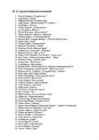
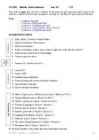
20.-21. sajandi olulisemad proosateosed 1. Richard Aldington ,,Kangelassurm" 2. Isaac Asimov ,,Asum" 3. Margaret Atwood ,,Teenijanna lugu" 4. Julian Barnes ,,Maailma ajalugu 10 ½ peatükis" 5. Saul Bellow ,,Hertzog" 6. Ingmar Bergman ,,Laterna magica" 7. Lois Paul Boon ,,Menuett" 8. Richard Brautigan ,,Arbuusisuhkrus" 9. Mihhail Bulgakov ,,Meister ja Margarita" 10. Anthony Burgess ,,Kellavärgiga apelsin" 11. Heinrich Böll ,,Grupipilt daamiga", ,,Piljard kell pool kümme" 12. Albert Camus ,,Katk" 13
E.g. malaria (med), blood vessel, spinal cord; linguistics semantics, syntax, chiasmus. Outside this direct application the function of the terms changes. In fiction terms may be used to recreate a true-to-life atmosphere of some profession. E.g. Arthur Hailey "The Final Diagnosis", "The Airport". Secondly to suggest characters educational status, social backround. To create irony when describing the interest and hobbies of common people. Aldington "Death of a hero" describes uses of psychology terms. Lastly, for the sake of humour when terms are used instead of everyday words. Foreign words and barbarism Barbarisms are words from other languages borrowed into English but no assimilated to the full extent. However, registered in dictionaries. E.g. vacuum, bizarre, stiletto Foreign words and phrases are facts of other languages. They don't belong into English. E.g. mein Gott! Avanti (go ahead), soleil (sun), kummel (vodka)
(all the –isms). A breaking away from conventions, a denial of traditional structure in literature (plot, presentation of characters, temporal and spatial relations). Literary works borrow structures from myth (e.g. Joyce’s Ulysses), music (e.g. Richard Aldington Death of a Hero, Woolf’s The Waves). Almost no new topics, just new ways of treating old topics. Things happen in the mind at the same time as other daily things. Stream of consciousness – constant flow of thoughts. Allusiveness (allusion – a figure of
and clear, sharp language. Modernist writers embraced the unconscious fears of a darker humanity. Sub movements: surrealism, formalism, avant-garde, symbolism, imagism Structuralism: Writers used myth and music as a part of the books structure. J. Joyce "Ulysses". Deep structure is the same as in "odyssey" and T.S. Elliot "the fisher king"-more complicated experiment. Aldous Huxley ,,point counter point"-builds his chapters on principles of music. R. Aldington ,,death of a hero"-a jazz novel. Polyphony-harmony. Cacophony Virginia Woolf ,,the waves"-symphony. Psychoanalysis: The greatest influence of psychoanalysis on literary production has probably been to add legitimacy to the already-existing trends towards greater psychological introspection and towards more prominent and franker discussions of sexuality. Main characteristic features of Modernism: Characteristics of Modernism Formal characteristics(11) · Open Form · Free verse
The usual function is irony or humor. FGI 1081 Stylistics (I. Ladusseva) 16 - The author may mention elevated things side by side with down-to-earth objects (e.g. "They kissed violently, passionately. The pigs in the sty grunted." "He liked her ever so more than the don don whores." (Aldington). - Words belonging to different stylistic layers brought together is also bathos (colloquial + formal vocabulary) (e.g. "I ain`t attempting to discuss the celebrated moral aspect of parental affection."). - Applying colloquial words to distinguished people (e.g. "That Shakespeare chap most likely had written countless books of poetry."). 2
 annaabi.ee