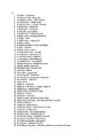
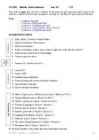
26. Accessible ligipääsetav 27. Accommodate mahutama 28. Accumulation- kogunemine, kuhjumine 29. Accustomed harjunud 30. Acres- aaker 31. Adapt to kohaneda 32. Adjacent to the house majaga külgnema 33. Adjustment reguleerimine 34. Adobe house- savitellistest maja 35. Aeration õhutus 36. Aesthetics esteetika 37. Agressive pace- agresiivne tempo /kiire 38. Agricultural techniques- põllumajanduslikud tehnikad 39. Airiness-õhulisus 40. Ambience-väliskeskkond 41. Ambitious design ambitsioonikas disain 42. Amenities mugavused 43. Amenity roof katus puhkealadega 44. Amenity value puhkamisväärtus 45. An area for sitting puhkeala/istumisala 46. An array of subsidies hulk toetust 47. An established garden- rajatud aed 48. An eyesore silmariivav objekt 49. An outdoor living area elamiseks, pikemaks ajaviimises eluruum 50. Annual- aastane (taim)
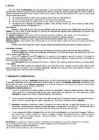
then either neutral formal informal (or: neutral colloquial literary). This colouring (formal informal) is always present in a word (e.g. "drink" (neutral) "beverage" (literary) "pull" (colloquial); "home" (neutral) "residence" (literary) "digs" (colloquial). Phonestheme is a subtype of IC. This is a repeated combination of sounds that has a more or less clearly perceived meaning. E.g. "fl" combination of sounds conveys the idea of airiness, brightness with the implication of insecurity; "sl" has the meaning of slowness and inactivity; "spr" conveys the idea of energetic, risk, and lively motion. 3. ADHERENT CONNOTATION Meaning of a word has: a denotation (meaning proper, we find it in dictionaries) and a connotation (an additional shade of meaning). Connotation may be a permanent part of word meaning it is then called inherent connotation. Connotation is ever present when the word is used
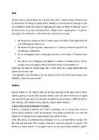
..(La Costa) Or: Forgive what seemed my sin in me. (Tennyson) Normally, assonance does not appear alone: it is accompanied by other means of sound orchestration, i.e alliteration, rhyme: Hear the sledges with the bells Silver bells What a world of merriment their melody foretells! (Poe) Some scholars have attempted to relate vowel sounds to the meaning they convey. The sound / I / , either alone or in dipthtongs, is said to produce the impression of lightness, airiness, brightness. The fields breathe sweet, the daisises kiss our feet, Young lovers meet, old wives a-sunning sit ... (T.Nashe) The length of vowels is also relevant: long vowels tend to sound more peaceful or more solemn than short ones, which tend to give an impression of quick movement, agitation or triviality. The predominance of long vowels and diphtongs is said to render the sense of slow pace or slowness, heaviness. This assessment of vowel sounds could be backed up
This colouring (formal informal) is always present in a word (e.g. "drink" (neutral) "beverage" (literary) "pull" (colloquial); "home" (neutral) "residence" (literary) "digs" (colloquial). Phonestheme is a subtype of IC. This is a repeated combination of sounds (not a morpheme) that has a more or less clearly perceived meaning. Thus in the words "flight", "flimsy", "flippant" "fl" combination of sounds conveys the idea of airiness, brightness with the implication of insecurity. "Slow", "sluggish", "sloppy" "sl" has the meaning of slowness and inactivity. "Spry", "sprightly", "springy" "spr" conveys the idea of energetic, risk, and lively motion. ADHERENT CONNOTATION (AC) Is evoked only to create a particular context (e.g. O. Wilde: "I tell you what, you are very rude, and, after all, what are you? Only a student (negative here)." "He is some brainless
· k, g, st, ts, ch--harshness, cruelty · s, sh--hissing, also soft and soothing sounds Assonance--vocalic alliteration, repetition of stressed vowels. It has melodious and emphatic patterns. (Forgive what seemed my sin in me--Tennyson) Normally it does not appear alone: it is accompanied by other means of sound orchestration. There have also been attempts to relate vowel sounds to the meaning they convey. · The sound [I] is said to produce the impression of lightness, airiness, brightness. · The length of vowels is also relevant--long vowels tend to sound more peaceful and solemn than short ones. Rhyme--is a special kind of regular sound repetition occurring at the end of poetic lines or at other, symmetrically placed stretches of a poem. Rhyming words are often situated at a regular distance from each other. Rhyme is the most obvious regular sound pattern in poetry that helps to structure ideas by linking lines together through similarities in the
openness of harmonic “direction” and the non-quadratic form are remarkable features. Tobias is applying the principle of motivic development, yet all the themes maintain their basic character evenly in the process. In harmony the classical homophonic foundation is obvious. The leading role belongs to the strings, while the 1 First performance in Tartu, Vanemuine Theatre, 19 Nov. 1907, composer conducting. solos of the brass are unpretentious, giving the whole texture an airiness of sound. The inflexionally intensified repetitions build the tension in the whole. In his work Tobias appears as a pathetic rather than a psychologically dramatic composer. The inner world of his hero Caesar has been explored convincingly and with vigour, especially if we take into account that Tobias was only 23 and the overture was his term work. We can detect neither a pronounced individuality nor direct influence, apart from some stylistic patterns of Beethoven
 annaabi.ee