Leidsid 11 sarnast õppematerjali, mis on seotud failiga "Agatha Christie romaanid". Need materjalid aitavad sul teemat sügavamalt mõista.
hercule, poirot, miss, marple, inspector, murder, arthur, hastings, chief, battle, tommy, superintendent, mystery, death, colonel, race, secret, jones, dead, mirror, agatha, christie, romaanid, detektiiv, affair, links, brown, suit, roger, four, blue, train, seven, bill, 1931, peril, lord, dies, orient, express, evans, bobby, clouds, mesopotamia, cardsSageli jätab soovida tegevuse psühholoogiline põhjendatus, esineb ebareaalseid olukordi, erinevad tegelaskujud erinevates romaanides on nii mõnigi kord äravahetamiseni sarnased nad kasutavad isegi samu repliike ja mitmed autoripoolsed arutlusedki korduvad raamatust raamatusse. Romaanides esinev romantika on naiivne ja romantiline meeskangelane sageli üllatavalt naiselik. Tema novellid · Mysterious Affair at Styles, the (1920) · Secret Adversary, the (1922) · Murder on the Links, the (1923) · Man in the Brown Suit, the (1924) · Secret of Chimneys, the (1925) · Murder of Roger Ackroyd, the (1926) · Big Four, the (1927) · Mystery of the Blue Train, the (1928) · Seven Dials Mystery, the (1929) · Murder at the Vicarage, the (1930) · Sittaford Mystery, the (1931) · Peril at End House (1932) · Lord Edgware Dies (1933) · Murder on the Orient Express (1934) · Why Didn't They Ask Evans? (1934) · Three-Act Tragedy (1935)
Some of the things you will learn in THE CODEBREAKERS • How secret Japanese messages were decoded in Washington hours before Pearl Harbor. • How German codebreakers helped usher in the Russian Revolution. • How John F. Kennedy escaped capture in the Pacific because the Japanese failed to solve a simple cipher. • How codebreaking determined a presidential election, convicted an underworld syndicate head, won the battle of Midway, led to cruel Allied defeats in North Africa, and broke up a vast Nazi spy ring. • How one American became the world's most famous codebreaker, and another became the world's greatest. • How codes and codebreakers operate today within the secret agencies of the U.S. and Russia. • And incredibly much more. "For many evenings of gripping reading, no better choice can be made than this book." —Christian Science Monitor
Producer, Dreamscape, The Mask, Eraser "The Writer's Journey should be on anyone's bookshelf who cares about the art o f storytelling at the movies. N o t just some theoretical tome filled with development clichés of the day, this book offers sound and practical advice on how to construct a story that works." — David Friendly, Producer, Little Miss Sunshine, Daylight, Courage Under Fire, Out to Sea, My Girl "A classic of its k i n d full of insight and inspiration that every writer, both amateur and professional, must read." — R i c h a r d D. Zanuck, T h e Zanuck C o m p a n y Charlie and the Chocolate Factory, Big Fish, Reign of Fire, Driving Miss Daisy, Cocoon, The Verdict, Sting
versity of Alaska; Robert G. Lowder, Bradley University; James W. Michael, Jr., Vir- ginia Polytechnic Institute and State University; Eugene P. Sheehan, University of Northern Colorado; Jefferson A. Singer, Connecticut College; and Sandi W. Smith, Michigan State University. Thanks to the following reviewers of this new edition: Amy M. Buddie, Kennesaw State University; Maria Czyzewska, Texas State Univer- sity; A. Celeste Farr, North Carolina State University; Arthur Frankel, Salve Regina University; and Brian Smith, Graceland University. Finally, throughout the project, no one was more on my side than Bobette Gor- den, who lived every word with me. I wish to thank the following individuals who-either directly or through their course instructors-contributed the "Reader's Reports" used in past editions: Pat Bobbs, Annie Carto, William Cooper, Alicia Friedman, William Graziano, Mark
UNO SOOMERE ESTONIAN SYMPHONIC MUSIC. THE FIRST CENTURY 1896-1996. AN OVERVIEW With a Historical and Cultural Summary IN MEMORY OF THE GREAT ESTONIAN COMPOSERS CONTENTS ESTONIA AND THE ESTONIANS FOREWORD IN THE FOLD OF TSARIST RUSSIA. EMERGENCE AND FIRST STEPS ON THE CLASSICAL-ROMANTIC PATH. HISTORICAL INTRODUCTION I. MUSICAL LIFE IN TARTU AT THE TURN OF THE CENTURY. TRAILBLAZERS: ALEKSANDER LÄTE, RUDOLF TOBIAS, ARTUR KAPP. II. THE FIRST DECADE OF THE 20TH CENTURY. ARTUR LEMBA: THE BEGINNING OF ESTONIAN SYMPHONY AND OPERA. III. NEW DEVELOPMENTS IN CULTURAL AND MUSICAL LIFE: THE END OF THE TSARIST PERIOD. THE INDEPENDENT REPUBLIC OF ESTONIA: THE INTRODUCTION OF INNOVATIONS FROM WESTERN ART AND THE EVOLUTION OF NATIONALLY ORIENTED MUSICAL TRENDS. IV. THE TWENTIES. ARTUR KAPP: ROMANTICIST AND DRAMATIST. V. THE INFLUENCE OF NEW WESTERN MUSICAL TRENDS. HEINO ELLER: A PROGRAMME PAINTER.
Neither of us was what anyone would call verbose, and I didn't know what there was to say regardless. I knew he was more than a little confused by my decision -- like my mother before me, I hadn't made a secret of my distaste for Forks. When I landed in Port Angeles, it was raining. I didn't see it as an omen -- just unavoidable. I'd already said my goodbyes to the sun. Charlie was waiting for me with the cruiser. This I was expecting, too. Charlie is Police Chief Swan to the good people of Forks. My primary motivation behind buying a car, despite the scarcity of my funds, was that I refused to be driven around town in a car with red and blue lights on top. Nothing slows down traffic like a cop. Charlie gave me an awkward, one-armed hug when I stumbled my way off the plane. "It's good to see you, Bells," he said, smiling as he automatically caught and steadied me. "You haven't changed much. How's Renée?" "Mom's fine. It's good to see you, too, Dad
Philosophy of Language Philosophy of Language: a Contemporary Introduction introduces the student to the main issues and theories in twentieth and twenty-first-century phi- losophy of language, focusing specifically on linguistic phenomena. Topics are structured in four parts in the book. Part I, Reference and Referring, includes topics such as Russell's Theory of Descriptions, Donnellan's distinction, problems of anaphora, the description theory of proper names, Searle's cluster theory, and the causalhistorical theory. Part II, Theories of Meaning, surveys the competing theories of linguistic mean- ing and compares their various advantages and liabilities. Part III, Pragmatics and Speech Acts, introduces the basic concepts of linguistic pragmatics, includes a detailed discussion of the problem of indirect force and surveys approaches to metaphor. Part IV, new to this edition, examines the four theories of metaphor. Features of Philosophy of Language include: · new c
The home environment might have had something to do with it, seeing as his parents, grandfather, great-grandfather, half- brother, and half-sister were all doctors. From humble beginnings in Oklahoma, he would mature into one of the most in uential gures in the exercise science world. He would also become, in the words of more than a few, a particularly "angry genius." One of Jones's protégés, Ellington Darden PhD, shares a prototypical Jones anecdote: In 1970, Arthur invited Arnold [Schwarzenegger] and Franco Colombu to visit him in Lake Helen, Florida, right after the 1970 Mr. Olympia. Arthur picked them up at the airport in his Cadillac, with Arnold in the passenger seat and Franco in the back. There are probably 12 stoplights in between the airport and the Interstate, so it was a lot of stop-and-go driving. Now, you have to know that Arthur was a man who talked loud and dominated every conversation. But he couldn't get Arnold to shut up
AMBER AND RUSSET - LATE COLOUR CHANGE GENES Copyright 2014, Sarah Hartwell The ancestors of the domestic cat were nondescript black/brown striped tabbies. Over the centuries, mutation produced a wide array of colours based on 2 different pigments. Eumelanin gives the blacks, browns and blues while phaeomelanin gives the reds, fawns and creams. A few other genes give further variations on those colours such silvers, colourpoints and solids/selfs. Mutations continue to occur and unexpected colours also turn up due to inbreeding where recessive genes, hidden for generations, start showing up. AMBER AND LIGHT AMBER During the 1990s, some purebred Norwegian Forest Cats in Sweden produced chocolate/lilac and cinnamon/fawn offspring. However, those colours are not found in the purebred Norwegian Forest Cat gene pool. Had the gene pool become polluted by someone, perhaps generations ago, breeding their Norwegian Forest Cat to another breed? Was it a spontaneous mutation? Crossing of those c
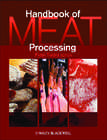
About the Editor Fidel Toldrá, Ph.D., is a research professor at years, including Handbook of Muscle the Department of Food Science, Instituto de Foods Analysis and Handbook of Processed Agroquímica y Tecnología de Alimentos Meats and Poultry Analysis (2009), Meat (CSIC), and serves as European editor of Biotechnology and Safety of Meat and Trends in Food Science & Technology, editor Processed Meat (2008, 2009), Handbook of in chief of Current Nutrition & Food Science, Food Product Manufacturing (2007), and as section editor of the Journal of Muscle Advances in Food Diagnostics, and Handbook Foods. He is also serving on the editorial of Fermented Meat and Poultry (2007, 2008). board of the journals Food Chemistry, Meat Professor Toldrá also wrote the book Dry- Science, Open Nutrition Journal, Food Cured Meat Products (2002).
203. You paralyzed my body with a poison kiss. 204. You put me together, then trashed me for pleasure. 205. I will survive. 206. I liked it. 207. It felt so wrong. 208. This was never the way I planned. 209. You was using me. 210. You're the reason, why I'm thinkin. 211. You're the one to blame. 212. I keep dreaming. 213. Take it slow. 214. I don't wanna be the one. 215. I hate my life. 216. Thought that we were stronger. 217. But you're just a boy, you don't understand. 218. Miss independent. 219. Lies, lies, lies 220. Ma ei saa aru, kuidas sa ei saa aru, ei ma ei saa aru 221. Ma ei saa aru, kuidas sa ei saa aru, et ma ei saa aru 222. Ma tean , et sa mõtled et ma ei mõtlegi su peale , mõtle pealegi , ma mõtlen ikka su peale 223. See kes ei tea midagi ja teab et ei tea midagi,teab rohkem kui see kes ei tea midagi ega tea et ei tea midagi! 224. Vahete vahel on vahede vahel olevatel vahedel vahed vahel 225
 annaabi.ee