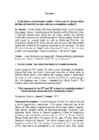
meedium (M) ja vastuvõtja (retsipient R). Kõik need elemendid mõjutavad üksteist (joonisel kujutatud nooltena). Samas on saatja ja vastuvõtja mitmekesistes sidemetes: neid mõjutavad enesepilt, isiksuseomadused, rollisidemed ja sotsiaalsed suhted. Mudel toob esile protsessi elementide (positsioonide) vastastikused suhted. Jakobsoni(20 saj,suurim keeleteadlane) mudel: kahetasandiline, lineaarne. Saatja (addreser adressant) saadab vastuvõtjate (addressee adresssaat) sõnumi. Sõnum peab viitama muulegi kui iseendale. Jakobson kutsub seda kontekstiks(asjaolud, milles sündmus kulgeb) Konatiivne (tungiv) funktsioon (ingl. connative function) ehk omandamise funktsioon. Keele need aspektid, mille siht on luua vastuvõtjas vastust, tema reaktsiooni. Väljendab vastuvõtja hoiakut sõnumi suhtes (suhtumine käsku on teistsugune kui palvesse).
for 10-fps resolution. -6- Configuration We need to configure our equipment for work. The most important part here is the configuration of Asterisk PBX stations. Firstly, it must be mentioned that for our mission we use a SIP protocol (Session Initiation Protocol), which is used for creation, change and rupture of sessions: transfer of any data from the sender to the addressee between one or several participants. SIP describes only rules of connection between devices, therefore together with SIP the information transfer protocol is used. SIP uses for data transmission protocols RTP (Real-Time Protocol) and SDP (Session Description Protocol). So, let's make a simple configuration between two PBXs. Figure 5.The scheme of SIP connection Stations' data: PBX 1 address: http://192.168.252.41 PBX 2 address: http://192.168.252
employer, or child and parent in some societies). A text will usually have many elements that help us determine the different aspects of tenor, such as the (1) level of formality of the text (how formal it is – very formal, everyday speech, slang, etc.), (2) social distance (determined by society – such terms as Miss, Mr, nicknames, use of last or first names, etc. help us understand how close or distant a relationship is, and (3) politeness between the speaker and the addressee (use of the formal ‘teie’ in Estonian; politeness phrases, such as ‘please’, ‘could’, ‘shall’, ‘would you mind’, etc.). Mode- The second sub-parameter of language use is mode (moodus/vahend); in essence, this is the choice between speaking and writing. Some languages might have words that are almost exclusively used in either written or spoken language and to use them in the other context would make the text seem badly constructed (an example in
H: - There are a lot of functions of post office. Of course, we have friends in different parts of the world, but it's really expensive to call them often. J: - Yes. Some people can use Internet, but not everyone is provided with it. So, then you can send letters... H: - Oh, yeah! It's really convenient! You can send even photos, is spite of the fact that the envelope is heavy. You can just send registered letter! J: - And if you don't know the exact address of addressee, you can send post restante letters. H: - And we can send even gifts for birthdays! Of course, it's not cheep, but it's better than nothing. I mean sending parcels. J: - Yeah, that's good. They go not very fast, but, after all, if there is no occasion to congratulate you nearest and dearest, it's really nice thing! But you shouldn't forget to insure your parcel in case there is something valuable. H: - Then, we shouldn't forget about telegrams! Urgent, express, photo, greetings...They are
communication-security measures. Dispatches were sent “on the umbrella"—broadcast to the fleet at large and copied by all ships. This sort of blanket coverage made identification difficult. Multiple addresses were used. They sent dummy traffic, which, however, did not confuse the listeners. Just before the change, the communicators passed many old messages. Rochefort's unit spotted them, and guessed that they were attempts either to pad the volume or to get through to the addressee before the change caused routing difficulties. On December 2, after only two days of analyzing the new calls, Rochefort's unit stated in its Communications Intelligence Summary: "Carriers—Almost a complete blank of information of the Carriers today. Lack of identifications has somewhat promoted this lack of information. However, since over two hundred service calls have been partially identified since the change on the first of December and not one carrier
 annaabi.ee