William the Bastard Early life about the bastard William I usually known as William the Conqueror and sometimes William the Bastard, he was the first Norman King of England. William was the son of the unmarried Robert I, Duke of Normandy, by Robert's mistress Herleva. During his childhood and adolescence, members of the Norman aristocracy battled each other, both for control of the child duke and for their own ends. About william the first In 1047 William was able to quash a rebellion and begin to establish his authority over the duchy, a process that was not complete until about 1060. His marriage in the 1050s to Matilda of Flanders provided him with a powerful ally in the neighbouring county of Flanders. By 1062 William was able to secure control of the neighbouring county of Maine. Conquests ...
William the Conqueror William I was French. William I (1027 9 September 1087), better known as William the Conqueror, was Duke of Normandy from 1035 and King of England from 1066 to his death. William is also referred to as "William II" in relation to his position as Duke of Normandy. In particular, before his conquest of England, he was known as "William the Bastard because of the illegitimacy of his birth. On his father's death in 1035, William was recognised as heir, with his great uncle serving as regent. In 1042 he began to take more personal control. From 1046 until 1055 he dealt with a series of baronial rebellions. William's political and military successes helped him in negotiations to marry Matilda, daughter of Count Baldwin of Flanders in 1053. When William was 24 years old, he visited England for the first time. When he saw what a pleasant country it was, he thought he would like to be its ...
William the Conqueror (~1028-1087) · Was born in Falaise , Normandy. It's not exactly known when William born but it is is believed to have been born in either 1027 or 1028.He was son of Robert I , the Duke of Normandy. He was known as "William the Bastard" because of the illegitimacy of his birth. · Duke of Normandy from 1035. By his father's will, William succeeded him as Duke of Normandy at age seven. He was knighted by Henry at age 15. By the time William turned 19 he was successfully dealing with threats of rebellion and invasion. · King of England from 1066 to his death. Upon the death of the childless Edward the Confessor, the English throne was fiercely disputed by three claimants--William, Harold Godwinson, the powerful Earl of Wessex, and the Viking King Harald III of Norway, known as Harald Hardraada. Ba...
STUDY QUESTIONS ON CHAPTER 3 · Battle of Stamford Bridge 1066- Battle, that took place on Stamford Bridge between Norwegians who were led by Harald and England (king Harold Godwinson). During the battle many Norwegian leaders were killed. Norwegians lost the battle, and it is very often taken to mark the end of the Viking Age. · Battle of Hastings 1066- Occurred on 14th October 1066 during the Norman conquest of England, between the Norman-French army of William the Conqueror and the English army under king Harold II. During the battle Harold was killed and the Normans won. It was the end of Anglo-Saxon era. · Bayeux Tapestry- Embroidered cloth nearly 70m long, which depicts the events leading up to the Norman conquest of England concerning William, Duke of Normandy and Harold, Earl of Wessex, later king of England and culminating in the battle of Hastings. · Debate poem- ...
KING LEAR William Shakespeare Plot Overview Lear, the aging king of Britain, decides to step down from the throne and divide his kingdom evenly among his three daughters. First, however, he puts his daughters through a test, asking each to tell him how much she loves him. Goneril and Regan, Lear’s older daughters, give their father flattering answers. But Cordelia, Lear’s youngest and favorite daughter, remains silent, saying that she has no words to describe how much she loves her father. Lear flies into a rage and disowns Cordelia. The king of France, who has courted Cordelia, says that he still wants to marry her even without her land, and she accompanies him to France without her father’s blessing. Lear quickly learns that he made a bad decision. Goneril and Regan swiftly begin to undermine the little authority that Lear still holds. Unable to believe that his beloved daughters are betrayin...
History exam *Stonehenge - is a monument located in England. It is one of the most famous prehistoric sites in the world and is composed of earthworks surrounding a circular setting of large standing stones. The surrounding circular, earth bank and ditch, have been dated to about 3100 BC. Stonehenge was produced by a culture with no written language. Many aspects of Stonehenge remain subject to debate. There is little or no direct evidence for the construction techniques used by the Stonehenge builders. *The Celts in Britain and their legacy The Cets lived in Britain in The Iron Age. They were warring tribes who were battleful amongst themselves as well as inter-tribal war. They were not centrally governed. The Celts brought iron working, iron ploughs and metal swords, horses, wheels and chariots - all these things gave them an instant superiority over the native tribes. The Celts built a number ...
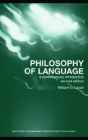
Philosophy of Language Philosophy of Language: a Contemporary Introduction introduces the student to the main issues and theories in twentieth and twenty-first-century phi- losophy of language, focusing specifically on linguistic phenomena. Topics are structured in four parts in the book. Part I, Reference and Referring, includes topics such as Russell's Theory of Descriptions, Donnellan's distinction, problems of anaphora, the description theory of proper names, Searle's cluster theory, and the causalhistorical theory. Part II, Theories of Meaning, surveys the competing theories of linguistic mean- ing and compares their various advantages and liabilities. Part III, Pragmatics and Speech Acts, introduces the basic concepts of linguistic pragmatics, includes a detailed discussion of the problem of indirect force and surveys approaches to metaphor. Part IV, new to this edition, examines the four theories of metaphor. Features...
Hamlet Shakespeare, William Published: 1599 Categorie(s): Fiction, Drama Source: Feedbooks 1 About Shakespeare: William Shakespeare (baptised 26 April 1564 – died 23 April 1616) was an English poet and playwright, widely regarded as the greatest writer in the English language and the world's pre-eminent dramatist. He is often called England's national poet and the "Bard of Avon" (or simply "The Bard"). His surviv- ing works consist of 38 plays, 154 sonnets, two long narrative poems, and several other poems. His plays have been trans- lated into every major living language, and are performed more often than those of any other playwright. Shakespeare was born and raised in Stratford-upon-Avon. At the age of 18 he married Anne Hathaway, who bore him three children: Susanna, and twins Hamnet and Judith. Between 1585 and 1592 he began a successful c...
ECKHART TOLLE A NEW EARTH Awakening to Your Life's Purpose CONTENTS Chapter One The Flowering of Human Consciousness – 6 Evocation..................................................................................................6 The Purpose of This Book........................................................................8 Our Inherited Dysfunction........................................................................10 The Arising New consciousness..............................................................12 Spirituality and Religion..........................................................................14 The Urgency of Transformation...............................................................16 A New Heaven and a new Earth...............................................................18 ...
ARMASTUS ! Sa ütled, et armastad mind, ma uskusin, kuid enam ei usu, sest see ütleb teeb mulle haiget. On sul nüüd kergem, kui said mulle haiget teha? Need, kes ei hooli ega armasta ei oska seda järelikult teha. Sa andsid mulle oma südamekujulise medaljoni ja laususid: Hoia seda nii nagu sina tahaksid, et sind hoiaks. Paljud kõnnivad üle su südame, aga on üks, kes sinna oma jäljed jätab. Mu armastuse garantii on igavene. Jumal andis meile kaks silma et näha, kaks kõrva et kuulda, kaks kätt et tunda, kuid miks andis Jumal meile ühe südame?Sellepärast, et teise me ise ülesse leiaks. lase end õhku, õhus on armastus! Väiksena mängisin tikkudega, sain vastu sõrmi, kuna see pidi valus olema, nüüd aga mängisin armastusega, isegi kui keegi ei keelanud oli see siiski valus. Armastus ühendab endas kõik inimese head omadused. Pilgud on esimesed armastuskirjad. Armastus sünnib pilgus, kasvab suudluses ja sureb pisarais. Armastus on kõ...
Meditsiiniajalugu hambaarstidele / ARTH 02.076 MITTETÄIELIK KONSPEKT Loengud-seminarid toodud toimumise järjekorras (2010. aasta) I. 1. LOENG (31. õ-nädal): Meditsiin vanaaja tsivilisatsioonides ja antiikmaailmas. .............................. 2 II. 1. SEMINAR (31. õ-nädal): Sissejuhatus. Meditsiinilugu kui teaduslugu. Meditsiiniantropoloogia. Elu ja surma käsitlevad teooriad..............................................................................................................11 III. 2. LOENG (32. õ-nädal): Meditsiin Idamaades. Keskaeg. Renessanss.............................................17 IV. 2. SEMINAR (32. õ-nädal): Rahvameditsiin. .................................................................................. 22 V. 3. LOENG (33. õ-nädal): Uusaeg. Valgustusaeg. Loodusteaduste teke ja areng. Lääneliku meditsiiniteaduse teke.......................
 annaabi.ee