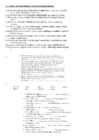
1.- Choose the most suitable verb form in each sentence. a) If only Peter doesn't live / didn't live / wouldn't live so far away from the town centre. We'll have to take a taxi. b) I feel rather cold. I wish I brought / had brought my pullover with me. c) What a pity. I wish we don't have to / didn't have to / wouldn't have to leave. d) If only you tell / told / had told me about the test. I haven't done any revision. e) I wish the people next door hadn't made / wouldn't make / couldn't make so much noise. I can't hear myself think! f) Darling, I love you so much! I wish we are / had been / would be / could be together always! g) I'm sorry I missed your birthday party. I really wish I come / came / had come / would come. h) I like my new boss but I wish she gave / would give / could give me some more responsibility. i) Having a lovely time in Brighton. I wish you are / were / had been ...
Conditionals Table of Contents Conditionals ......................................................................... 2 A. Real Conditionals ............................................................. 2 B. Unreal Conditionals ......................................................... 3 Linking words used in Conditionals ...................................... 4 Conditionals Conditions deal with imagined situations: some are possible, some are unlikely, some are impossible. A. Real Conditionals Real Conditionals refer to situations that are true, have happened, generally happen or are likely to happen. The First Conditional expresses a possible condition and a probable result: If I have time, I will help you. In the if-clause we use the Present Simple, in the main clause will + the verb. We can also use the Present Continuous or Perfect in the if-clause and...
Tarkvaratehnika 1. Loeng Kvaliteetse tarkvara atribuudid: 1. Teostab ettenähtud funktsionaalsust 2. Hooldatav Tarkvara peab arenema, et vastata muutuvatele vajadustele. 3. Usaldusväärne Töökindlus ja turvalisus. 4. Vastuvõetav Kasutajad on aktsepteerinud selle. Tarkvara on neile arusaadav, kasutatav ja ühilduv teiste süsteemidega. Mis on tarkvaratehnika? Tarkvaratehnika on tiimide poolt rakendatav distsipliin tootmaks kõrgekvaliteedilist, suuremastaabilist ja hinnaefektiivset tarkvara, mis rahuldab kasutajate nõudmisi ja mida saab hooldada teatud ajaperioodi vältel. Tarkvaratehnika on süstemaatilise, distsiplineeritud ja mõõdetava lähenemisviisi rakendamine tarkvara arendamisele, käitamisele ja hooldamisele, see tähendab, inseneriteaduste rakendamine tarkvarale. Tarkvaraarendus on nõrgem termin, kus tingimata ei kasutata protsesse, tööriistu, standardeid jne Mis o...
TARKVARATEHNIKA KORDAMISKÜSIMUSED 1. Mis on tarkvaratehnika? Software engineering ! “Engineers Australia” definitsioon: Tarkvaratehnika on tiimide poolt rakendatav distsipliin tootmaks kõrgekvaliteedilist, suuremastaabilist ja hinnaefektiivset tarkvara mis rahuldab kasutajate nõudmisi ja mida saab hooldada teatud ajaperioodi vältel. IEEE definitsioon: Tarkvaratehnika on süstemaatilise, distsiplineeritud ja mõõdetava lähehemisviisi rakendamine tarkvara arendamisele, käitamisele ja hooldamisele, see tähendab, inseneriteaduste rakendamine tarkvarale. Tarkvaraarendus on nõrgem termin, kus tingimata ei kasutata protsesse, tööriistu, standardeid, jne. Tarkvaraarendus on progemine + konfigursatsiooni haldus. Tarkvaratehnika ei ole ainult programmi kirjutamine, vaid teemad hõlmavad ka kvaliteeti, ajakavasid, tasuvust ning põhimõtete ja korra tundmist ja rakendamist. Tar...
Philosophy of Language Philosophy of Language: a Contemporary Introduction introduces the student to the main issues and theories in twentieth and twenty-first-century phi- losophy of language, focusing specifically on linguistic phenomena. Topics are structured in four parts in the book. Part I, Reference and Referring, includes topics such as Russell's Theory of Descriptions, Donnellan's distinction, problems of anaphora, the description theory of proper names, Searle's cluster theory, and the causalhistorical theory. Part II, Theories of Meaning, surveys the competing theories of linguistic mean- ing and compares their various advantages and liabilities. Part III, Pragmatics and Speech Acts, introduces the basic concepts of linguistic pragmatics, includes a detailed discussion of the problem of indirect force and surveys approaches to metaphor. Part IV, new to this edition, examines the four theories of metaphor. Features...
Some of the things you will learn in THE CODEBREAKERS • How secret Japanese messages were decoded in Washington hours before Pearl Harbor. • How German codebreakers helped usher in the Russian Revolution. • How John F. Kennedy escaped capture in the Pacific because the Japanese failed to solve a simple cipher. • How codebreaking determined a presidential election, convicted an underworld syndicate head, won the battle of Midway, led to cruel Allied defeats in North Africa, and broke up a vast Nazi spy ring. • How one American became the world's most famous codebreaker, and another became the world's greatest. • How codes and codebreakers operate today within the secret agencies of the U.S. and Russia. • And incredibly much more. "For many evenings of gripping reading, no better choice can be made than this book." —Christian Science Monitor THE ...
THE W R I T E R ' S JOURNEY M Y T H I C STRUCTURE FOR W R I T E R S THIRD EDITION CHRISTOPHER VOGLER S C R E E N W R I T I N G / W R I T I N G Christopher Vogler explores the powerful relationship between mythology and storytelling in his clear, concise style that's made i this book required reading for movie executives, screenwriters, playwrights, fiction and non-fiction writers, scholars, and fans of pop culture all over the world. Discover a set of useful myth-inspired storytelling paradigms like "The Hero's Journey," and step-by-step guidelines to plot and • character development. Based on the work of Joseph Campbell, The Writers Jour...
Analog Interfacing to Embedded Microprocessors Real World Design Analog Interfacing to Embedded Microprocessors Real World Design Stuart Ball Boston Oxford Auckland Johannesburg Melbourne New Delhi Newnes is an imprint of Butterworth–Heinemann. Copyright © 2001 by Butterworth–Heinemann A member of the Reed Elsevier group All rights reserved. No part of this publication may be reproduced, stored in a retrieval system, or transmitted in any form or by any means, electronic, mechanical, photocopying, recording, or otherwise, without the prior written permission of the publisher. Recognizing the importance of preserving what has been written, Butterworth–Heinemann prints its books on acid-free paper whenever possible. Library of Congress Cataloging-in-Publication Data Ball, Stuart R., 1956– Analog interfacing to embedded microprocessors : real world design / Stuart Ball. p. cm. ISBN 0-7506-7339-7 (pbk...
 annaabi.ee