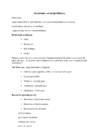
Unpaid often unwilling position Under the supervision og Justices of Peace Compulsory local tax was imposed Poor Those who would work but could not able-bodied and deserving poor, received help of work for wage Those who could work but wouldn´t idle poor, whipped through the streets, publicly, until they learned the error of their ways Those who werw too old/ill/young to work impotent and deserving poor. Were to be looked after in almshouses, hospitals, orphanages or poor houses.
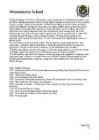
to all pupils. Sports are a key activity at Westminster, as are Art, Drama and Music. Over the academic year, the School organises several exchanges and expeditions. In addition, some pupils participate ( osalema ) in annual events such as PHAB (Physically Handicapped and Able Bodied) and Commemoration ( mälestus ) along with School traditions like The Greaze each Shrove Tuesday. 1066 Battle of Hastings 1179 Benedictine monks of Westminster Abbey werw required by Pope Alexander III to provide a small charity school 1245 Westminster Abbey rebuilt 1348 First outbreake of the Black Death 1540 Dissolutoin of Benedictine Monastery. Henry VIII ensured the School's survival by statue 1560 New charter for 'The Collage' from Elizabet I 1649 Execution of Charles I : Busby leads School in prayers for the King on the day of his beheading 1753 First recorded Pancake Greaze 1793 First cricket match against Elton at Hounslow Heath
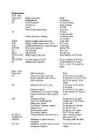
BY Tõus, langus Prices has risen by 10 percent. Reisima millegagi ( va jala, By car, by bus. hobusega) AT Vanus She learned Russian at 45. ABOUT Teemad We werw talking about you. Omadussõnad ja tegusõnad, mille järele tuleb kasutada kindlat eessõna: Afraid of kartma midagi, kedagi Fond of armastama midagi, kedagi Good at Hea millegis Interested in Huvitatud olema millegist, kellegist Kind to Lahke olema kellegagi Pleased with Rahul olema millegagi, kellegagi Proud of Uhke olema millegi, kellegi üle Suprised at Üllatunud olema Agree with Nõus olema kellegagi, millegagi Belong to Kuuluma kellelegi, millelegi
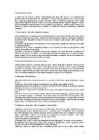
tomato, burrito,mosquito).Portugese: cobra, emu, port, tank, veranda. Russian: ruble, verst, steppe, vodka, tiga, crash. German words were translated word for word (nt, chain-smoker, home-sickness, masterpiece, swan-song; thing in itself, world outlook, world market; kinderkarten, schnaps, sour kraut, deli). Non-European lg: Arabic words came in the middle ages through French (nt, algebra, alixir, hashish, harem, islam, sherbet). Hebrew or Old Jewish- words werw borrowed due to the translation of the bible (nt, hallelujah, Massiah). In the 17th cent England started to conqure other countrys such as India (nt, cashmere, nirvana, bungalo), Chinese (nt, gingseng, tea), Japanese(geisha, sushi, kimono, samurai, harakiri), North.Am Indians(moccasin, tomahawk, wigwam). 4 17. How to tell a borrowing from a native word?
 annaabi.ee